Blog
Tutorials
How to Make Money From an App (2026)
How to make money from an app in 2026: real revenue numbers, the 6 monetization models, app store fees, and a realistic plan to earn $1K-$10K a month.

Nafis Amiri
Co-Founder of CatDoes
Most people ask how to make money from an app and picture a viral hit that prints cash. The real 2026 picture is quieter and more useful: a small number of apps earn a lot, most earn very little, and the ones that win pick the right money model, keep users around, and get the paywall right. The good news is that building an app is now cheap enough that you can test an idea in a weekend instead of spending $40,000, which changes the whole math of what is worth trying.
Short answer: Apps make money six main ways: subscriptions, freemium/free trials, in-app purchases, one-time purchases, ads, and B2B licensing. Subscriptions are the default for indie apps because the revenue compounds. What actually decides your income is not downloads. It is retention, your paywall conversion rate, and your pricing. A realistic, achievable goal for a focused niche app is $1,000 to $10,000 a month, which is roughly 170 to 1,700 paying subscribers at $6 each.
Table of Contents
How much money can you actually make from an app?
The 6 ways to make money from an app
What Apple and Google take in 2026
iOS or Android: where is the money?
What actually drives app revenue
Build cheap first, then find what earns
A realistic plan to make $1,000 to $10,000 a month
Frequently asked questions
Start building your money-making app
How much money can you actually make from an app?
App revenue is winner-takes-most. According to RevenueCat's State of Subscription Apps 2025 report, which analyzed more than 75,000 apps that generated over $10 billion in 2024, the top 5% of subscription apps earn more than $1.16 million a month, while the median app that survives to 18 months makes around $8,300 a month. The gap between the top 5% and the bottom 25% has widened to about 400x, up from 200x a year earlier.
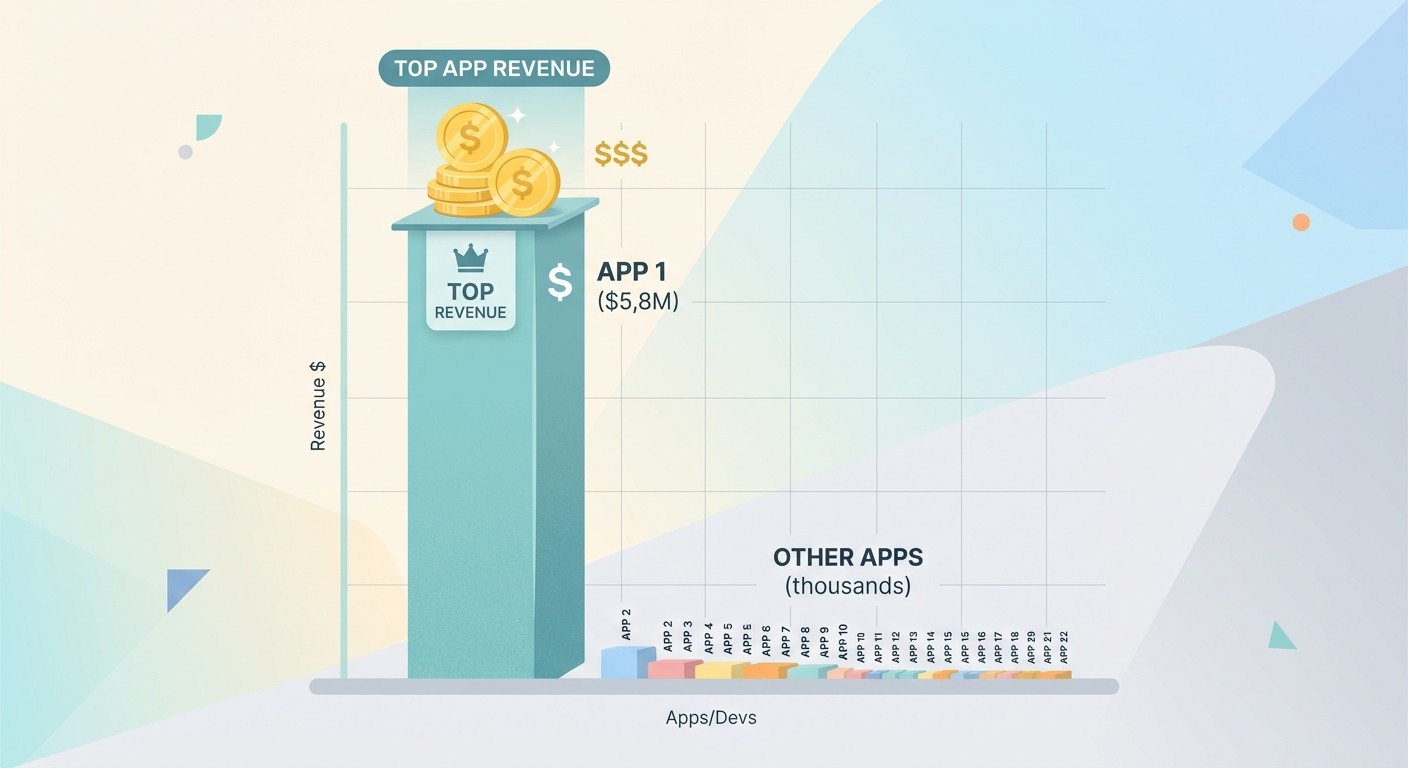
That $8,300 figure only counts apps that lasted a year and a half with a live subscription. Most apps never get there. So the honest framing is this: a tiny slice of apps make life-changing money, and the realistic target for a solo builder or small team is a niche app earning a few thousand dollars a month. That is very achievable, and it is where most of the practical advice below is aimed. Getting to that point starts with the build itself, which we cover in how to build an app and make money.
Tier | Monthly revenue | What it looks like |
|---|---|---|
Top 5% | $1.16M+ | Category leaders with big paid acquisition |
Strong indie | $10K-$100K | A well-run niche app with loyal subscribers |
Realistic target | $1K-$10K | A focused app solving one clear problem |
Median (surviving) | ~$8.3K | Apps still alive with a subscription at 18 months |
Most apps | Under $100 | Launched, never found an audience or a paywall |
The 6 ways to make money from an app
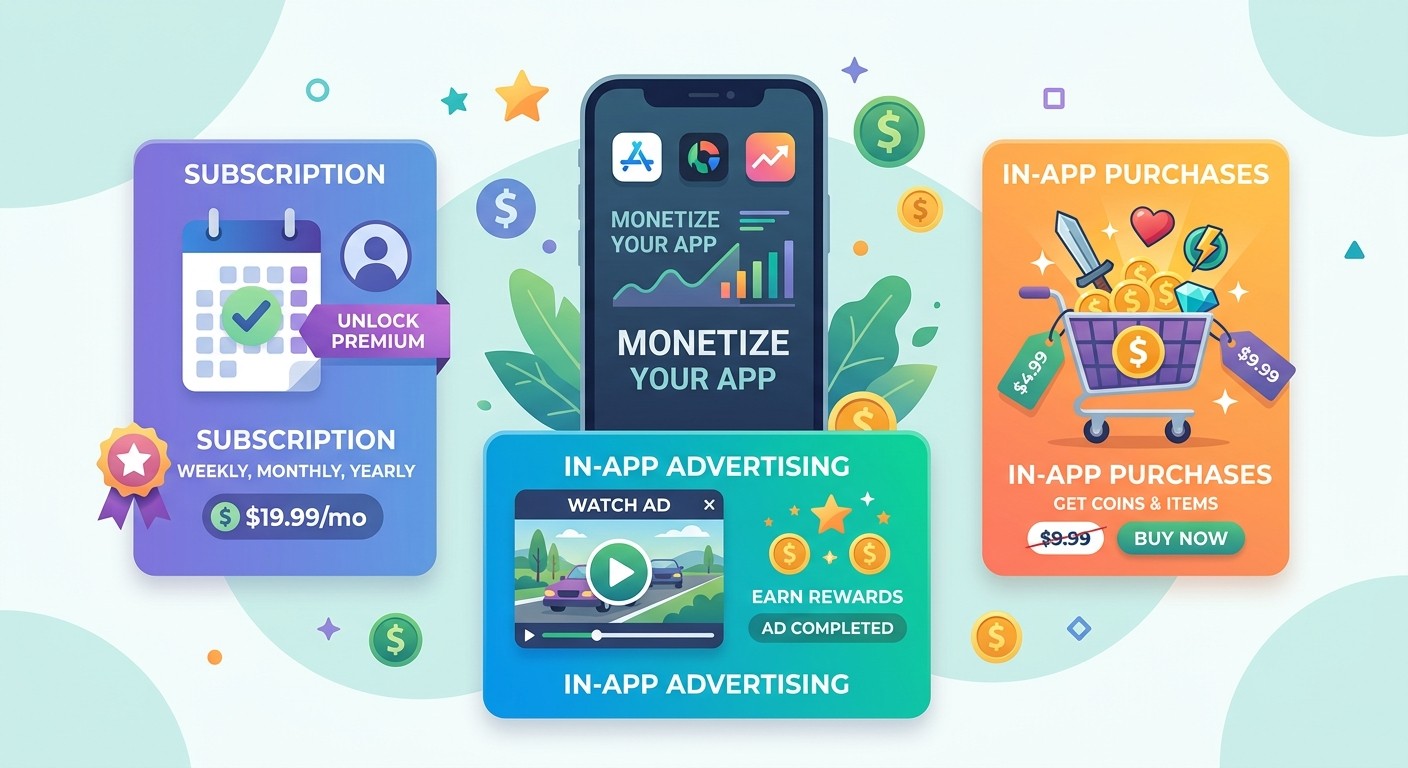
There are six proven ways to make money from an app. Most successful apps combine two or three of them rather than betting on one. Here is how they compare, then a short note on when to use each.
Model | Best for | Typical price | Notes |
|---|---|---|---|
Subscriptions | Apps used weekly or daily | $3-$15/month | Revenue compounds; the 2026 default |
Freemium / free trial | Funnelling users to paid | Free + paid tier | Free tier feeds the paywall |
In-app purchases | Games, credits, content | $0.99-$99 | Great for consumables and add-ons |
One-time purchase | Simple utilities | $5-$30 once | Easy sell, but no recurring income |
Ads | High-volume free apps | ~$3-$12 eCPM | Needs huge traffic to matter |
B2B licensing | Business tools | $20-$200/seat/mo | Low churn, higher deal size |
Subscriptions are the default because a paying user keeps paying. Freemium and free trials are less a separate model and more the funnel that feeds subscriptions. In-app purchases shine in games and content apps where people buy credits or unlock features. One-time purchases are the easiest sell but the money does not compound. Ads only work at scale, and B2B licensing trades a smaller user base for bigger, stickier contracts. For a full breakdown with examples, see our guide to 9 proven app monetization strategies.
One reality check on ads: at a typical rewarded-video eCPM of around $10 to $12 in the US, 100,000 ad impressions a month earns roughly $1,200. Banner ads sit near a $2.80 eCPM and rewarded video around $10.50 based on Business of Apps 2025 advertising data, so ads reward volume, not cleverness. If you do not have hundreds of thousands of sessions, a paywall will almost always out-earn ads.
What Apple and Google take in 2026
Both stores take a commission on digital purchases, and 2026 is the year those rules changed. The headline number is still 30%, but most indie developers qualify for 15%, and new rules now let you route payments outside the store in some regions.
Here is the current picture. Apple and Google both charge smaller developers 15% instead of 30%: Apple through its Small Business Program (up to $1 million in the prior year), and Google on your first $1 million in annual earnings. That single tier is why most solo builders keep 85 cents on the dollar, not 70.
Scenario | Store cut | You keep on a $10/mo sub |
|---|---|---|
Standard rate | 30% | $7.00 |
Under $1M/year (Small Business) | 15% | $8.50 |
US web checkout via an in-app link (Apple) | 0% for now (Apple has proposed 5% to 15%) | $9.41 after Stripe's 2.9% + 30¢ |
The bigger 2026 story is external payments. After a US court ruling in the Epic v. Apple case, developers can link users out to pay on the web from US iOS apps. Apple still can't charge any commission on those sales: a December 2025 appeals decision said it may eventually charge a fee based on its costs, but only once the district court approves one. In August 2026, Apple proposed 15%, with 10% for subscription renewals and 5% for small developers, and the Supreme Court agreed in June 2026 to hear its appeal.
On the Android side, Google changed its fees on June 30, 2026 for the US, EEA, and UK: a 10% service fee plus a 5% billing fee on your first $1 million and on all subscriptions. US apps can also use their own billing or link out to the web, but from October 1, 2026 those sales carry a Google service fee, including 10% on subscriptions. The takeaway: plan your pricing around 15% to 30%, and treat external payments as an upside that is still stabilizing.
iOS or Android: where is the money?
If revenue is your goal, start with iOS. Even though Android has far more devices worldwide, iOS users spend more. In 2025 the Apple App Store generated about $117.6 billion in consumer spending versus roughly $49.2 billion on Google Play, which means Apple captured around 70% of the two-store total despite Google leading on downloads. iOS users spend about 2.1x more per app than Android users.
Metric (2025) | Apple App Store | Google Play |
|---|---|---|
Consumer spending | ~$117.6B | ~$49.2B |
Share of combined revenue | ~70% | ~30% |
Spend per app vs the other | ~2.1x higher | Baseline |
Strength | Monetization | Download volume, global reach |
Practical rule: if you are monetizing with subscriptions or purchases, launch iOS first and add Android once the money model works. If you are monetizing with ads and need massive reach, or you are targeting markets where Android dominates, flip that order. The good news is modern app builders ship both from one codebase, so this is a sequencing decision, not a permanent fork.
What actually drives app revenue
Downloads are a vanity metric. Three things decide whether an app makes money: how many users stick around, how well your paywall converts, and how you price. Get these right on a small audience and you will out-earn a bigger app that ignores them.
Retention beats downloads
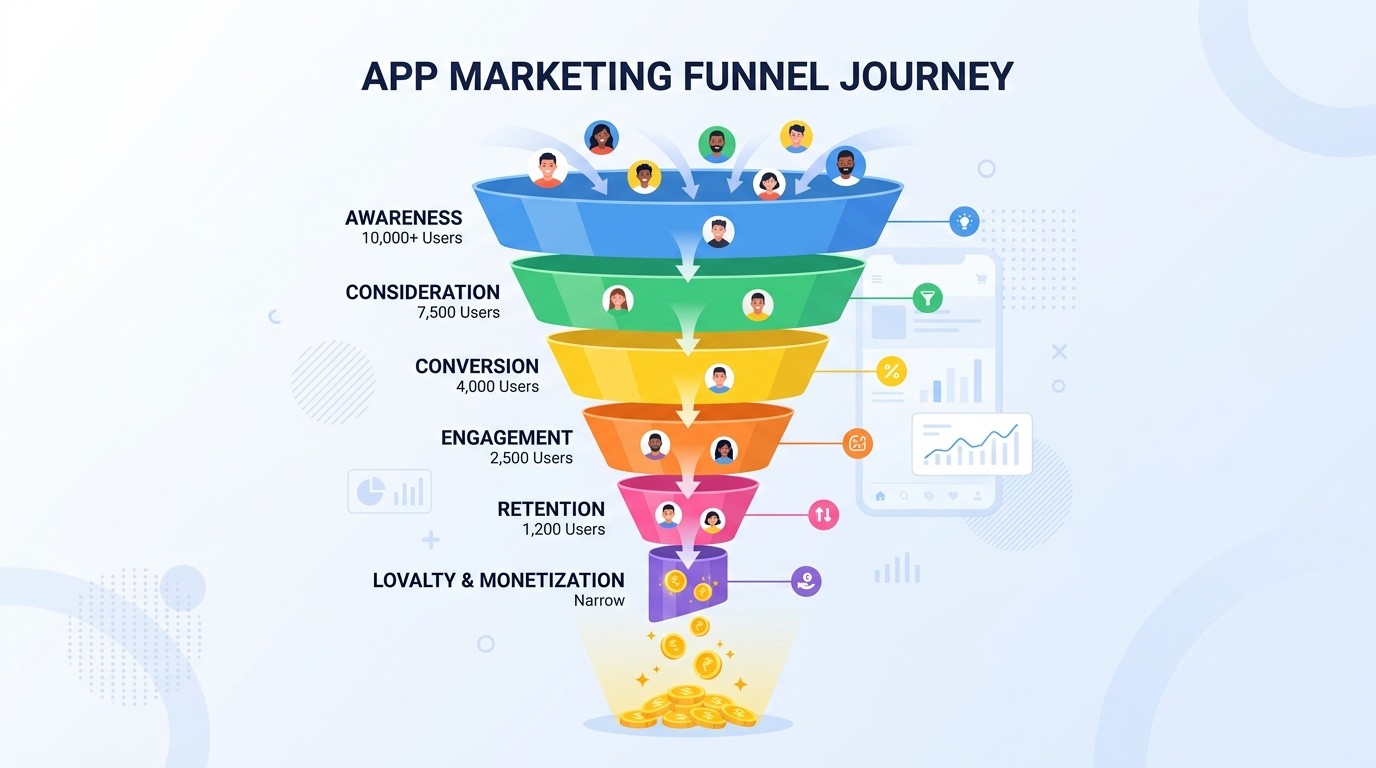
Subscription apps live and die on churn. RevenueCat's data puts median monthly churn around 13% to 14%, which means the typical app replaces its entire subscriber base every seven to eight months. If your churn is high, paid acquisition just fills a leaky bucket. Building a habit, sending useful notifications, and shipping a real "aha" moment in the first session matter more than any growth hack.
The paywall decides your revenue
Your paywall is where the money is made or lost. Trial-to-paid conversion varies a lot by category: RevenueCat's 2025 benchmarks show Travel around 48.7%, Media & Entertainment around 43.8%, and Health & Fitness around 39.9%, with the top decile of apps near 68%. Two levers move this the most. First, trial length: trials lasting 17 to 32 days convert best, around 45.7% median, because they give users time to build a habit. Second, price positioning: higher-priced apps actually convert trials better (about 9.8% versus 4.3% for cheap ones), because a serious price attracts serious users.
Pricing that converts
The most common winning structure is a weekly, monthly, and annual set of options with the annual plan anchored as the best value. A typical cluster is around $5 weekly, $10 monthly, and $30 to $60 yearly. Annual plans lock in revenue and cut churn, so nudge users toward them. If you sell globally, price by region: $9.99 makes sense in North America but will kill conversion in markets where $3 to $4 is the norm. Small paywall experiments compound, so treat pricing as something you test, not something you set once.
Build cheap first, then find what earns
The single biggest change in 2026 is that building an app barely costs anything. A custom app used to run $40,000 or more and take months. Today you can describe an app in plain English to an AI builder and have a working version the same day. Our mobile app development cost breakdown shows how far that number has fallen.
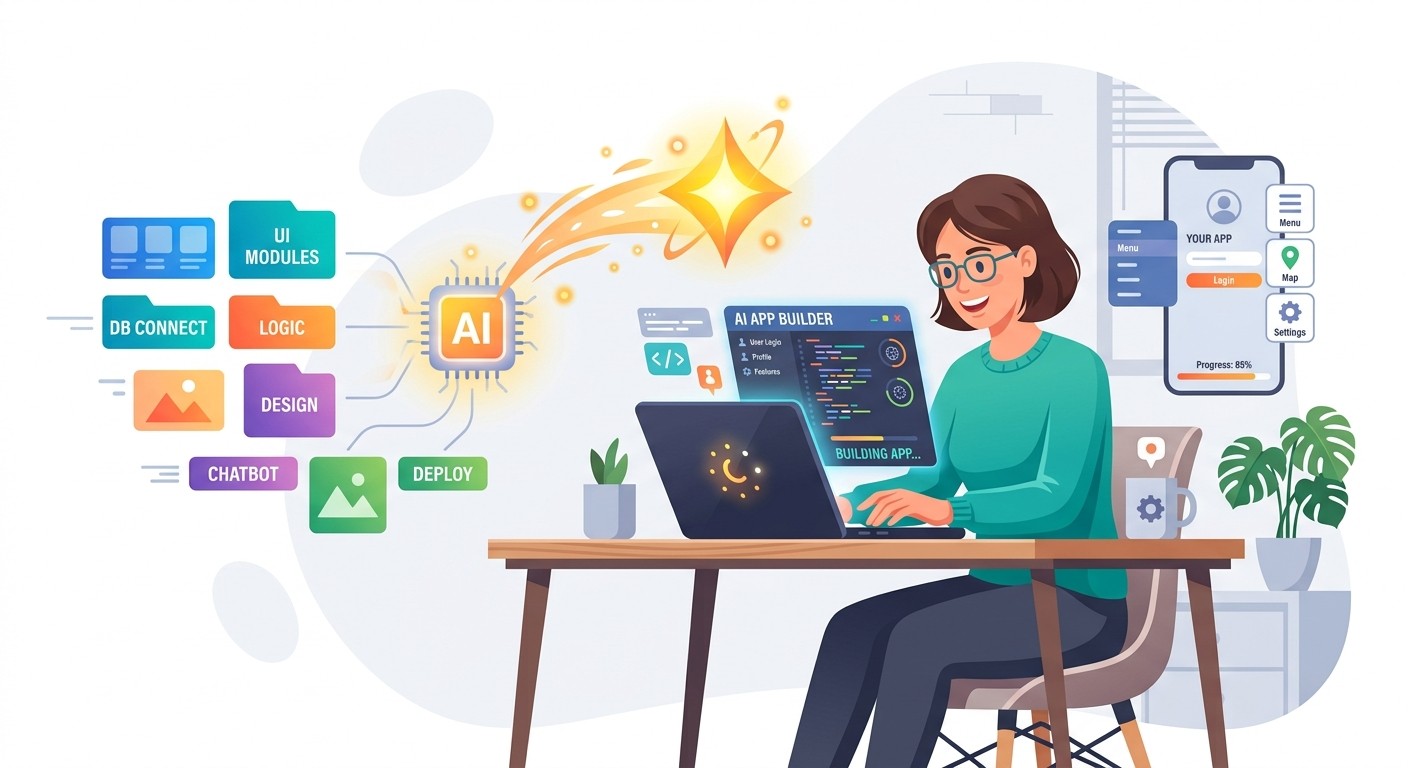
Cheap building rewires the strategy. When each attempt cost tens of thousands of dollars, you had to bet everything on one idea. When an attempt costs a weekend, you can launch several small apps, see which one gets traction, and pour your energy into the winner. This portfolio approach is how many indie developers now find their hit: they ship many cheap shots and let the market pick. The apps that win are usually narrow, aimed at one specific audience with one clear problem, which is exactly the kind of thing that is fast to build and easy to market. If you need a starting point, browse our list of profitable app ideas.
A realistic plan to make $1,000 to $10,000 a month
Making $1,000 to $10,000 a month from an app is realistic and specific: at roughly $6 a month per subscriber, that is about 170 to 1,700 paying users. Here is a plan to get there without a big budget.
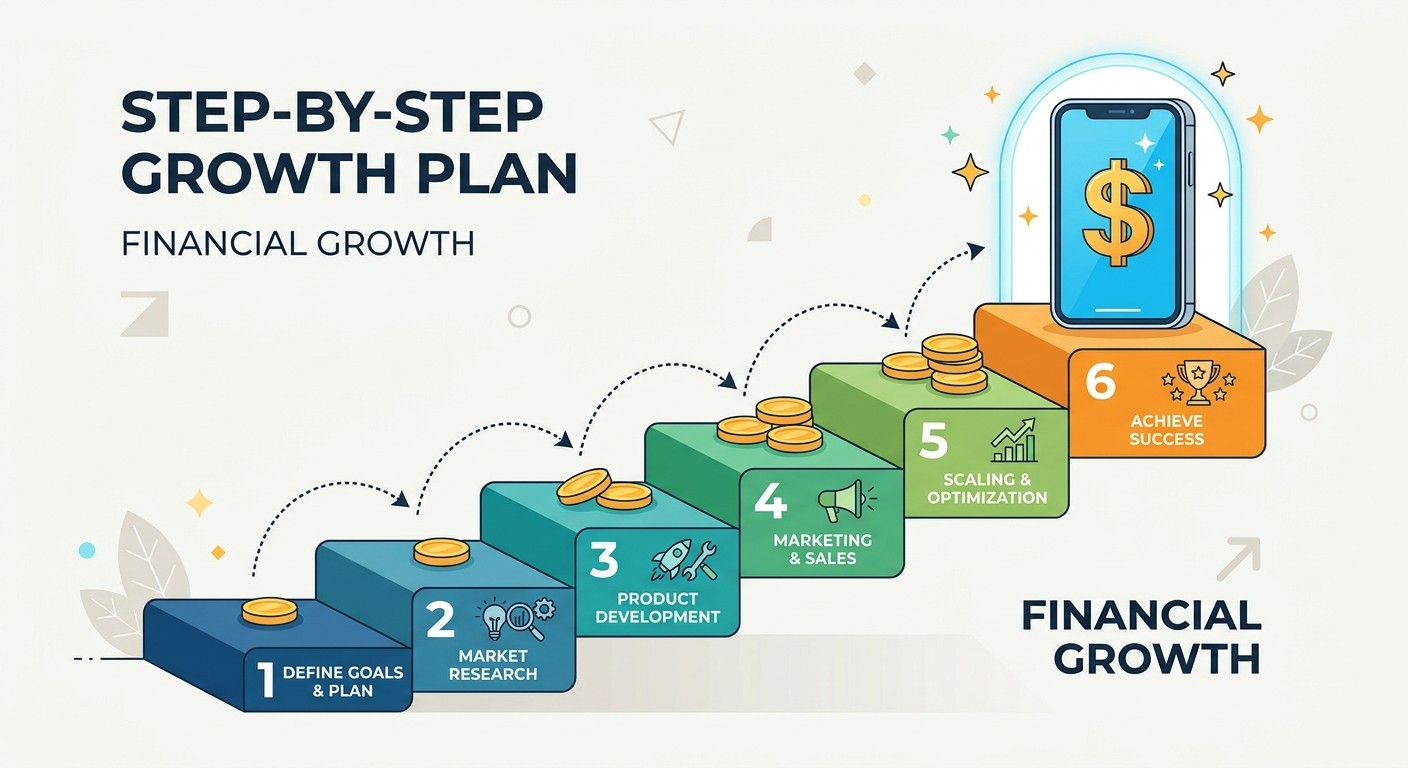
Pick a narrow, painful niche. Solve one clear problem for one specific group. Narrow apps are easier to build, rank, and market.
Build a small version fast. Ship a focused first release in days, not months. You are testing whether anyone pays, not launching the final product.
Add a subscription with a free trial. Use a 17-to-32-day trial and price it seriously. Offer weekly, monthly, and annual, anchored on annual.
Launch on iOS first. That is where per-user spending is highest. Add Android once the paywall converts.
Get your first users for free. Short-form video, niche communities, and app store optimization beat paid ads early. See how to promote an app with no budget.
Fix retention and the paywall. Watch where trials cancel and where users drop off in week one. Small fixes here move revenue more than more downloads.
Do the math, then scale what works. Once a subscriber is worth more than it costs to acquire one, spend to grow. Until then, keep experimenting cheaply.
A simple funnel shows how attainable this is: 10,000 downloads at a 5% trial-start rate and a 40% trial-to-paid rate is 200 paying users, or about $1,200 a month at $6 each. Improve any one of those numbers and the total climbs fast.
Frequently asked questions
How do apps make money?
Apps make money through subscriptions, freemium upgrades and free trials, in-app purchases, one-time purchases, advertising, and B2B licensing. Most profitable apps combine a subscription with a free trial, because recurring revenue compounds over time while ads and one-time sales do not.
How much money can you realistically make from an app?
Most apps earn very little, but a focused niche app can realistically reach $1,000 to $10,000 a month, which is about 170 to 1,700 paying subscribers at $6 each. The top 5% of subscription apps make over $1 million a month, but that is a rare outcome driven by large paid acquisition.
What is the best way to monetize an app?
For most apps, a subscription with a free trial is the best model because the revenue recurs and compounds. Use ads only if you have very high traffic, and use one-time purchases only for simple utilities where recurring value is hard to justify.
Do free apps make money?
Yes. Free apps make money through ads, in-app purchases, or by converting free users into paid subscribers via a freemium model. The free tier is the funnel; the paywall is where the money is actually made.
How much do Apple and Google take?
Both stores take 30% by default, but drop to 15% for smaller developers, which covers most indie developers: Apple for anyone under $1 million in the prior year, and Google on your first $1 million in annual earnings. In the US, apps can also send users to a web checkout. Apple can't take a commission on those sales until a court approves a fee, and Google charges a service fee on them from October 1, 2026.
Is it better to launch on iOS or Android for revenue?
Launch on iOS first if revenue is your goal, because Apple captured around 70% of combined app-store spending in 2025 and iOS users spend about 2.1x more per app. Choose Android first only if you rely on ad revenue at scale or target markets where Android dominates.
Can you make money from an app built with AI or no code?
Yes. The app store does not care how an app was built, only that it works and follows the guidelines. AI app builders let you ship a real, monetizable app in days for a fraction of the old cost, which makes it far cheaper to test whether an idea earns.
How long does it take to make money from an app?
You can earn your first dollars within days of launching a paywall, but building to a few thousand a month usually takes months of improving retention, conversion, and distribution. The cheap-build era means you can start testing revenue almost immediately instead of waiting on a long development cycle.
Start building your money-making app
Making money from an app in 2026 comes down to a few decisions: pick a narrow niche, monetize with a subscription and a smart free trial, launch on iOS first, and obsess over retention and your paywall instead of raw downloads. Because building is now cheap, the winning move is to test ideas fast and double down on whatever earns.
That is exactly what CatDoes is built for. Describe your app in plain English and CatDoes builds, deploys, and ships it to the App Store and Google Play, backend included, so you can go from idea to a live, monetizable app without writing code. Start building your app with CatDoes and find out what earns.
Nafis Amiri
Co-Founder of CatDoes