Blog
Insights
Flutter vs React Native 2026 Compared
Flutter vs React Native in 2026: compare performance, UI, ecosystem, and developer experience to decide which cross-platform framework fits your next app.

Nafis Amiri
Co-Founder of CatDoes
TL;DR: Flutter vs React Native in 2026 comes down to your team and product goals. Flutter (now at version 3.41 with the Impeller rendering engine) excels at pixel-perfect, design-heavy apps with a single codebase across six platforms. React Native (version 0.84 with the New Architecture) is ideal for teams with JavaScript experience who need deep native platform integration. Both are production-ready and used by major companies. Below, we compare performance, cost, AI integration, ecosystem, and more with real numbers to help you decide.
Table of Contents
Quick Decision Guide
What Changed in 2025-2026
Performance and Rendering
UI Consistency and Platform Feel
Development Cost Comparison
AI and Machine Learning Integration
Ecosystem and Third-Party Support
Developer Experience and Learning Curve
Platform Coverage
Community and Job Market
Real-World Apps Using Each Framework
When to Choose Flutter vs React Native
Frequently Asked Questions
Choosing between Flutter and React Native is one of the biggest decisions in cross-platform mobile development. Both frameworks have matured significantly through 2025 and into 2026, each earning major updates that closed longstanding gaps. This guide compares them across ten categories with real version numbers, benchmark data, and named examples so you can make an informed choice.

Quick Decision Guide
Short on time? Use this decision matrix to narrow your choice in 30 seconds.
Your Situation | Best Fit | Why |
|---|---|---|
Team knows JavaScript/React | React Native | Reuse existing skills, 1-2 month ramp-up |
Need pixel-perfect custom UI | Flutter | Own rendering engine, total visual control |
Building for iOS + Android + web + desktop | Flutter | Single codebase for 6 platforms |
Sharing code with existing React web app | React Native | Same React patterns, shared business logic |
Need latest OS features (Liquid Glass, etc.) | React Native | Uses native components, day-1 OS support |
Tight budget, small team | Either | Both save 30-50% vs separate native teams |
Want to skip the framework decision entirely | Go from idea to app without writing code |
Read on for the detailed breakdown behind each recommendation.
What Changed in 2025-2026
Framework | Version | Key Updates |
|---|---|---|
Flutter | 3.41 (Dart 3.11) | Impeller rendering engine now default on iOS and Android (API 29+), CalVer versioning adopted, Material 3 theming stabilized, desktop and web support improved |
React Native | 0.84 | New Architecture (Fabric + TurboModules) default since 0.76, Hermes V1 engine introduced in 0.82, bridgeless mode, Expo SDK 54 with Liquid Glass support |
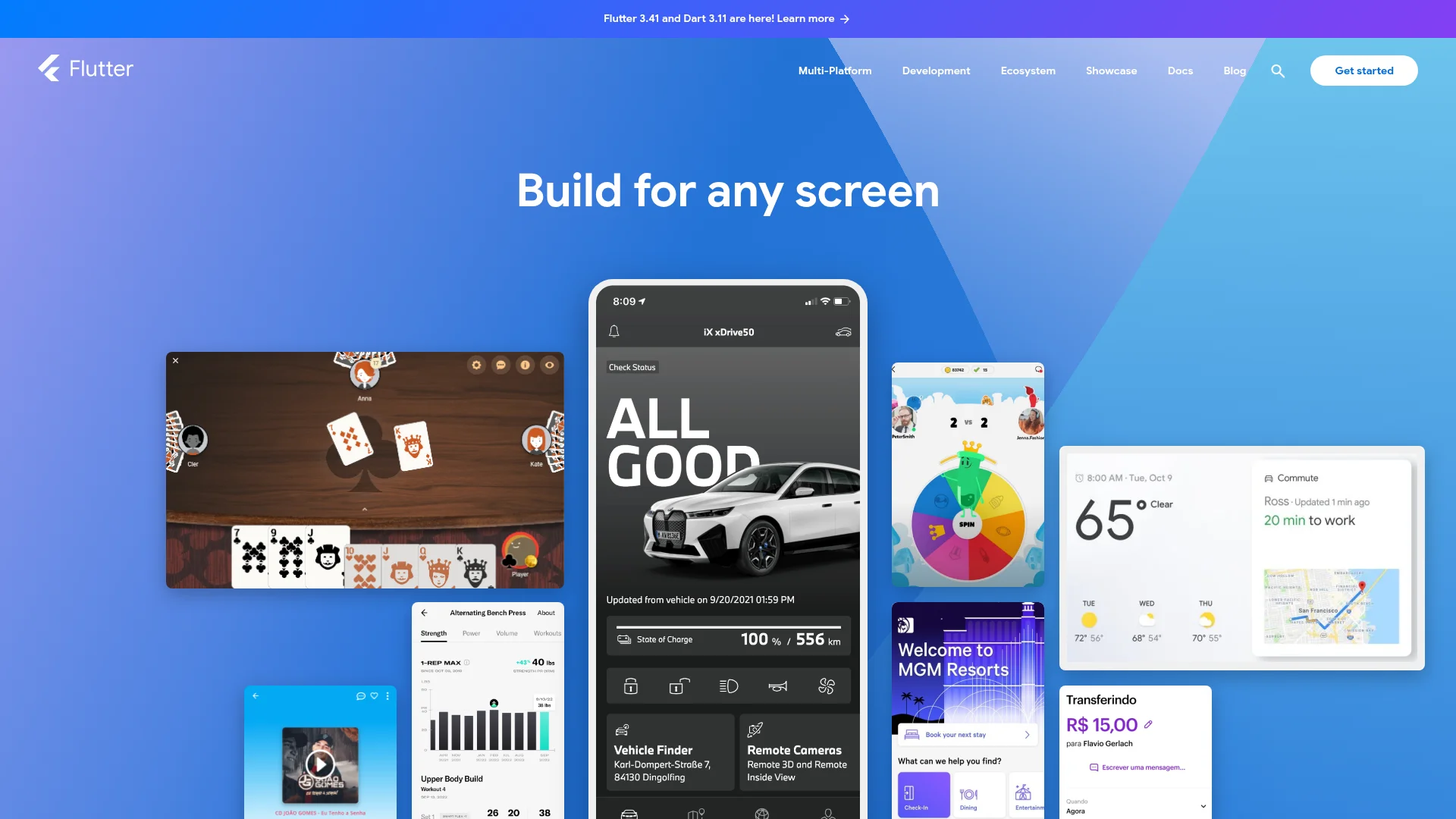
Both frameworks shipped architectural upgrades that directly improve startup speed, rendering performance, and native platform access. Flutter replaced Skia with the Impeller engine on mobile, while React Native completed its multi-year New Architecture migration.
Performance and Rendering
Performance is usually the first question in any Flutter vs React Native comparison. Here is how they stack up in 2026.
Flutter renders every pixel through its own engine. On iOS, the Impeller engine (which fully replaced Skia) eliminates shader compilation jank and delivers consistent 60-120 fps. On Android API 29+, Impeller is the default with Skia fallback deprecated. Dart compiles ahead-of-time (AOT) to native ARM code, keeping startup times under 300ms on modern devices. Memory usage improved with Dart 3.11 optimizations.
React Native renders using native platform components. The New Architecture (Fabric renderer + TurboModules) removed the old asynchronous bridge, enabling synchronous native calls. Hermes V1, introduced in React Native 0.82, optimizes bytecode compilation for faster cold starts. Startup time benchmarks show 20-40% improvement over the legacy architecture. React Native apps feel native because they are native at the UI layer.
Metric | Flutter 3.41 | React Native 0.84 |
|---|---|---|
Rendering approach | Own engine (Impeller) | Native platform components |
Frame rate | 60-120 fps (consistent) | 60 fps (native-matched) |
Cold start (iOS) | ~1.2 seconds | ~1.8 seconds |
Memory usage (iOS) | ~45 MB baseline | ~68 MB baseline |
Typical APK size | 8-12 MB | 5-8 MB |
Animation performance | Excellent (GPU-direct) | Good (native-driven) |
Verdict: Flutter has the edge for complex animations, lower memory, and consistent rendering across platforms. React Native has smaller app sizes and matches native performance by using native components directly.
UI Consistency and Platform Feel
This is where the two frameworks have fundamentally different philosophies.
Flutter paints its own UI on a canvas, giving you pixel-perfect consistency across iOS, Android, web, and desktop. Material 3 theming is built in, and Cupertino widgets replicate iOS styling. Your app looks identical on every platform, which is an advantage for brand-heavy consumer apps. The tradeoff: new OS design changes (like Apple's Liquid Glass introduced at WWDC 2025) need to be manually recreated by the Flutter team or community.
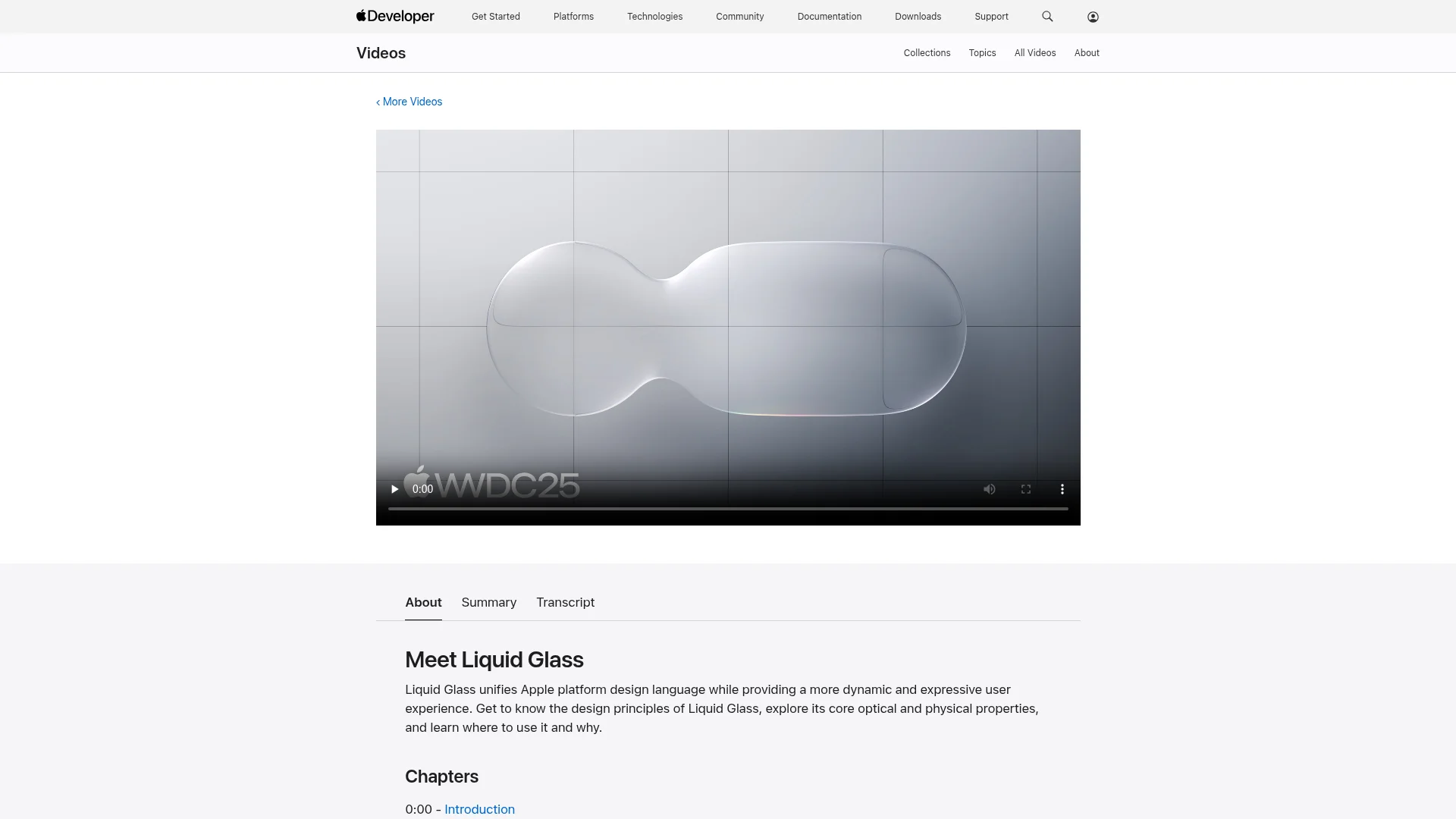
React Native uses the actual native UI components of each platform. This means your app automatically inherits platform-specific look and feel, including new design languages like Liquid Glass on iOS 26 (supported via Expo SDK 54). Libraries like React Native Paper and NativeWind provide cross-platform styling. The tradeoff: achieving pixel-perfect consistency across platforms requires more deliberate effort.
Verdict: Flutter wins for brand consistency and custom design systems. React Native wins for platform-native look and feel, and faster adoption of new OS design features.
Development Cost Comparison
Budget is a deciding factor for most teams. Both frameworks save 30-50% compared to maintaining separate iOS and Android codebases, but cost profiles differ.
Cost Factor | Flutter | React Native |
|---|---|---|
Estimated MVP cost | ~$50,000-65,000 | ~$55,000-73,000 |
Development hours (typical MVP) | ~300 hours | ~340 hours |
Annual maintenance | ~$10,000-15,000 | ~$15,000-20,000 |
Senior developer salary (US) | $130,000-180,000 | $120,000-160,000 |
Developer availability | Growing fast | Large existing pool |
Flutter's smaller widget tree and hot reload tend to produce faster development cycles, which reduces initial build costs. React Native benefits from a larger hiring pool, which can lower recruitment costs. Maintenance costs are typically lower for Flutter because Dart's sound null safety catches more bugs at compile time.
For teams validating an idea before committing to custom development, AI app builders can produce a working MVP in hours rather than months, for a fraction of these costs.
AI and Machine Learning Integration
AI features are increasingly table stakes for mobile apps in 2026. The two frameworks take different approaches to ML integration.
Flutter excels at on-device ML. Dart's FFI (Foreign Function Interface) enables direct bindings to TensorFlow Lite and Gemma models. Google's Vertex AI and Firebase AI Logic packages provide first-party support. On-device inference means lower latency and better privacy for features like image recognition, text prediction, or real-time translation.
React Native has the advantage for cloud-based AI. JavaScript SDKs from OpenAI, Anthropic, and other providers work directly. LangChain.js enables complex AI workflows. Expo modules simplify integration with cloud AI endpoints. For apps that call external AI APIs rather than running models on-device, React Native's ecosystem is more mature.
AI Use Case | Better Fit | Why |
|---|---|---|
On-device ML inference | Flutter | Dart FFI, TensorFlow Lite, Gemma, Gemini Nano |
Cloud AI API calls | React Native | OpenAI/Anthropic JS SDKs, LangChain.js |
Real-time AI features | Flutter | Lower latency with on-device processing |
Rapid AI prototyping | React Native | npm ecosystem, faster API integration |
Verdict: Choose Flutter for on-device ML and privacy-sensitive AI features. Choose React Native for cloud-based AI and rapid prototyping with AI APIs.
Ecosystem and Third-Party Support
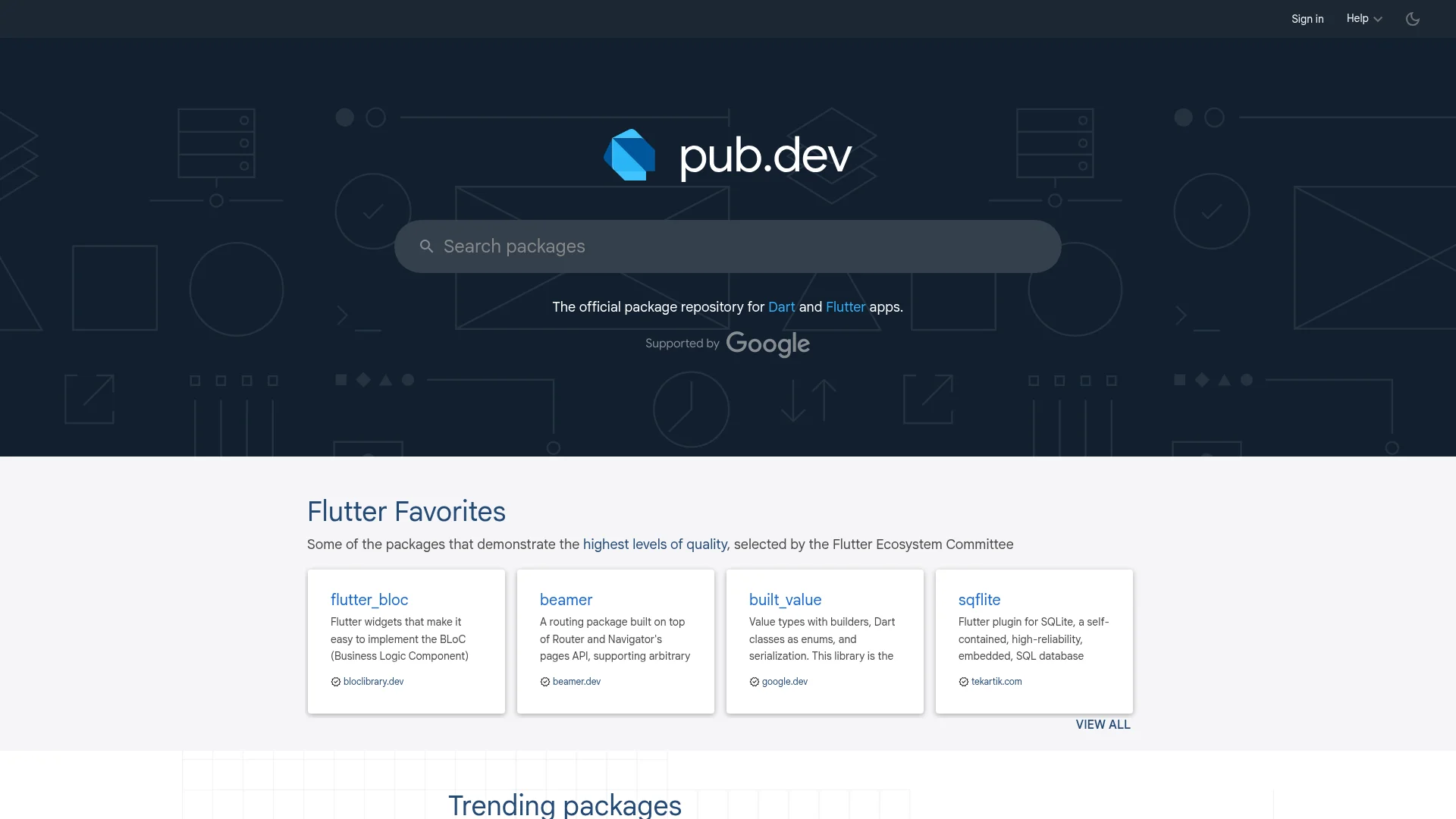
Flutter has over 45,000 packages on pub.dev, including first-party support for Firebase, Supabase, and Google APIs. The Dart package ecosystem is focused exclusively on Flutter, so package quality tends to be consistent. However, niche or enterprise integrations sometimes lag behind JavaScript equivalents.
React Native taps into the entire npm ecosystem (2M+ packages), plus the React ecosystem specifically. Tools like Redux, Zustand, React Query, and Expo modules are battle-tested at scale. Expo (now at SDK 54) provides managed workflows, over-the-air updates, and pre-built modules that reduce native configuration. The sheer breadth of JavaScript tooling is hard to match.
Verdict: React Native benefits from the broader JavaScript ecosystem. Flutter's smaller but more focused package ecosystem offers strong quality for common use cases.
Developer Experience and Learning Curve

Flutter offers hot reload (sub-second), comprehensive documentation, and a consistent development toolkit. Dart is easy to learn for developers with Java, C#, or TypeScript experience. The framework is opinionated, which reduces decision fatigue but requires learning Dart from scratch. Most developers become productive in 2-3 months. DevTools provide built-in performance profiling, widget inspection, and memory analysis.
React Native is a natural fit for teams already using JavaScript or TypeScript. Fast Refresh (hot reload equivalent) works reliably with the Metro bundler. The learning curve is lower for web developers since React patterns transfer directly — most become productive in 1-2 months. Building custom native modules requires Swift/Kotlin knowledge, but Expo's managed workflow eliminates this for most use cases.
Factor | Flutter | React Native |
|---|---|---|
Primary language | Dart | JavaScript / TypeScript |
Time to productive | 2-3 months | 1-2 months (with JS/React) |
Hot reload | Sub-second | Fast Refresh |
Type safety | Sound null safety (compile-time) | TypeScript (opt-in) |
OTA updates | Limited | Mature (Expo EAS Update) |
IDE support | VS Code, Android Studio, IntelliJ | VS Code, WebStorm, any JS IDE |
Verdict: React Native has a lower barrier for JavaScript/web teams. Flutter has a lower barrier for mobile-first or strongly-typed language backgrounds. Both have excellent tooling. React Native's OTA update story (push fixes without app store review) is a meaningful advantage for fast-moving teams.
Platform Coverage
Flutter targets six platforms from a single codebase: iOS, Android, web, Windows, macOS, and Linux. Desktop support is stable as of 2025, and web support continues to improve with the CanvasKit and Skwasm renderers.
React Native targets iOS and Android natively. Web support comes through React Native Web or simply sharing business logic with a Next.js or Remix web app (since it is all React). Desktop support exists via React Native Windows and React Native macOS (both maintained by Microsoft), though adoption is smaller than Flutter's desktop story.
Verdict: Flutter has broader official platform coverage from a single codebase. React Native covers mobile well and leverages the React ecosystem for web, but desktop support is less mature.
Community and Job Market
Both frameworks have large, active communities, but the numbers differ.
Metric | Flutter | React Native |
|---|---|---|
GitHub stars | ~170,000+ | ~122,000+ |
Developer market share | ~46% | ~35-38% |
Primary backer | Meta | |
Stack Overflow questions | ~200,000+ | ~220,000+ |
Available developers (global) | Growing rapidly | Larger existing pool (67% of devs know JS) |
Flutter has grown rapidly in GitHub stars, community events, and developer market share (Statista 2026). React Native benefits from the massive existing JavaScript developer pool — 67% of developers already know JavaScript (Stack Overflow 2024). Both have strong enterprise adoption and active conference ecosystems.
It is worth noting that Kotlin Multiplatform (KMP) has emerged as a third option, growing from 7% to 23% adoption in 18 months. KMP shares business logic via Kotlin while using native UI, making it appealing for teams already invested in native Android development.
Real-World Apps Using Each Framework
The best proof of a framework is what has been shipped with it.
Flutter apps: Google Pay, BMW companion app (30+ countries), Nubank (70M+ users), eBay Motors, Alibaba, Philips Hue, ClickUp, LG webOS TVs, and the Ubuntu desktop installer.
React Native apps: Instagram, Discord (200M+ MAU), Shopify (86% shared code across platforms), Tesla vehicle app, Walmart, Bloomberg, Pinterest, and Microsoft Office on Windows.
Both frameworks power apps serving hundreds of millions of users. For a deeper look at what is possible with React Native specifically, see our list of 15 React Native app examples.
When to Choose Flutter vs React Native
Choose Flutter if:
You need pixel-perfect consistency across iOS, Android, web, and desktop
Your app is design-heavy with complex custom animations
You are building for six platforms from one codebase
You need on-device ML with low latency
Your team is comfortable learning Dart or comes from Java/C# backgrounds
Choose React Native if:
Your team already knows JavaScript, TypeScript, or React
You want native platform look and feel, including new OS features like Liquid Glass
You need to share code between mobile and an existing React web app
You need OTA updates to push fixes without app store review
You rely on cloud AI APIs or the npm ecosystem for third-party integrations
Skip both if: You want to build a mobile app without writing code. No-code platforms let you go from idea to published app without choosing a framework at all.
Frequently Asked Questions
Is Flutter or React Native better for beginners?
It depends on your background. Web developers will find React Native easier since it uses JavaScript and React patterns — most become productive in 1-2 months. If you are new to programming entirely, Flutter's opinionated structure and comprehensive docs can reduce decision fatigue, though expect 2-3 months to get comfortable with Dart.
Can Flutter and React Native apps match native performance?
Yes. Flutter's Impeller engine delivers 60-120 fps with no shader jank, and benchmarks show ~45 MB memory baseline on iOS. React Native's New Architecture enables synchronous native calls, matching native app performance for most use cases. Both frameworks are used in apps with hundreds of millions of users.
Which framework has more job opportunities in 2026?
React Native currently has more job listings due to the larger JavaScript developer market (67% of developers know JS). Flutter job postings are growing faster year-over-year, and Flutter's developer market share has reached ~46%. Both are in demand.
Does React Native support Apple's Liquid Glass design?
Yes. React Native can use Liquid Glass through native modules like @callstack/liquid-glass (requires RN 0.80+ and Xcode 26) or via Expo SDK 54's GlassEffect API. Flutter cannot natively support Liquid Glass since it renders its own UI rather than using platform components.
How much does it cost to build an app with Flutter vs React Native?
A typical MVP costs $50,000-65,000 with Flutter and $55,000-73,000 with React Native, with Flutter slightly cheaper due to faster development cycles. Both save 30-50% compared to maintaining separate iOS and Android codebases. Annual maintenance runs $10,000-20,000 for either framework.
Conclusion
In 2026, both Flutter and React Native are production-ready, well-supported, and used by the world's largest companies. Flutter excels at design-forward, multi-platform consistency with strong on-device ML support. React Native excels at native platform integration, OTA updates, and leveraging the JavaScript ecosystem. The best choice is the one that matches your team's skills and your product's requirements.
Nafis Amiri
Co-Founder of CatDoes


