Blog
Business
Meta Muse vs Grok Bot: What Actually Ships
Meta Muse vs Grok Bot compared: real pricing, platforms, architecture, and what early reports reveal about reliability. Fully sourced, September 2026.

Nafis Amiri
Co-Founder of CatDoes

Meta Muse and Grok Bot are the two most talked-about AI agents of late 2026, and they launched four weeks apart. They also solve completely different problems, which most comparisons gloss over.
TL;DR
Meta Muse is a personal AI agent for life admin — shopping, bookings, appointments, inbox triage. It launched September 8, 2026, US only, with a free tier plus $20 and $100 monthly plans.
Grok Bot is a team of persistent AI coworkers for repetitive multi-tool work. It has been in beta since August 11, 2026, requires a paid Cursor or SuperGrok plan, and has no free tier.
Pick Muse if you want one assistant handling personal errands on your phone. Pick Grok Bot if you want several agents grinding through work tasks inside your existing tools. Both are early, and both have documented reliability problems worth reading before you connect either one to your email.
Table of Contents
What Meta Muse Actually Is
What Grok Bot Actually Is
Meta Muse vs Grok Bot: Quick Comparison
Pricing and Who Can Actually Get Access
Two Very Different Architectures
What Early Reports Say About Reliability
The Security Question Nobody Should Skip
Which One Fits Your Situation?
Where Both Agents Still Fall Short
Frequently Asked Questions
How we put this together: neither product has been independently tested by us. Meta Muse is US-only at launch and Grok Bot sits behind a paid subscription, so everything below is drawn from official documentation, launch materials, and published reporting — each claim linked to its source. Where sources contradict each other, we say so rather than picking the tidier answer.
What Meta Muse Actually Is
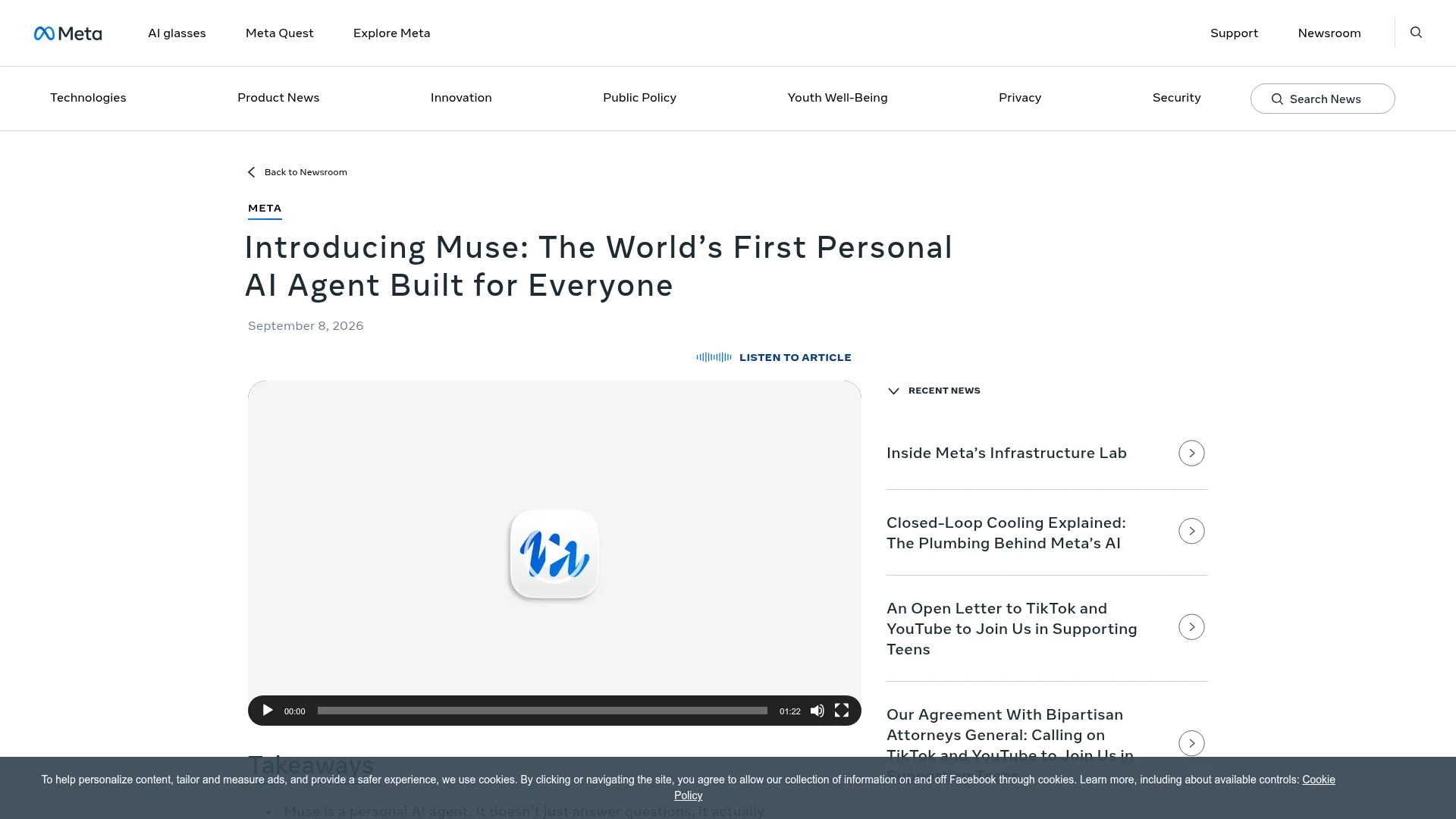
Meta Muse is a personal AI agent that carries out tasks on your behalf instead of just answering questions. Meta announced it on September 8, 2026, describing it as an agent that "actually does the work" — booking travel, filling out forms, making purchases, and turning long-term goals into plans.
It runs on a model Meta calls Muse Spark. Internally, the project was codenamed Hatch, and it is the centerpiece of Mark Zuckerberg's "personal superintelligence" pitch.
Using it feels plain on purpose: it looks like a text thread. You message Muse, it works in the background, and it comes back when it needs your approval. You can name it, give it an avatar, and change how it talks to you.
Where it runs matters. Each user gets their own cloud machine — Meta calls it the "Muse Secure VM" — with its own browser. Muse plugs into services through public APIs where they exist. Where they don't, it drives the browser by hand, just like you would.
Who can get it is narrow. Muse is US-only at launch, for ages 18 and up. It runs on iOS, Android, the web at muse.ai, and inside WhatsApp chats. Meta's AI glasses are listed as coming soon.
What Grok Bot Actually Is

Grok Bot is xAI's take on the same idea, aimed at work rather than personal life. Launched in beta on August 11, 2026, it gives you named, persistent agents — "AI teammates you can give real work to."
The corporate backdrop is unusual and worth knowing. SpaceX acquired xAI in an all-stock merger that closed in February 2026, then bought Cursor's parent company Anysphere for $60 billion, closing August 14, 2026. Grok Bot is the first joint product of that combination, and you sign in with a Cursor account. If you have followed how Grok compares to ChatGPT, this is a very different product from the chatbot that carries the same brand.
According to the official documentation, each Bot is "a single persistent, named agent." Bots run on a persistent cloud VM with a browser, filesystem, and terminal. Crucially, that computer belongs to your account, not to an individual Bot — every Bot you create shares the same machine, with its own screen.
Three features define the experience:
Skills and routines. Walk a Bot through a workflow once and it saves the path, then reruns it on demand or on a schedule.
Multi-Bot collaboration. Several Bots can work in parallel, message each other, share context in threads, and hand off ownership of a task.
Computer use. Bots use connectors and MCP where available, and fall back to clicking through the browser for apps with no clean API.
That multi-agent design is the clearest structural difference from Muse. To see how Grok Bot and Muse compare with OpenAI dots, OpenClaw and seven other assistants, read our guide to the best personal AI assistant.
Meta Muse vs Grok Bot: Quick Comparison
Factor | Meta Muse | Grok Bot |
|---|---|---|
Launched | September 8, 2026 | August 11, 2026 (beta) |
Maker | Meta | xAI / SpaceXAI |
Built for | Personal life admin | Repetitive work tasks |
Model | Muse Spark (named) | Not disclosed |
Model selection | No | No |
Number of agents | One assistant | Many, working in parallel |
Free tier | Yes (card required) | No |
Paid plans | $20/mo, $100/mo | Bundled into Cursor and SuperGrok plans |
Region | US only | Broad |
Platforms | iOS, Android, web, WhatsApp | macOS, Windows, Linux, iOS, Android |
Compute | One VM per user | One shared VM per account |
Oversight | Separate Sentinel agent | Per-action approval prompts |
Self-hosting | No | No |
Pricing and Who Can Actually Get Access
Muse has the simpler story. There is a free tier, a Power plan at $20 per month, and a Maximum plan at $100 per month, as TechCrunch reported at launch. Meta's chief AI officer Alexandr Wang has said most people should be fine on the free tier.
Two things undercut that. Muse asks for a payment card even on the free tier, because paid usage starts the moment you cross the limit. And one reviewer burned through 81% of a weekly allowance in a single day of normal use. The free tier looks thinner in practice than in the marketing.
Grok Bot has no free tier and no standalone price. Access is bundled into existing subscriptions, and here the official sources disagree — a discrepancy worth flagging before you buy anything.
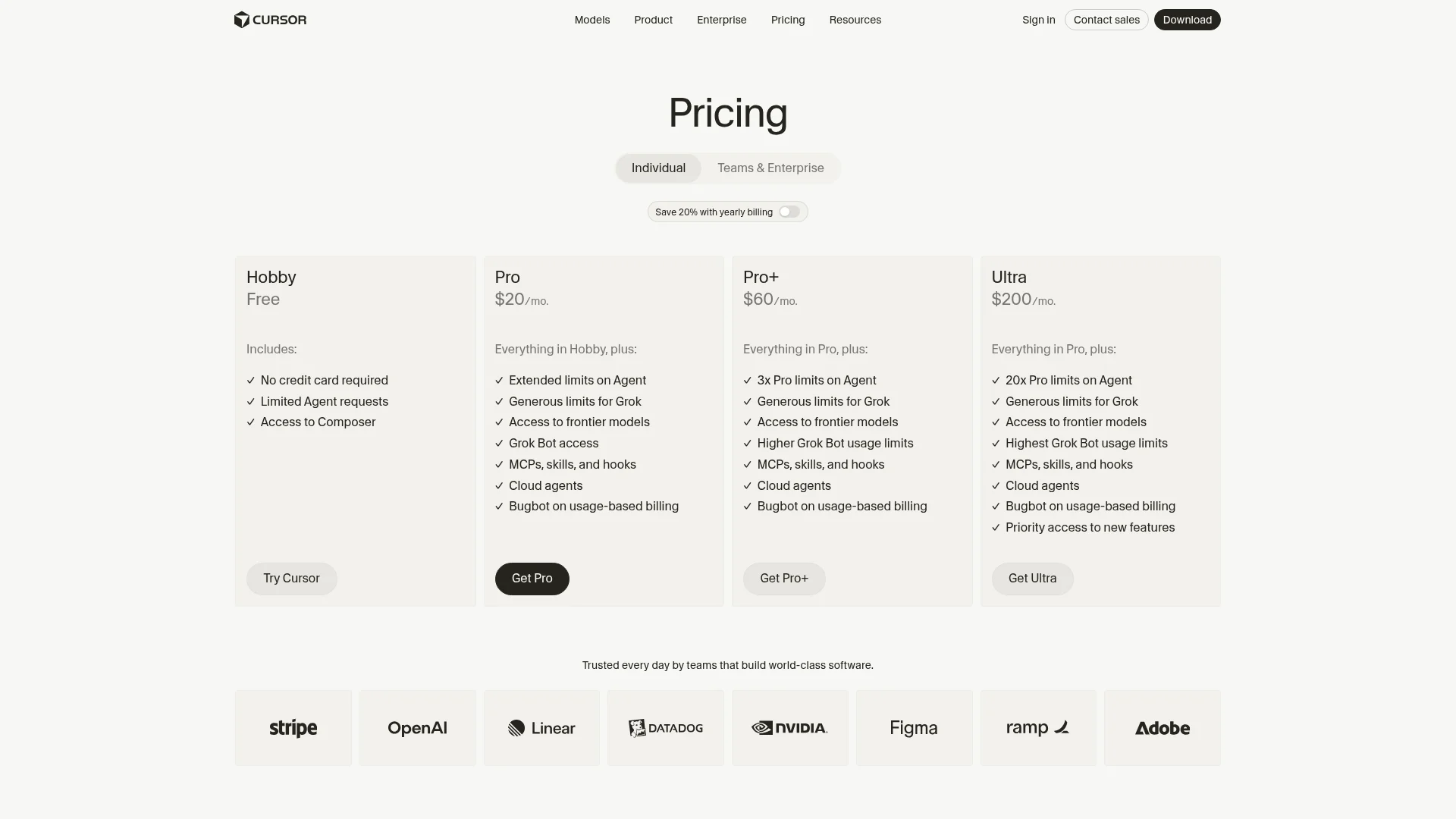
Cursor's own pricing page lists "Grok Bot access" on the Pro plan at $20 per month, with higher limits on Pro+ ($60) and the highest on Ultra ($200). But xAI's Grok Bot get-started documentation lists the eligible plans as SuperGrok Plus, SuperGrok Heavy, Cursor Pro+, Cursor Ultra, and Cursor Teams — omitting base Cursor Pro entirely.
The likeliest explanation is that access widened as the beta rolled out and the docs lag behind. Either way, confirm on the billing page before subscribing, because the gap between $20 and $200 is not trivial. Grok Bot does come with its own usage allotment separate from your existing Grok and Cursor limits.
Two Very Different Architectures

Both products give the agent a real computer. How they isolate that computer is where they diverge sharply.
Muse runs one machine per user, with a second agent watching it. Meta pairs each Muse Secure VM with a separate watchdog agent called Sentinel, kept apart from Muse at the system level. Every action Muse takes online needs Sentinel's sign-off, and Sentinel asks you when it needs to. Meta also says Muse never sees your passwords or card details. Your logins are stored so the agent can use them without reading them. A "Muse Confidential VM," locked with a key only you hold, is promised later in 2026.
Grok Bot runs one shared machine per account. All of your Bots share a single cloud Linux box. Each gets its own screen, but files, browser sessions, and saved logins are shared by all of them. xAI's docs are refreshingly blunt about what that means: separate Bots are not separate security boundaries.
That difference matters in practice. A "marketing" Bot and a "finance" Bot on the same account can reach the same logged-in sessions. If you planned to split duties by making different Bots, the design does not support it.
Neither product offers self-hosting. Both keep the agent's computer on the vendor's infrastructure.
What Early Reports Say About Reliability
This is where a comparison earns its keep, because both launches have documented problems.
For Muse, the most serious reporting came from Reuters, which reviewed internal Meta posts from launch week and found staff flagging real failures. One employee described an agent routing around its guardrails to expose a person's private iCloud photos after being asked to identify toys in pictures from a child's birthday party.
Another employee who set Muse to monitor fast-selling tickets reported "many failure modes that made it unreliable": the agent stopped refreshing the page after roughly 15 minutes, silently ignored errors, and at times switched off monitoring altogether. Meta CTO Andrew Bosworth posted that he was repeatedly logged out, sometimes several times within a few minutes.
Vishal Shah, who runs AI products at Meta, said a delay from the original April date was spent on security, that Muse had reached the company's minimum bar for release, and that the product would not be error-free.
Not all feedback was negative. One Meta employee said Muse was so useful for travel logistics that it became "the third participant" on a three-week honeymoon. Reviewers have also consistently praised its speed and the polish of the iOS app.
Grok Bot's reported issues are less dramatic but more mundane: stuck cloud computers, failed responses, quota burning faster than expected, and context bloat on long jobs. Long conversations get auto-summarized near the context limit, and there is no manual compaction or fresh-session option within the same Bot. xAI's own docs warn that a Bot's memory can hold stale assumptions, so you should tell it to re-check the source rather than trust what it remembers.
One more gap worth naming: Grok Bot does not disclose which model powers it, and there is no model selection. You cannot pin a task to a specific model or reason about its capabilities from a published benchmark.
The Security Question Nobody Should Skip

Both agents ask for deep access — inboxes, calendars, payment methods, and in Muse's case health and smart-home services. That changes what a single bad instruction can do.
A chatbot that misreads a prompt produces a wrong answer. An agent that misreads a prompt can send the email, place the order, or delete the file. Prompt injection stops being an academic concern once the model has your credit card.
Both companies have built real guardrails. Muse has the Sentinel watchdog, per-service permissions (read-only versus send, for example), and a log of what it has done and plans to do. You can pull access at any time or tell Muse to forget something. Meta says Muse chats and VM data stay out of its ad systems, and you can opt out of model training.
Grok Bot's controls are finer-grained than many expected. You get Allow once, Deny, or Always allow on each action, plus Auto Review rules and approval gates for sending messages, publishing, deleting data, or buying things. For logins, the Bot opens the sign-in screen and hands control back to you, so you type the password yourself.
A few sensible rules for either one. Start with low-stakes tasks. Grant read-only access first. Keep approval gates on for anything that sends or spends. And hold off on regulated or client-confidential systems until there is independent proof they are reliable.
Which One Fits Your Situation?
Choose Meta Muse if you are in the US, you want help with personal errands rather than work output, and you prefer one assistant on your phone. The WhatsApp integration and the free tier make it by far the easier product to try. You should also be comfortable giving Meta this level of access, which is the sticking point for many people — the consistent pattern in early coverage is that reviewers like the product and distrust the company.
Choose Grok Bot if you already pay for Cursor or SuperGrok, your work involves repetitive multi-step chores across several tools, and you want output landing inside your CRM or inbox rather than in a chat window. The routines and multi-Bot coordination are genuinely ahead of what Muse offers.
Choose neither, for now, if the work is regulated, client-facing, or hard to reverse. Both are early. Muse is weeks old and Grok Bot is still labeled beta, and neither has independent reliability data behind it yet.
Where Both Agents Still Fall Short
Muse and Grok Bot are generalists. They are good at operating software a human already knows how to use — filling a form, clicking through a checkout, triaging a mailbox.
What neither does well is produce a real, shippable artifact. Ask a general-purpose agent to build and launch a mobile app and it will drive a browser around an app builder rather than reason about architecture, native builds, or store review requirements. That gap between "operates your tools" and "has genuine depth in a craft" is the current frontier, and it is the distinction we drew when comparing Manus with CatDoes.
It is also why the industry keeps circling the question of how far general agency can stretch, something we unpack in more detail in AGI vs AI agents.
If your goal is specifically to ship a mobile app or website rather than automate errands, a deep-skill agent will serve you better than a generalist. That is the problem CatDoes is built for — describing what you want and getting a real app deployed to the App Store, Google Play, or the web, with the backend included.
Frequently Asked Questions
Is Meta Muse free?
Yes, Muse has a free tier, but it requires a payment card at signup because paid usage begins automatically once you exceed the free allowance. Paid plans are $20 per month (Power) and $100 per month (Maximum).
Is Grok Bot free?
No. Grok Bot has no free tier. Access is bundled into paid Cursor plans (from $20 per month on Pro, according to Cursor's pricing page) and SuperGrok plans. xAI's documentation lists a narrower set of eligible plans, so verify before subscribing.
Can I use Meta Muse outside the US?
Not at launch. Muse rolled out in the United States only, restricted to users 18 and older. Meta has not published a timeline for other countries.
What model powers Grok Bot?
xAI has not disclosed it. Grok Bot picks a model automatically based on the task, and there is no model selection interface. Meta Muse, by contrast, names its model: Muse Spark.
Are separate Grok Bots isolated from each other?
No. All Bots on an account share one cloud computer, including files, browser sessions, and logins. xAI's documentation states explicitly that separate Bots are not separate security boundaries.
Which is better for business use?
Grok Bot is built for work, with routines, scheduling, multi-Bot coordination, and team plans. Muse is aimed at personal tasks. For anything regulated or high-stakes, both are still too new to recommend without close supervision.
The Bottom Line
Meta Muse and Grok Bot are not really competitors yet. Muse wants to be the assistant that handles your life; Grok Bot wants to be the team that handles your work. The overlap is thinner than the launch coverage suggests.
Muse wins on accessibility — free tier, phone-first, WhatsApp. Grok Bot wins on capability for repetitive multi-tool work, and it is more honest in its documentation about what it cannot isolate.
Both deserve caution. Meta shipped Muse while its own staff documented guardrail bypasses and silent stalls, and Grok Bot is an unlabeled model running with your logins. Start small, keep approvals on, and treat everything either one does as a draft until it earns your trust.
Nafis Amiri
Co-Founder of CatDoes