Blog
Insights
7 Best Bubble Alternatives 2026 (Own Your Code in 2026)
The best Bubble alternatives in 2026 that let you own and export your code. Compare CatDoes, Lovable, Bolt.new, FlutterFlow and more for native mobile apps.

Nafis Amiri
Co-Founder of CatDoes

TL;DR: The best Bubble alternatives in 2026 are the ones that hand you real, exportable source code instead of locking your app inside proprietary infrastructure. Bubble never exports code, and its Workload Unit pricing gets unpredictable as you grow. If you want to own what you build, and ship native iOS and Android apps instead of just web, tools like CatDoes, Lovable, Bolt.new, and FlutterFlow are stronger picks. Below we rank seven alternatives by what they actually output and who each one fits.
Table of Contents
Why Builders Are Leaving Bubble in 2026
What "Own Your Code" Actually Means
Quick Comparison Table
1. CatDoes
2. Lovable
3. Bolt.new
4. FlutterFlow
5. WeWeb
6. Appsmith
7. Xano
How to Choose the Right Bubble Alternative
Moving Off Bubble: What to Expect
FAQ
Why Builders Are Leaving Bubble in 2026
Bubble is still one of the most capable visual app builders around. But three problems push people to look elsewhere, and all three get worse as your app succeeds.
You never get your code. This is the big one. Bubble apps run on Bubble's proprietary infrastructure, and there is no source-code export. If you stop paying, your app goes offline. There's no "eject" button, no repo to hand a developer, no way to move to your own servers. You are renting your product, not owning it.
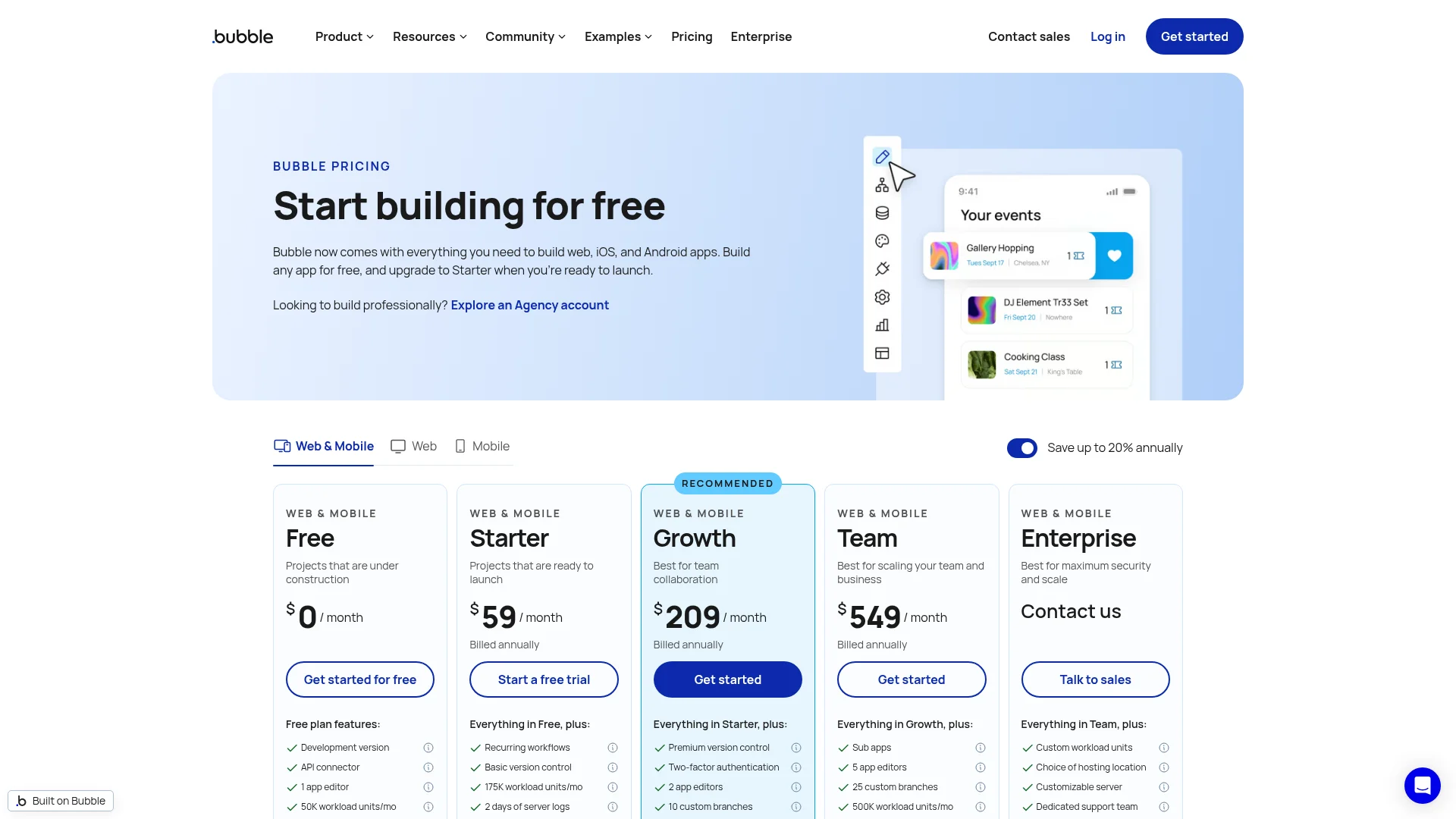
Workload Unit pricing is hard to predict. Bubble's plans run Free ($0), Starter ($29/mo), Growth ($119/mo), and Team ($349/mo) on annual billing, but the subscription is not the real cost. Every database query, workflow, API call, and page load burns Workload Units (WUs). Plans include a monthly allocation (175K on Starter, 250K on Growth, 500K on Team), and an inefficient app can blow through them fast. Overage tiers run roughly $30 per 100K WUs. The result: your bill scales with usage in ways that are tough to forecast before launch.
It's web-first, with no clean native path. Bubble started as a web-app builder. Native mobile arrived later and still isn't the reason most people pick it. If your goal is a real app in the App Store and Google Play, you're fighting the tool instead of riding it.
None of this makes Bubble bad. It makes Bubble a poor fit if you care about ownership, predictable costs, or native mobile. That is exactly why the alternatives below exist.
What "Own Your Code" Actually Means
"Own your code" means the tool produces real, readable source code (React, TypeScript, Flutter, Vue) that you can export, read, edit in any IDE, put under Git version control, and deploy anywhere. It's the opposite of a black box.
Why does it matter? Three reasons:
No lock-in. If the tool disappears or raises prices, your app keeps running because you have the code.
No rebuild ceiling. When you outgrow the visual editor, a developer can take over the codebase instead of starting from zero.
Real portability. Host on Vercel, AWS, or your own server, wherever makes sense. Your infrastructure, your rules.
Across the industry, nearly every serious builder released in 2025 and 2026 offers some form of code or data portability. Bubble is the notable exception, and that gap is the whole reason this list exists.
Quick Comparison Table
Tool | You own the code? | Native mobile apps? | Backend included? | Best for |
|---|---|---|---|---|
CatDoes | Yes (GitHub export) | Yes: iOS, Android, web | Yes (CatDoes Cloud) | Native + web, full ownership |
Lovable | Yes (React/TS) | No (web/PWA) | Yes (Lovable Cloud) | Web apps from prompts |
Bolt.new | Yes (full source) | No (web) | Bring your own | Fast web prototypes |
FlutterFlow | Yes (Flutter export) | Yes: iOS, Android | Firebase/Supabase | Visual native builder |
WeWeb | Yes (Vue export) | No (web) | Xano/Supabase | Web frontend ownership |
Appsmith | Yes (open source) | No (web) | Self-hosted | Internal tools, self-host |
Xano | Data export | N/A (backend only) | It is the backend | Scalable API layer |
Bubble | No | Limited | Yes (proprietary) | Web apps, no ownership |
1. CatDoes
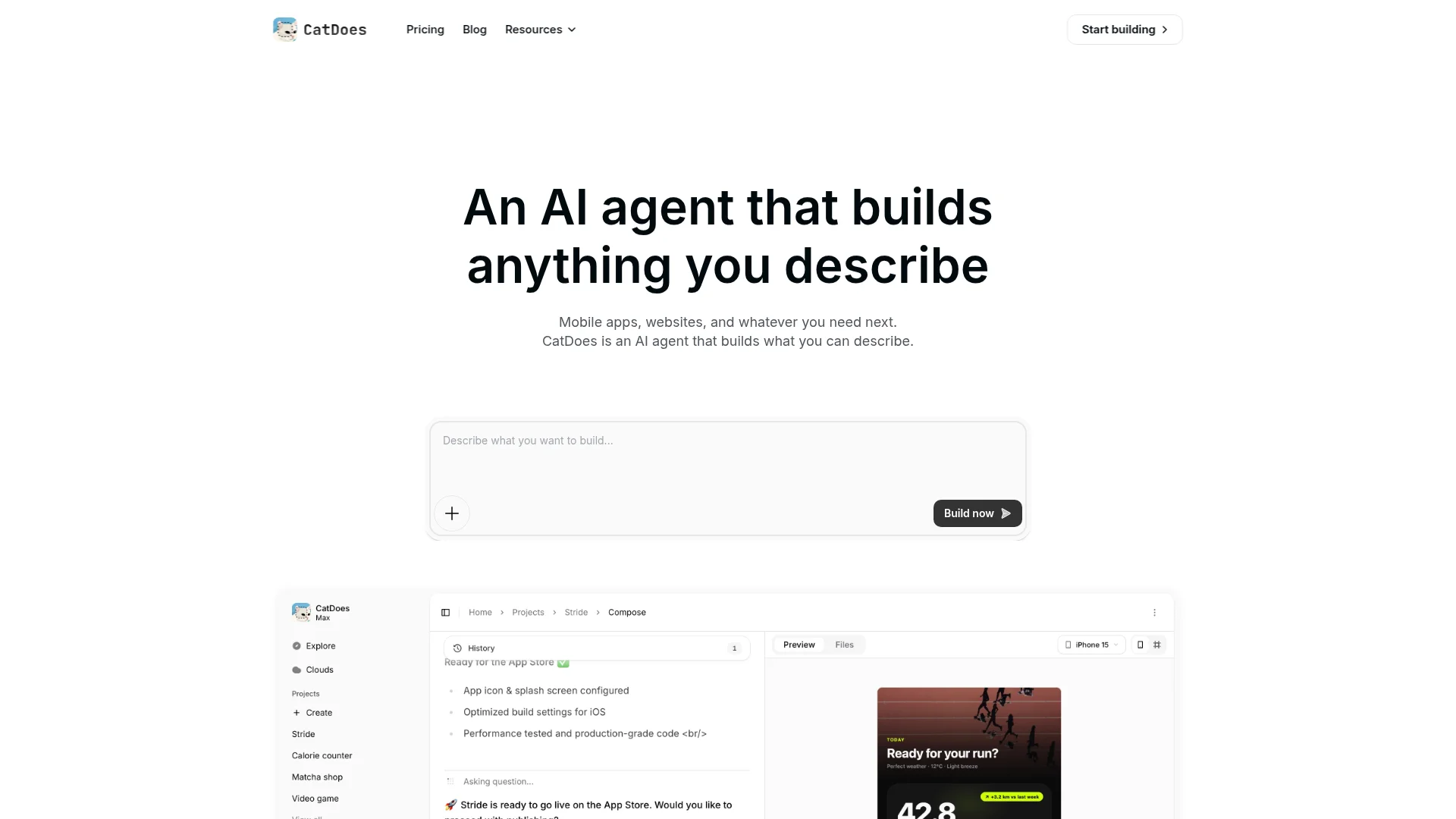
CatDoes is an AI agent that builds mobile apps and websites from plain English, and hands you the code. You describe what you want, the agent builds it in the cloud, spins up subagents to handle the heavy lifting, and ships to the App Store, Google Play, or the web with a custom domain. Every project can sync to GitHub, so the source code is yours from day one.
This is the direct answer to Bubble's two biggest gaps. Where Bubble locks your app inside its own infrastructure, CatDoes gives you a real repo you can export, edit, and deploy anywhere. Where Bubble treats native mobile as an afterthought, CatDoes ships true iOS and Android apps alongside web from the same project. A full backend (database, auth, storage, edge functions, realtime) comes included through CatDoes Cloud, so you're not stitching together three services to launch.
CatDoes vs Bubble: Head-to-Head
CatDoes | Bubble | |
|---|---|---|
Code ownership | Full (GitHub export) | None |
Native iOS + Android | Yes | Limited |
How you build | Describe it in plain English | Drag-and-drop visual editor |
Backend | Included (CatDoes Cloud) | Included (proprietary) |
Pricing model | Monthly credits, no lock-in | Workload Units (usage-based) |
If you stop paying | You keep the code | App goes offline |
Best for: Anyone who wants native apps and a website, built by describing them, with the source code in their own GitHub. See the full breakdown in our CatDoes vs Bubble comparison.
2. Lovable
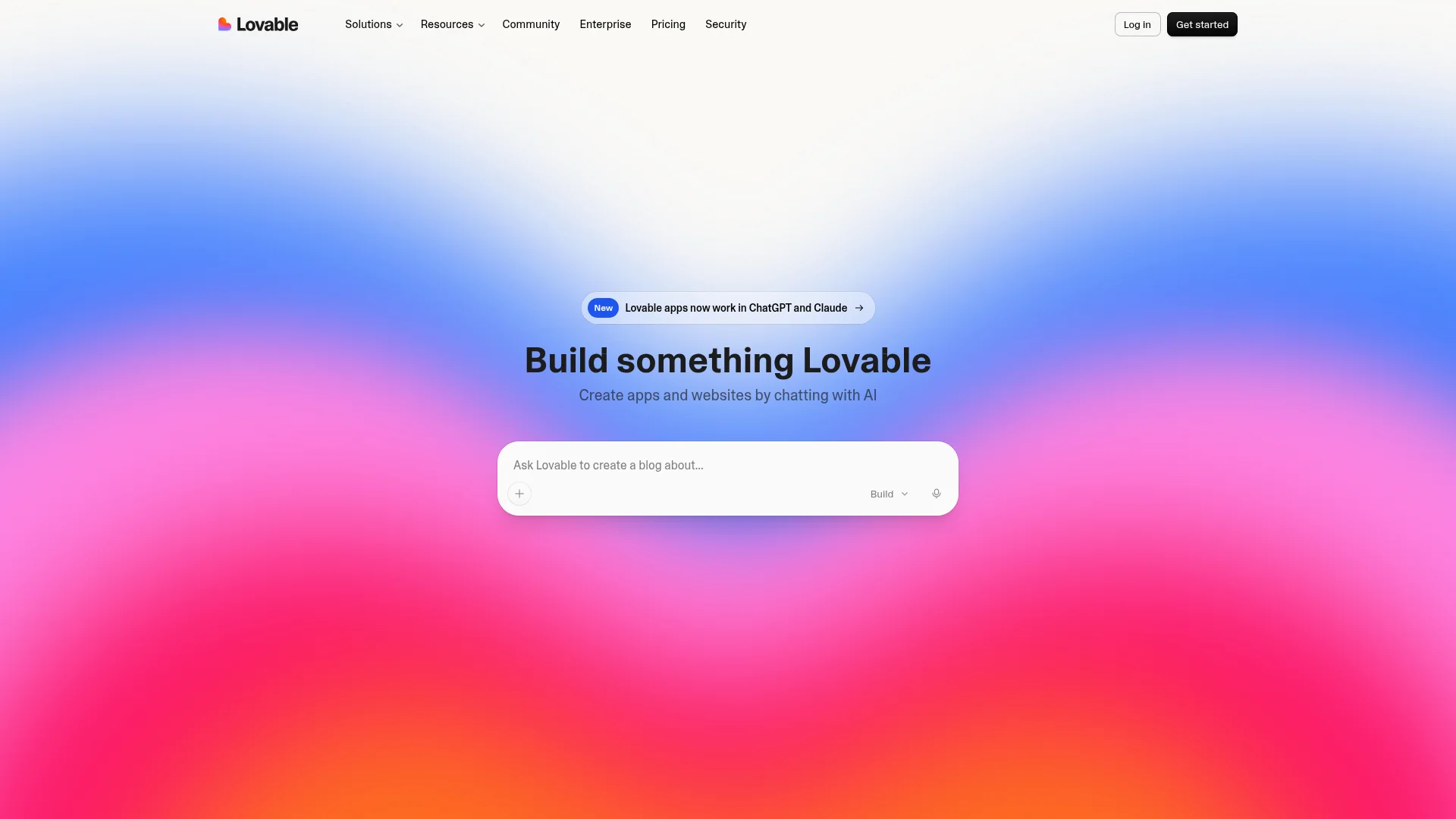
Lovable turns a plain-English description into real React and TypeScript. You iterate by chatting, and the output is actual code you own. Push it to GitHub, open it in any IDE, deploy it anywhere. Lovable 2.0 added Lovable Cloud for backend services, which makes it a more complete full-stack option than it was a year ago.
The catch for Bubble refugees: Lovable is web-first. It builds web apps and PWAs, not native iOS and Android binaries. If native mobile is the goal, you'll want to pair it with a wrapper or pick a tool that ships native directly.
Best for: Founders comfortable with code who want polished web apps generated from prompts.
3. Bolt.new
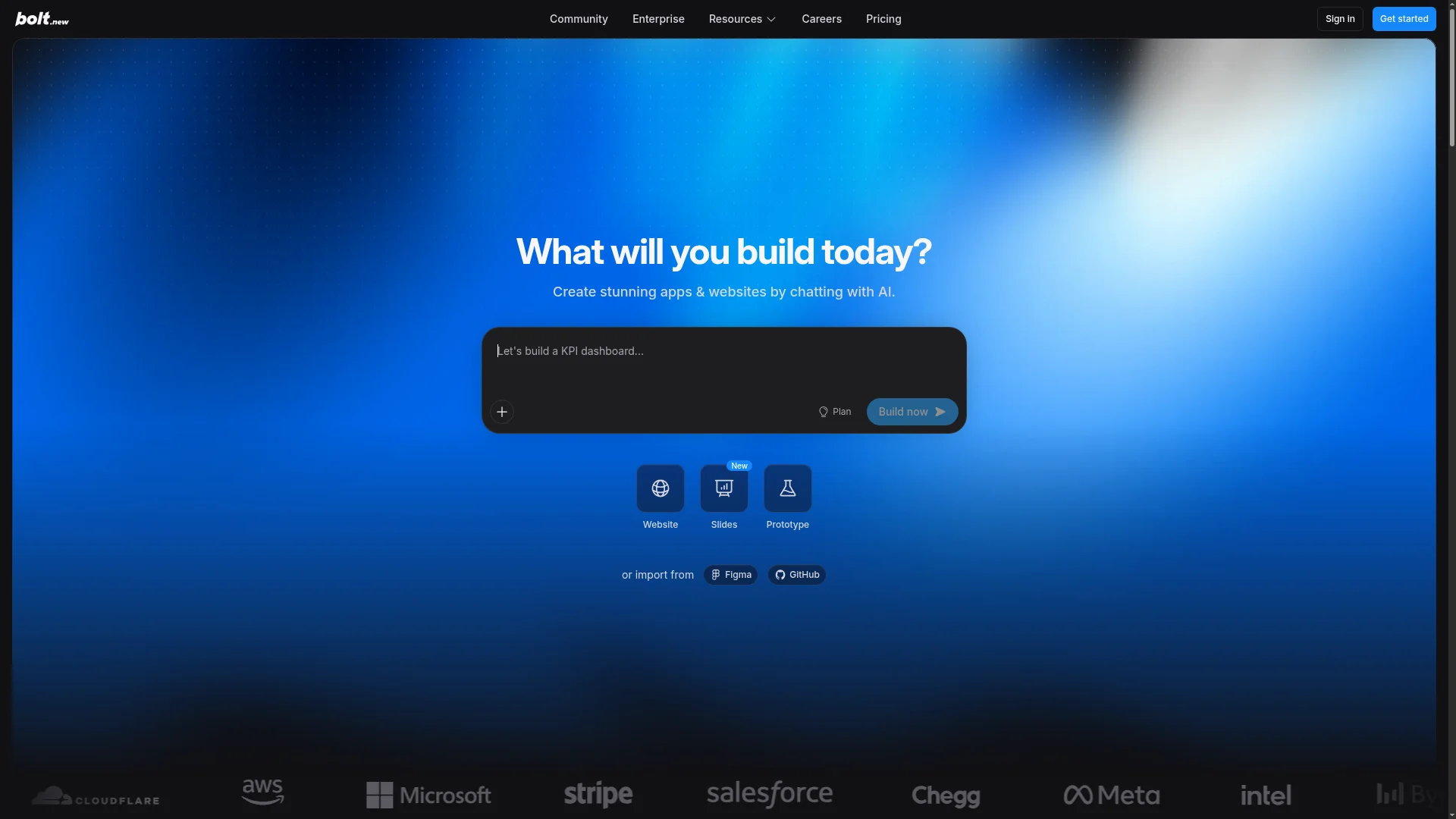
Bolt.new (from StackBlitz) generates full-stack web apps in the browser and gives you the complete source. It's fast, great for spinning up a working prototype in an afternoon, and everything runs in an in-browser dev environment so you see changes instantly.
Like Lovable, it's a web tool. There's no native mobile output, and you'll bring your own backend for anything serious. But for ownership and speed on web projects, it's a clean Bubble alternative.
Best for: Rapid web prototypes where you want the code and don't need native apps.
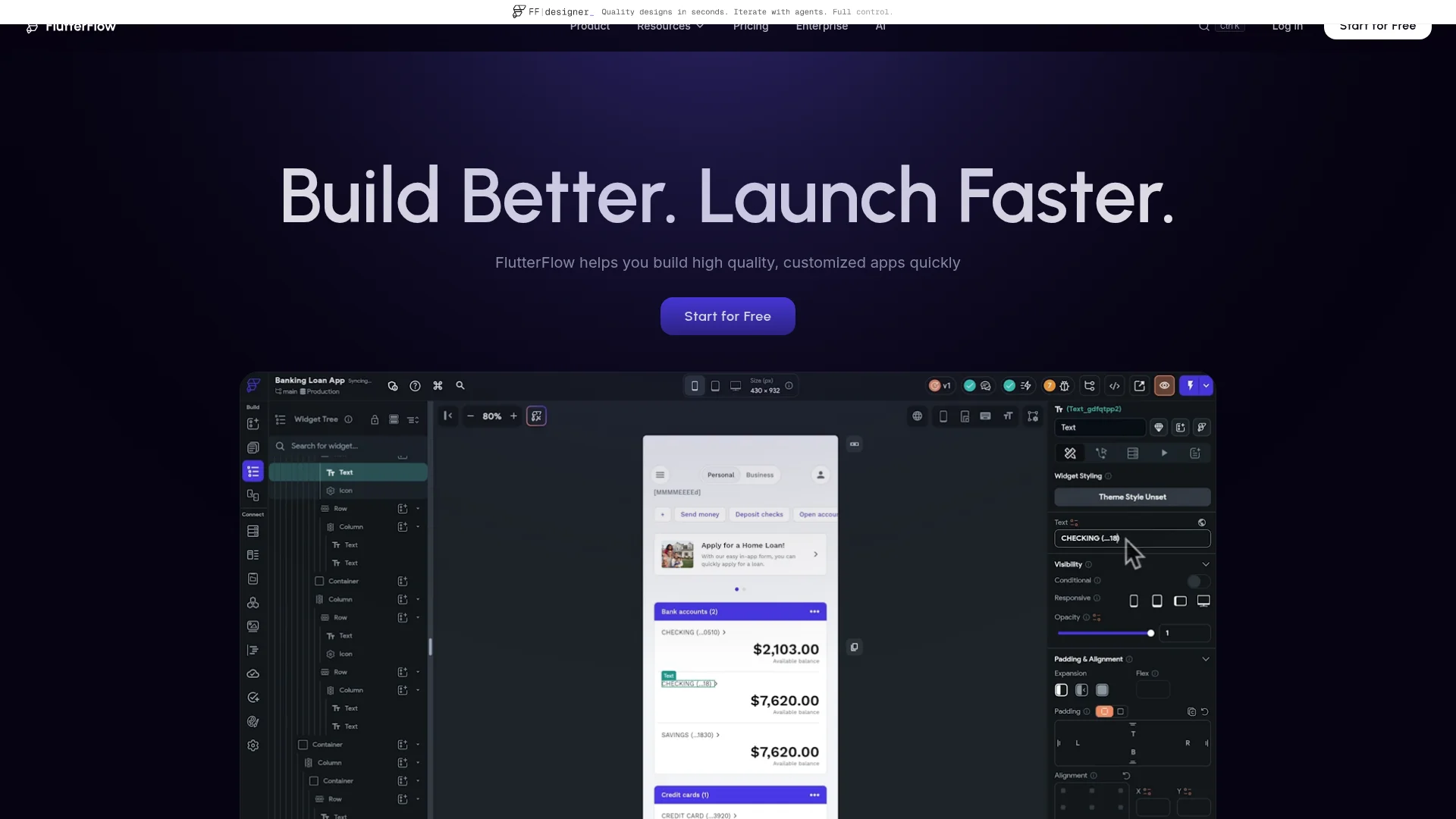
4. FlutterFlow
FlutterFlow is the visual builder that comes closest to replacing Bubble for people who need native mobile. You design the UI, wire up logic visually, and export clean Flutter code that compiles to native iOS and Android from a single project, something Bubble still doesn't offer.
The trade-off: extending the exported code means knowing Flutter (Dart), which is less common than React. Backend usually comes from Firebase or Supabase. But if you want a visual editor and real native ownership, FlutterFlow earns its spot.
Best for: Teams that want a drag-and-drop experience but need native iOS and Android with code export.
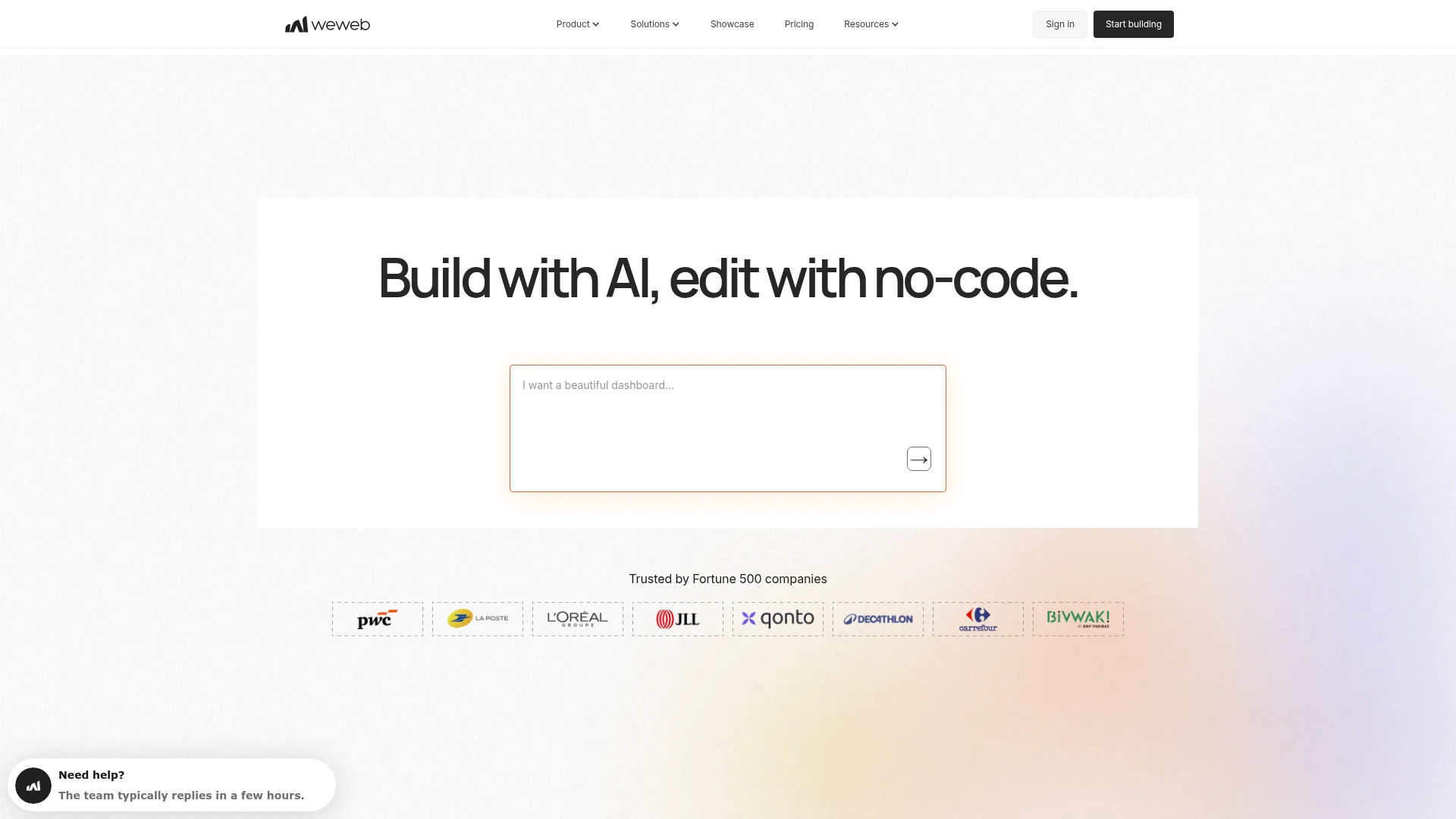
5. WeWeb
WeWeb builds your frontend on standard Vue.js and lets you export clean, readable code to host yourself. It's a strong choice when you want a visual builder but refuse to be locked into proprietary hosting. Pair it with a backend like Xano or Supabase and you've got a portable, ownable stack.
The limitation is the same as most on this list: no native mobile path. WeWeb is a web frontend builder, full stop.
Best for: Web apps where owning a clean, standard-framework frontend matters most.
6. Appsmith
Appsmith is open-source and self-hostable on every tier, which makes it the most portable option here for internal tools. You keep full control of your data and infrastructure because you can run the whole thing on your own servers. For dashboards, admin panels, and internal apps where portability and data control are non-negotiable, it's hard to beat.
It's not built for polished consumer-facing products or native mobile, so scope it to internal use.
Best for: Internal tools and admin panels that must be self-hosted.
7. Xano
Xano isn't a frontend builder. It's a no-code backend. It handles your database, API generation, and server-side logic, and it offers database export so your data stays portable. On its own it doesn't build an interface, but paired with a frontend like WeWeb it forms an ownable, scalable stack that sidesteps Bubble's proprietary backend entirely.
Best for: Adding a scalable, exportable API layer behind another builder.
How to Choose the Right Bubble Alternative
Match the tool to your priority:
You need native iOS + Android and full ownership: CatDoes ships native apps and a website from plain-English prompts, with GitHub export.
You want polished web apps from prompts: Lovable or Bolt.new for real code, web-first.
You prefer a visual editor but need native: FlutterFlow, if you're okay with Flutter.
You want to own a standard-framework frontend: WeWeb (Vue export).
You need self-hosting or internal tools: Appsmith (open source).
You just need a portable backend: Xano behind any frontend.
If you're not sure which type of tool fits your project, our guide to the best AI app builders and our roundup of no-code AI platforms break down the categories in more depth.
Moving Off Bubble: What to Expect
Here's the honest part. Because Bubble doesn't export code, switching away always means rebuilding. There's no automated migration path out. That's frustrating, but it's also the strongest argument for choosing a portable tool now: the sooner your app lives in real code, the less painful any future move becomes.
A practical way to migrate: rebuild the core flows on your new tool, run both in parallel while you test, then cut over your domain and users once the replacement is solid. If your new stack syncs to GitHub, you'll never face a forced rebuild again. If you're bringing work in from another AI builder, our guide on syncing projects with GitHub walks through the import step.
FAQ
Can you export your code from Bubble?
No. Bubble does not offer source-code export. Apps run on Bubble's proprietary infrastructure, and if you stop paying, the app goes offline. This lack of ownership is the top reason people look for alternatives. Ownership matters just as much for terminal-based agents, which we cover in our guide to Claude Code alternatives.
What is the best Bubble alternative in 2026?
It depends on what you're building. For native iOS and Android apps plus a website, with full code ownership via GitHub, CatDoes is the strongest pick. For web apps generated from prompts, Lovable and Bolt.new lead. For a visual builder with native export, FlutterFlow.
Is Bubble expensive?
Bubble's base plans run from $0 (Free) to $349/month (Team) on annual billing. But the real cost driver is Workload Units, usage-based charges for every query, workflow, and page load, which can make bills hard to predict as your app grows.
Which Bubble alternatives let me build native mobile apps?
CatDoes and FlutterFlow both output native iOS and Android apps. Most other alternatives (Lovable, Bolt.new, WeWeb, Appsmith) are web-first, producing web apps or PWAs rather than native binaries.
Do I need to know how to code to use these tools?
No. Tools like CatDoes, Lovable, and Bolt.new build from plain-English descriptions. The difference from Bubble is that you also get real source code, so a developer can take over later if you want, but you don't need to write it yourself to launch.
Own What You Build
Bubble is a capable web builder, but in 2026 the deciding factor is ownership, and native reach. If you want an app in the App Store and Google Play, a website on your own domain, and the source code sitting in your GitHub, describe your idea and let the agent build it. Start building with CatDoes and keep the code.
Nafis Amiri
Co-Founder of CatDoes


