Blog
Insights
Custom Mobile App Development Services (2026)
Custom mobile app development services in 2026: what's included, real cost ranges, engagement models, and how to choose a provider. Build smarter with AI.

Nafis Amiri
Co-Founder of CatDoes

TL;DR: Custom mobile app development services cover everything needed to turn an idea into a shipped, maintained app: discovery, UI/UX design, native or cross-platform development, backend, QA, deployment, and ongoing support. In 2026, a traditional provider charges roughly $15,000 for a simple app and $100,000 to $250,000+ for a complex one, billed through fixed-price, time-and-materials, dedicated-team, or staff-augmentation models. AI-native platforms now deliver the same core build in days for a fraction of the cost, which is why the smartest buyers compare all three paths (agency, freelancer, AI platform) before signing anything.
Hiring the wrong app development partner is expensive. Founders routinely pay $50,000 or more, wait six months, and walk away with an app they do not even own the code to. This guide breaks down exactly what custom mobile app development services include, what they cost in 2026, the four ways providers bill you, and how to vet a partner before you sign, so you can pick the right path with your eyes open.
Table of Contents
What Custom App Development Services Include
How Much These Services Cost in 2026
The 4 Engagement Models (and How to Pick One)
Agencies vs Freelancers vs AI Platforms
How to Choose an App Development Company
The AI-Native Alternative to Hiring a Provider
Frequently Asked Questions
What Custom App Development Services Include
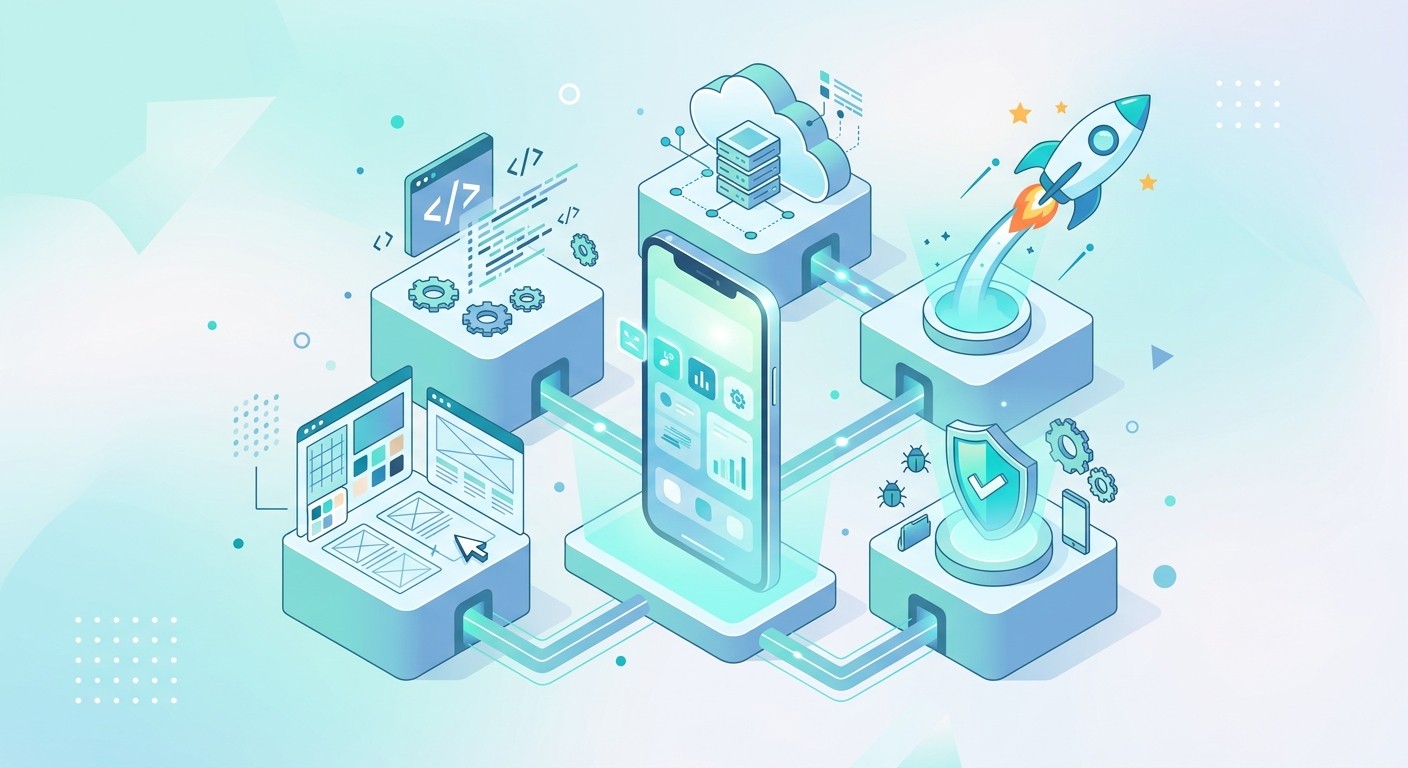
Custom mobile app development services cover the full journey from idea to a live, maintained app. A complete engagement includes seven building blocks, and knowing each one helps you spot what a cheap quote is quietly leaving out.
Discovery and strategy: scoping, user research, feature prioritization, and a technical plan before any code is written.
UI/UX design: wireframes, high-fidelity mockups, and a clickable prototype so you can test the flow early.
App development: the frontend users tap plus the logic that runs it, built native or cross-platform.
Backend and infrastructure: the database, user authentication, file storage, APIs, and cloud servers that power the app.
Quality assurance: functional, performance, usability, and device-compatibility testing to catch bugs before users do.
Deployment: App Store and Google Play submission, store listings, and passing each platform review.
Maintenance and support: bug fixes, OS updates, security patches, and new features after launch.
A quote that covers only "design and development" but skips QA, backend, and maintenance is not a full service, it is a partial one. Ask which of these seven your price actually includes.
Native vs Cross-Platform: A Decision Baked Into Every Quote
One choice shapes your whole budget: native or cross-platform. Native apps are built separately for iOS and Android, giving top performance and full device access, but you pay for two codebases. Cross-platform frameworks like React Native and Flutter share 70 to 90 percent of code across both platforms, cutting frontend cost by roughly 30 to 40 percent.
For most business apps, modern cross-platform builds feel just as smooth as native. For a deeper look at the full process behind these services, see our guide to custom mobile app development.
How Much These Services Cost in 2026
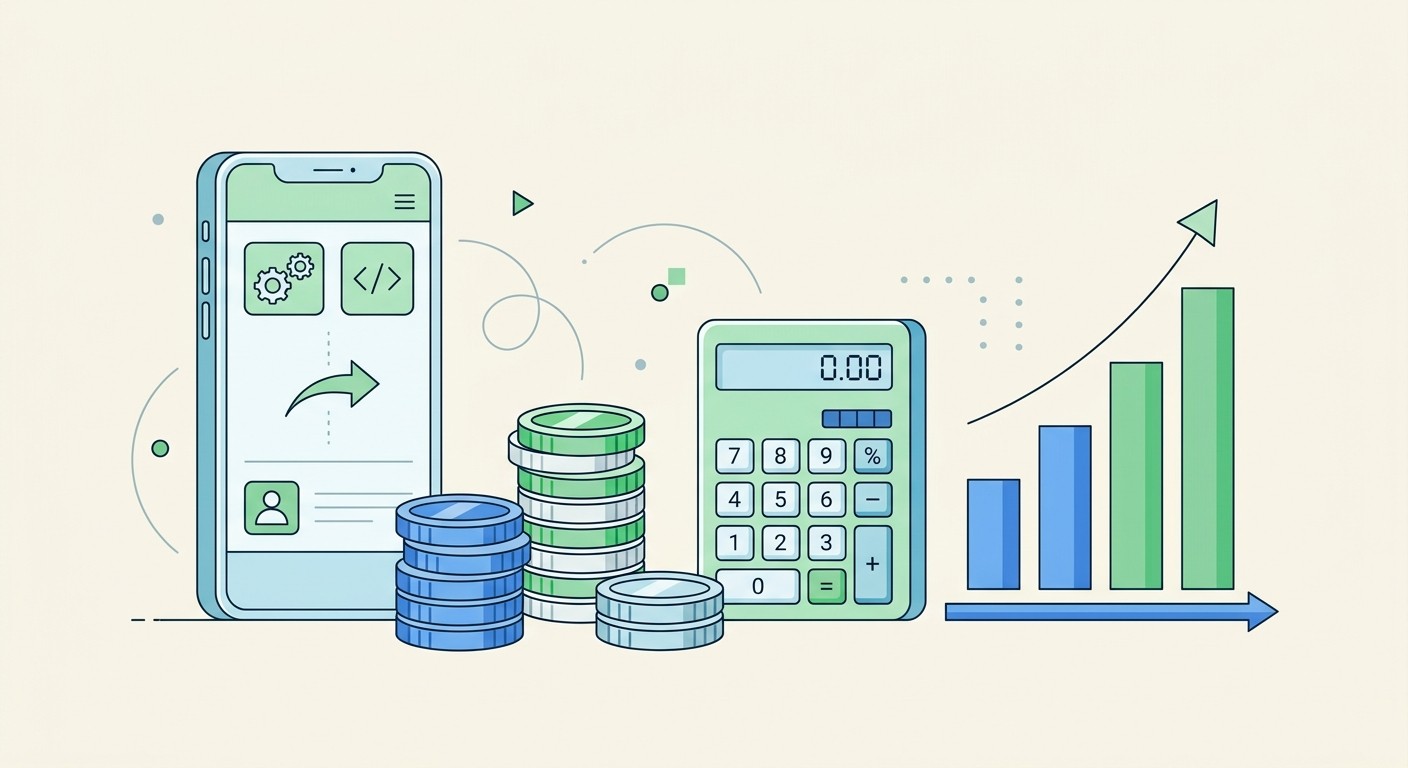
In 2026, custom mobile app development services cost roughly $15,000 for a simple app and $100,000 to $250,000 or more for a complex one. The single biggest driver is complexity: how many screens, how much custom logic, and how many integrations you need.
App Complexity | What It Includes | Typical Cost | Timeline |
|---|---|---|---|
Simple | 3-8 screens, basic features, minimal backend | $15,000-$50,000 | 4-8 weeks |
Medium | Custom UI, API integrations, user accounts, push | $50,000-$150,000 | 2-4 months |
Complex | Real-time data, AI/ML, multi-role, high security | $100,000-$250,000+ | 4-9+ months |
Adding AI or machine-learning features typically layers on another $15,000 to $100,000. These are ballpark ranges, not quotes. As Business of Apps notes, the same "app" can cost $10,000 at one shop and $300,000 at another, because the price depends entirely on what you are building.
Developer Rates by Region
Where your team sits changes the math dramatically. The same mid-level app developer bills very differently across regions:
Region | Typical Hourly Rate (2026) |
|---|---|
North America (US / Canada) | $120-$250+ |
Western Europe | $60-$120 |
Eastern Europe (Poland, Ukraine) | $45-$85 |
Latin America (Brazil, Mexico) | $40-$75 |
South & Southeast Asia (India, Vietnam) | $15-$40 |
Established agencies usually charge $75 to $250 an hour; independent freelancers run $25 to $150. Equally skilled engineers in Eastern Europe or Latin America can cost 60 to 70 percent less than a US hire, which is why nearshore and offshore teams dominate the mid-market. For a fuller breakdown by feature, see our mobile app development cost breakdown.
The Cost Most Buyers Forget: Maintenance
The build is not the finish line. Industry benchmarks put annual maintenance at 15 to 20 percent of the original build cost, so a $100,000 app costs $15,000 to $20,000 a year to keep running. Budget more for year one, since stabilizing a fresh codebase often runs 40 to 50 percent of the build cost. That figure covers cloud hosting, third-party services, bug fixes, OS updates, security monitoring, and app-store compliance.
The 4 Engagement Models (and How to Pick One)
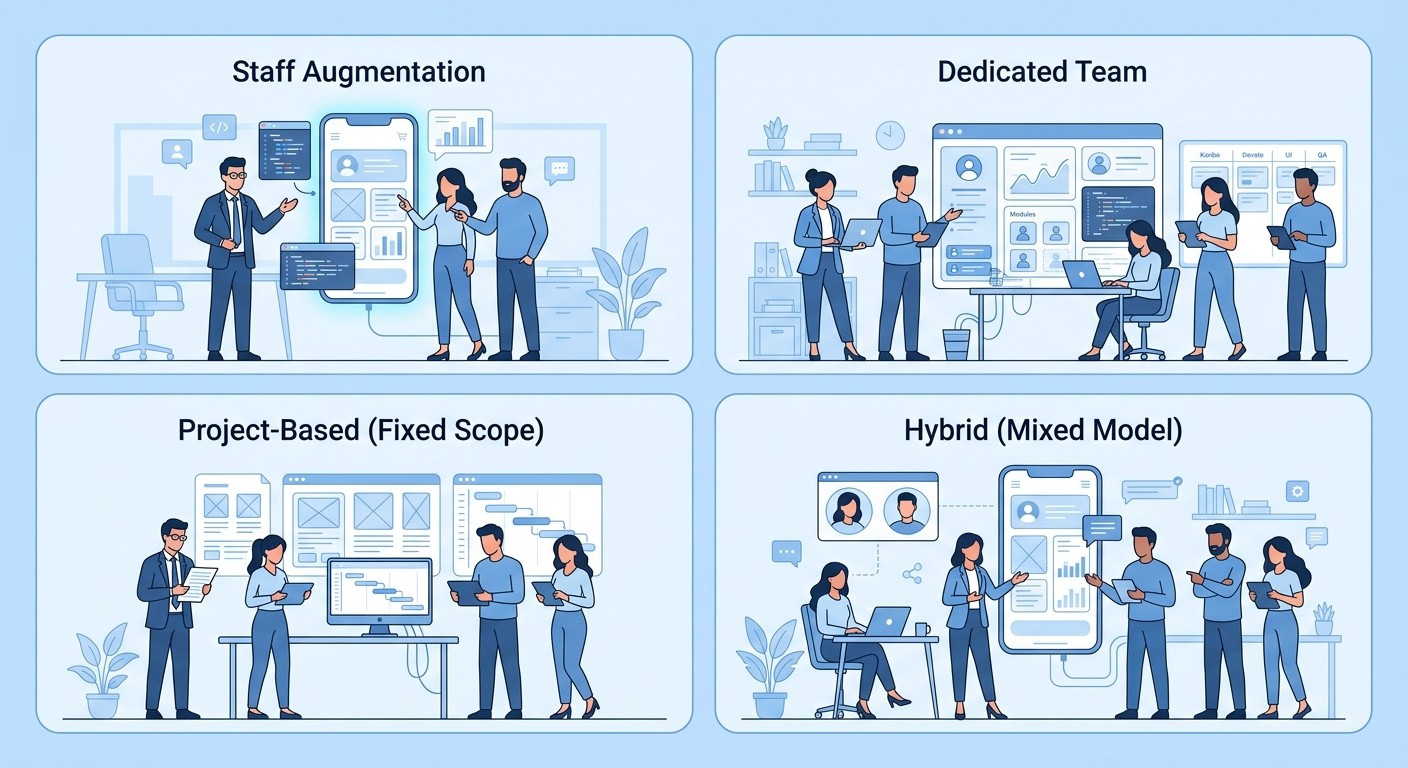
Beyond price, the way a provider bills you decides who carries the risk when scope changes. There are four standard engagement models, plus one hybrid that has become the 2026 default.
Model | How You Pay | Risk Sits With | Best For |
|---|---|---|---|
Fixed price | One agreed total for a defined scope | The vendor | Well-defined, stable projects |
Time & materials | Actual hours at an agreed rate | You (the client) | Evolving or exploratory work |
Dedicated team | Flat monthly fee per team member | Shared | Long-term products (6+ months) |
Staff augmentation | Per specialist added to your team | You | Scaling an existing in-house team |
A quick rule: fixed price wins when the scope is locked, time and materials wins when it is not. Many 2026 contracts now cap time and materials with a not-to-exceed clause, giving you flexibility without an open cheque.
The Hybrid Model Most Providers Now Recommend
For most builds under $300,000, the emerging best practice is a hybrid. A short paid discovery phase produces a detailed scope, wireframes, and a fixed-price quote for the build, with defined acceptance criteria and a 30 to 90 day post-launch warranty. A time-and-materials retainer then covers ongoing iteration and new features. If your provider follows an agile mobile app development process, this pairs naturally with two-week sprints and regular demos.
Agencies vs Freelancers vs AI Platforms
Three kinds of providers deliver custom mobile app development services, and they suit very different budgets and timelines.
Development Agencies
Agencies bring a full team (project manager, designers, developers, testers) under one roof. You get depth and accountability, but it is the priciest route, with high overhead baked into every hour. Best when you need serious expertise and have the budget to match.
Freelancers and Independent Developers
Hiring freelancers directly is cheaper and more flexible, but you become the project manager, and coordinating a designer, an iOS dev, an Android dev, and a backend dev is real work. Best for simple apps or filling a specific skill gap. If you go this route, our guide on how to hire app developers covers rates and where to find them.
AI-Native Platforms
AI-native platforms are the newest option. You describe the app in plain English and AI agents handle design, code, and backend setup, compressing weeks of billable work into hours. Best for founders and small businesses who want to move fast without a five-figure invoice.
Provider | Time to MVP | Upfront Cost | You Manage | Code Ownership |
|---|---|---|---|---|
Agency | 3-6+ months | High | Little | Negotiate it |
Freelancers | 2-5 months | Medium | Everything | Usually yours |
AI-native platform | Days to weeks | Low | The prompts | Yours, exportable |
How to Choose an App Development Company
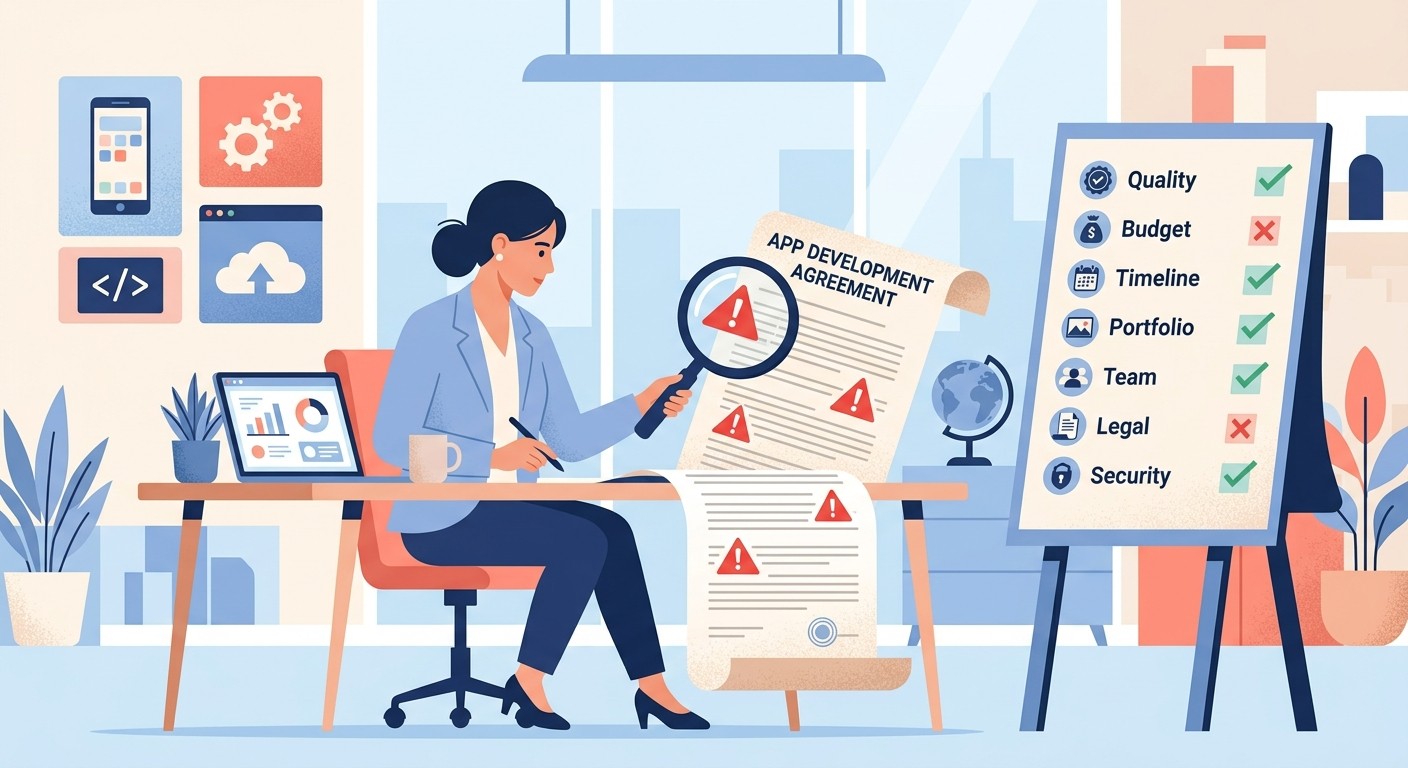
Whichever route you pick, the failure modes are predictable and visible during the sales process, long before you sign. Ask these questions, and watch how they answer.
Can you show two apps you built in my industry, and the technical problems you solved?
Who owns the code and IP? The right answer is full Git access from day one, with all IP transferring on final payment.
What is your testing process, and what does post-launch maintenance cover?
How do you handle scope changes, and what is your change-order process?
What does this quote exclude?
Then watch for the red flags that signal trouble ahead:
Prices that look too good to be true. One survey found 67 percent of businesses that chose a partner mainly on low cost were unhappy with the result.
A confident fixed-price quote before questions. If they price the job before asking about your integrations, data model, or performance needs, that number is a sales device, not an estimate.
Refusing to share source code or insisting they host it for you. That is vendor lock-in, not a partnership.
Security never coming up in their pitch, especially if your app touches logins, payments, or personal data.
Demanding full payment upfront. Standard practice is staged payments tied to milestones.
The way a company handles your hardest questions is itself the signal. A strong partner welcomes scrutiny because they have shipped through real pressure before.
The AI-Native Alternative to Hiring a Provider
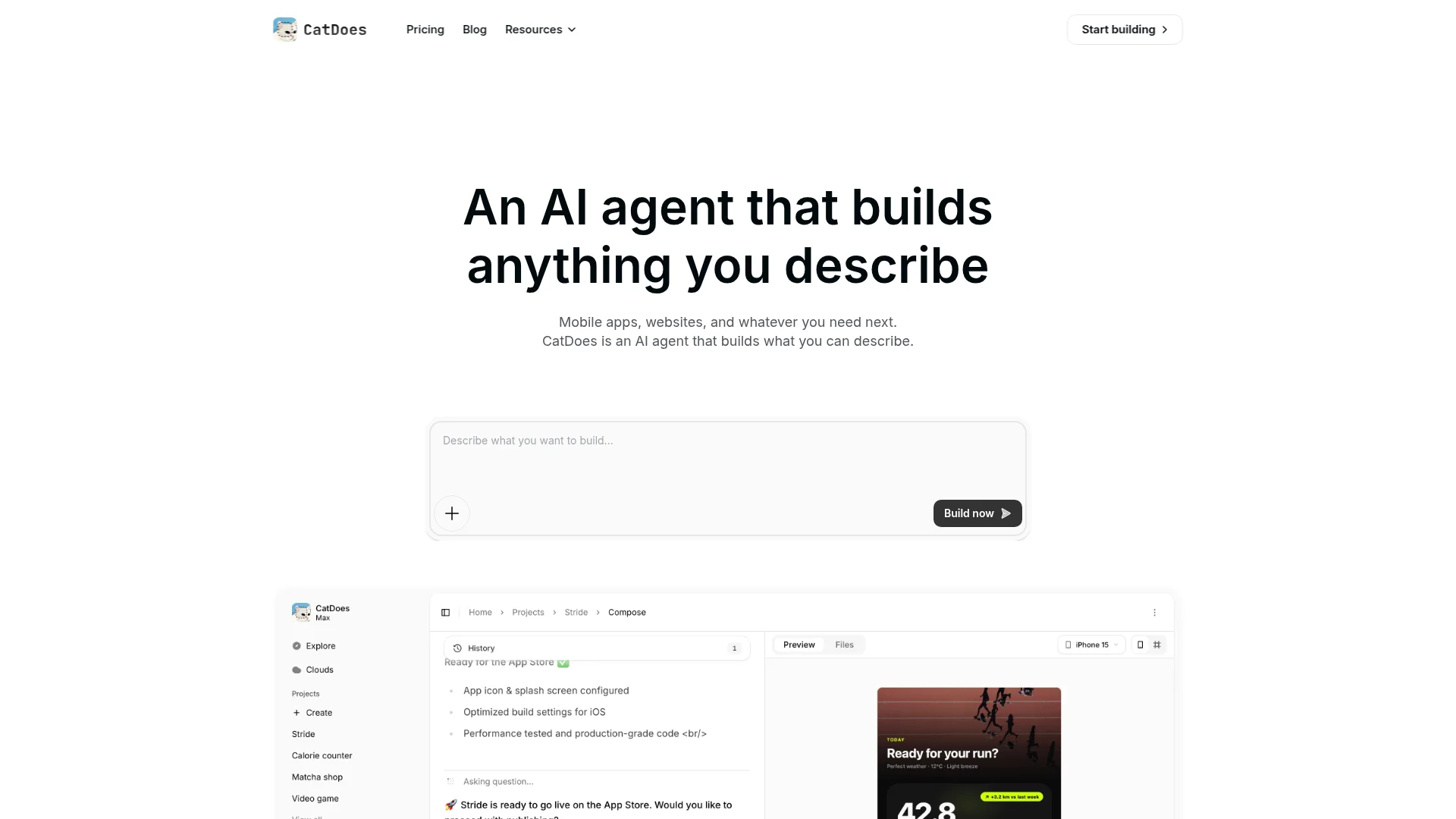
The reason every buyer should compare paths in 2026 is that AI has rewritten the economics of app development. Work that used to require a five-person team and a five-figure invoice can now start with a single sentence.
The shift is not hype. Gartner projects that 75 percent of new enterprise apps will be built on low-code and no-code tools by 2026, up from less than 25 percent in 2020, with 80 percent of those users coming from outside traditional IT. Meanwhile, roughly 92 percent of US developers already use AI coding tools daily. The custom software development market is growing to an estimated $53.5 billion in 2026, and AI is the force reshaping how that work gets delivered.
That is the gap AI-native platforms fill. With CatDoes, you describe your app in plain English and AI agents design the interface, write the code, and provision the backend (database, auth, and storage) automatically, then deploy to the App Store, Google Play, or the web. You own and can export the code, so there is no lock-in. For a business app that might cost $50,000 and six months through an agency, this collapses the first working version to days.
AI does not replace human judgment. Someone still decides what to build and whether it is safe to ship, and complex or regulated apps still benefit from expert review. But for the majority of business apps, starting with an AI platform and bringing in a specialist only where needed is the fastest, cheapest path to a real product. Want to skip the agency quotes and long timelines? Build your custom app with CatDoes and let AI agents handle the design, code, and backend while you focus on your idea.
Frequently Asked Questions
How much do custom mobile app development services cost?
Through a traditional provider in 2026, a simple app runs $15,000 to $50,000, a medium app $50,000 to $150,000, and a complex app $100,000 to $250,000 or more. AI-native platforms start far lower with subscription pricing, which is why many startups build their first version there before hiring anyone.
How long does it take to build a custom app?
With conventional development, a simple app takes about 4 to 8 weeks, a medium app 2 to 4 months, and a complex app 4 to 9 months or more. AI-native platforms cut this to days or weeks for a working MVP.
What is the difference between native and cross-platform development?
Native apps are built separately for iOS and Android for maximum performance and device access. Cross-platform apps use a single codebase (React Native or Flutter) for both, cutting build cost by 30 to 40 percent. Most business apps run well on cross-platform.
Do I still need a developer if I use an AI app builder?
For most business apps, no. AI agents handle design, code, and backend. You may want a developer to review complex logic, regulated features, or high-scale architecture, but you no longer need a full team to ship a working product.
Which engagement model is cheapest?
For a locked, well-defined scope, fixed price is safest and often cheapest because the vendor absorbs overrun risk. For ongoing or unclear work, capped time and materials avoids paying for padding. Overall, an AI-native platform is usually the lowest-cost option because it removes most billable labor.
Choosing the Right Path for Your App
Custom mobile app development services in 2026 are no longer a single road. You can hire an agency for $50,000 and six months, coordinate freelancers for less, or start with an AI-native platform and have a working app in days. Match the path to your budget, timeline, and how much control you want, confirm exactly what a quote includes before you sign, and remember that the cheapest quote is rarely the cheapest project. Whatever you choose, the winners in 2026 are the buyers who compared all three options first.
Nafis Amiri
Co-Founder of CatDoes