Blog
Tutorials
Hire an iOS Developer: Costs & Alternatives (2026 Guide)
Learn how to hire app developers with our complete guide. We cover everything from project scoping to finding and vetting the right talent for your app.

Nafis Amiri
Co-Founder of CatDoes

Hiring an iOS developer comes down to four decisions: what you actually need built, which hiring model fits (freelancer, agency, in-house, or an AI builder), what it will cost, and how you vet the person before you commit. Get those right and you avoid the two outcomes that sink most first apps: paying senior rates for junior work, or spending six figures on something an AI agent could have shipped in a week.
This guide covers all four. You'll get real 2026 cost numbers (salaries, freelance rates by region, and the full price to build an iOS app), plus a vetting process you can run even if you've never written a line of Swift. And because "hire a developer" is no longer the only way to get a native iPhone app into the App Store, we'll be honest about when hiring is the right call and when an AI app builder like CatDoes beats it outright.
Table of Contents
What an iOS Developer Actually Does
The 4 Ways to Hire an iOS Developer
How Much Does It Cost to Hire an iOS Developer?
How Much Does It Cost to Build a Full iOS App?
The Hidden Costs and How Long Hiring Really Takes
How to Vet an iOS Developer (Even If You're Not Technical)
The Alternative: Build Your iOS App With AI
Which Option Is Right for You?
Frequently Asked Questions
What an iOS Developer Actually Does
An iOS developer builds apps that run natively on iPhone and iPad. The job title hides a lot of range, and knowing the difference protects you from overpaying for skills you don't need, or underpaying for skills you do.
At the core, a strong iOS developer works in Swift (Apple's modern language) and SwiftUI or the older UIKit for building interfaces. They live in Xcode, Apple's development environment, and they know how to get a build through App Store review, which is stricter than Google Play and where a lot of first-time submissions get rejected. The best ones also understand the parts users never see: data storage, networking, push notifications, and the security rules Apple enforces.
Here are the skills worth screening for, roughly in order of importance:
Swift and SwiftUI/UIKit: the actual building blocks of a native iOS app. Ask which they prefer and why.
App Store submission experience: someone who has shipped apps knows the review guidelines and won't get you stuck in rejection loops.
API and backend integration: almost every app talks to a server for logins, data, and payments.
Performance and memory management: the difference between an app that feels instant and one that drains the battery and gets deleted.
Cross-platform awareness: if you also want Android, a developer who knows React Native or Flutter can build both from one codebase instead of two.
One decision shapes everything else here: native versus cross-platform. A pure native iOS build gives you the best performance and full access to every iPhone feature, but it only runs on Apple devices, so you'd need a second developer and codebase for Android. If you want both platforms, a cross-platform framework is usually the smarter budget choice. Our guide on how to build an iPhone app walks through that trade-off in detail.
The 4 Ways to Hire an iOS Developer
There are four realistic paths to getting an iOS developer's work done, and the right one depends on your budget, your timeline, and how much of the project you want to manage yourself.
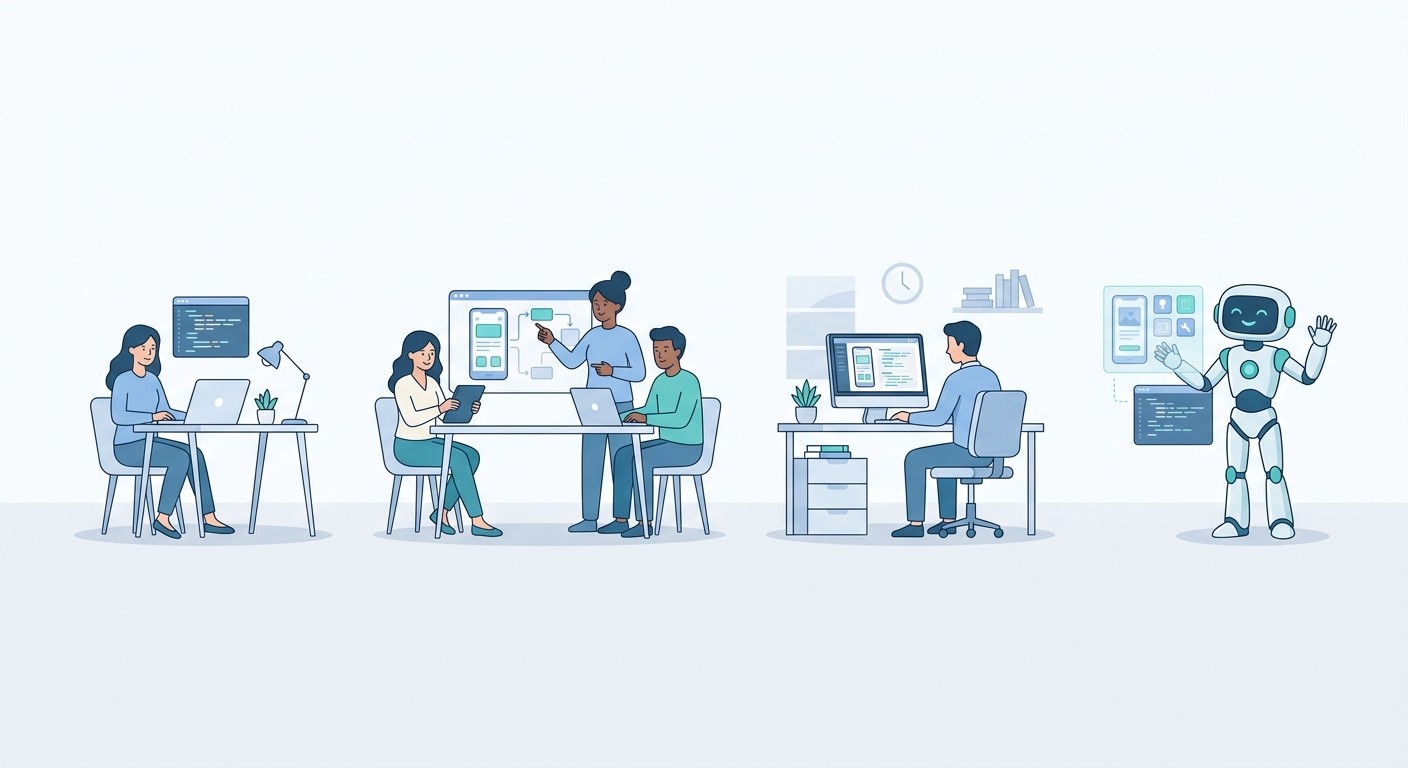
Freelance marketplaces. Sites like Upwork and Toptal give you a global talent pool at a huge range of prices. Great for well-defined, short-term work. The catch: you are the project manager, and quality varies wildly, so you have to vet hard.
Development agencies. An agency hands you a full team (project manager, designers, developers, QA) and delivers a finished app. Best for complex, long-term projects and non-technical founders. You pay a premium for that, and you trade some day-to-day control for their process.
In-house employees. A full-time hire makes sense once your app is your core product and needs constant work. You get commitment and deep context, but you also take on salary, benefits, recruiting, and hardware — the most expensive path by far.
AI app builders. The newest option, and the one the other guides ignore. Instead of managing a person, you describe what you want and an AI agent builds, tests, and ships a native iOS app for you. Fastest and cheapest for most apps — more on this below.
Here's how the four stack up at a glance:
Path | Typical Cost | Timeline | Your Involvement | Best For |
|---|---|---|---|---|
Freelancer | $20–$150+/hr | Weeks to months | High (you manage) | Defined, smaller projects |
Agency | $25K–$350K+ | 3–9 months | Low (they manage) | Complex, funded projects |
In-house | $120K–$210K+/yr | Ongoing | High (you lead) | App is the core product |
AI builder | From $20/mo | Hours to days | Medium (you direct AI) | MVPs and most apps |
How Much Does It Cost to Hire an iOS Developer?
There's no single price, because it swings on experience, location, and hiring model. But the ranges below reflect real 2026 market data, and they're the numbers most competing guides leave vague.
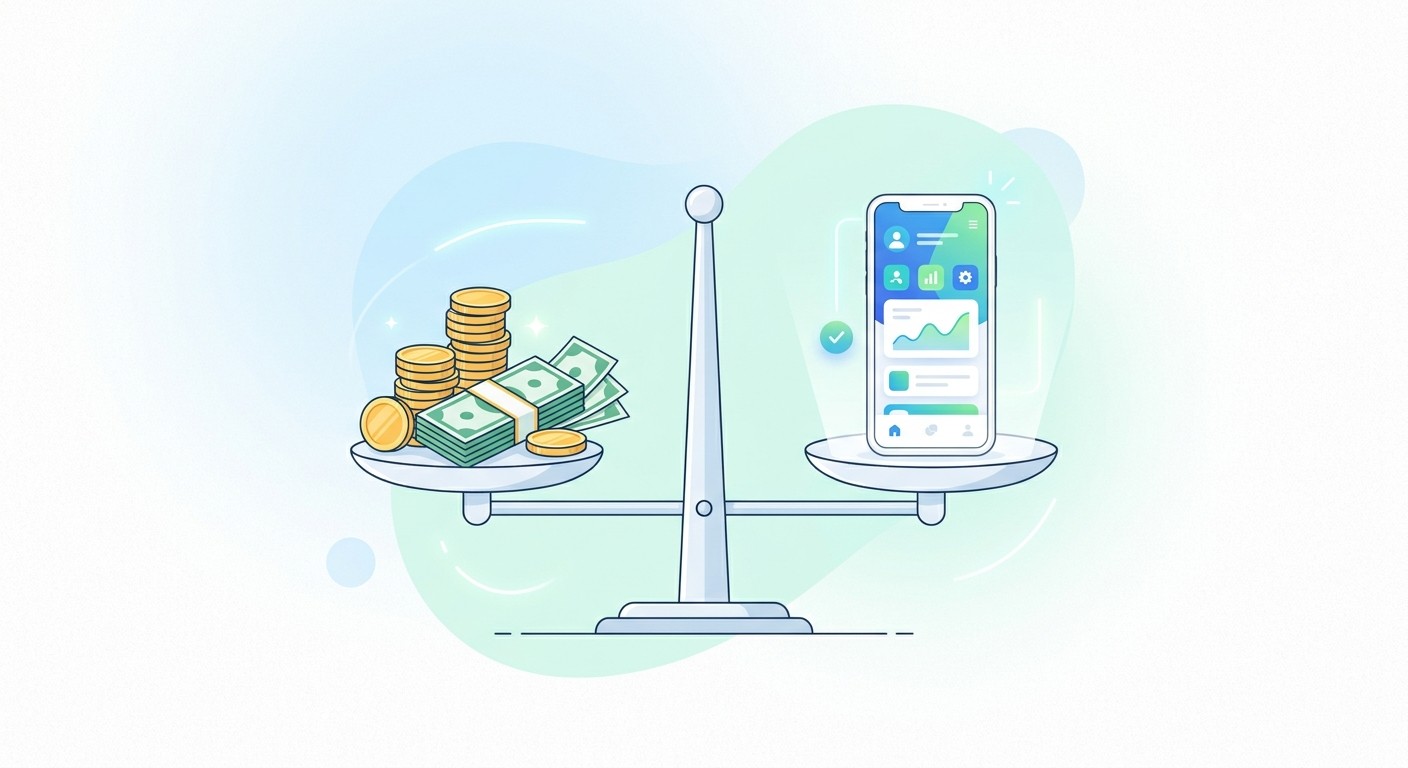
iOS Developer Salary in the US (by seniority)
A US iOS developer averages roughly $120,000–$137,000 in base salary, according to Glassdoor and Indeed data, climbing well past $170,000 at the senior and big-tech end. Broken out by level (base salary and equivalent contract rate):
Level | Experience | Base Salary (US) | Contract Rate |
|---|---|---|---|
Junior | 0–2 years | $95K–$120K | $55–$80/hr |
Mid-level | 3–5 years | $120K–$160K | $80–$110/hr |
Senior | 5–8 years | $160K–$210K | $110–$150/hr |
Staff / Principal | 8+ years | $210K+ | $150–$200/hr |
One thing worth knowing: salary sources disagree by a lot for the same title. Levels.fyi puts the median closer to $191,000 once equity is included, while some surveys land near $107,000. When a range is that wide, judge the individual and the work, not the headline number.
Freelance iOS Rates by Region
If you hire a freelancer, geography is the single biggest lever on price. The same skill level costs three to five times more in San Francisco than in South Asia. Typical 2026 hourly rates for iOS work:
Region | Freelance Rate (iOS) |
|---|---|
US / Canada | $80–$150/hr |
Western Europe | $70–$130/hr |
Eastern Europe | $30–$70/hr |
Latin America | $25–$60/hr |
India / South Asia | $20–$50/hr |
On the big marketplaces, the global median for an iOS developer sits around $25/hr, with most gigs falling between $16 and $35. Two caveats: iOS rates run about 12–18% above general software-dev rates for the same region and seniority (the Apple ecosystem carries a premium), and the cheapest rate is rarely the cheapest project once you factor in rework and management time.
Freelance vs. Agency vs. In-House
Put the three human paths side by side and the trade-off is clear. Freelancers are cheapest per hour but load all the coordination onto you. Agencies cost the most but hand you a managed team and a finished product. An in-house hire is the biggest long-term commitment — and the fully loaded first-year cost of a US senior, once you add benefits, hardware, and recruiting, realistically lands around $215,000–$230,000, not the base salary alone.
How Much Does It Cost to Build a Full iOS App?
Hiring rates only tell you part of the story. What most founders actually want to know is the total price to get a finished app into the App Store. Based on 2026 agency data from GoodFirms and others, here's the realistic range:
App Complexity | Examples | Cost to Build (iOS) |
|---|---|---|
Simple / MVP | Single feature, basic UI, one screen flow | $25K–$60K |
Moderate | Logins, payments, backend, several screens | $60K–$150K |
Complex | Real-time, integrations, custom animation | $150K–$350K+ |
A few things move these numbers. Native iOS tends to run 10–15% higher than the same app on Android, because Swift talent is pricier and App Store review is stricter. Building for both platforms natively means two codebases and can nearly double the bill, which is why cross-platform frameworks exist. And the fastest way to control cost is to ship a tight MVP first, then add features once real users tell you what they want. Our full mobile app development cost breakdown has the detailed numbers by phase.
The Hidden Costs and How Long Hiring Really Takes
The build quote is never the whole cost. Budget for these before you sign anything:
Maintenance: plan on 15–20% of your build cost every year for updates, bug fixes, and OS changes. On a $50,000 app that's $7,500–$10,000 annually.
Apple Developer Program: $99/year, required to publish to the App Store at all.
Hardware (in-house): a Mac plus test devices runs $6,300–$11,700 up front, and you can't build iOS apps without Apple hardware.
Recruiting: a specialist agency charges 15–25% of first-year salary to place a developer. On a $150,000 hire, that's $22,500–$37,500 before they write any code.
Then there's time. Hiring a good iOS developer is slow: the median time to hire a software engineer is around five weeks, and the time to actually fill an engineering role runs closer to nine weeks once sourcing, interviews, and notice periods are counted. With the US Bureau of Labor Statistics projecting 15% growth in software developer jobs through 2034 and roughly 129,000 openings a year, good iOS talent is in demand and doesn't sit idle. You're often two months from a signed offer before development even starts.
How to Vet an iOS Developer (Even If You're Not Technical)
Whoever you hire, the vetting process is what separates a smooth build from a nightmare. You don't need to read Swift to do this well — you need to evaluate outcomes and communication.
Review the Portfolio Like a User
Don't just look at screenshots. If their past apps are live on the App Store, download them and use them. Is the interface clean and responsive? Does it feel intuitive, or do you get lost? A beautiful app that crashes is as useless as a stable one that's painful to navigate. Look for projects similar to yours in features or industry — that relevant experience saves real time and money.
Get a Second Opinion on the Code
If you can't judge code quality yourself, hire a freelance technical consultant for a couple of hours to run a review. It's a small spend that catches big problems. A good review checks three things: is the code readable and documented, is it efficient (bloated code drains batteries and users), and is it built to scale without a rewrite later.
Ask Questions That Reveal How They Think
Skip the trivia. The most useful interview questions force a story:
"Walk me through the hardest bug you've shipped a fix for, and how did you diagnose it?" Tests real problem-solving, not memorization.
"Tell me about a time you disagreed with a designer or PM. How did it resolve?" Shows collaboration and conflict handling.
"An app you built got rejected from App Store review. What happened and what did you do?" Reveals whether they've actually shipped iOS apps or just written code.
Pair the interview with a short, paid take-home task (no more than two to four hours of work) that mirrors the real job. You'll learn more from that than from any resume. And whoever you hire, get a contract that transfers 100% of the IP to you on final payment; never start on a handshake.
The Alternative: Build Your iOS App With AI
Here's what every staffing-agency guide leaves out, because their business is placing developers: for a large share of apps in 2026, you don't need to hire a developer at all. An AI app builder can do the work — and for MVPs and most standard apps, it's faster, cheaper, and less risky than any of the three human paths above.
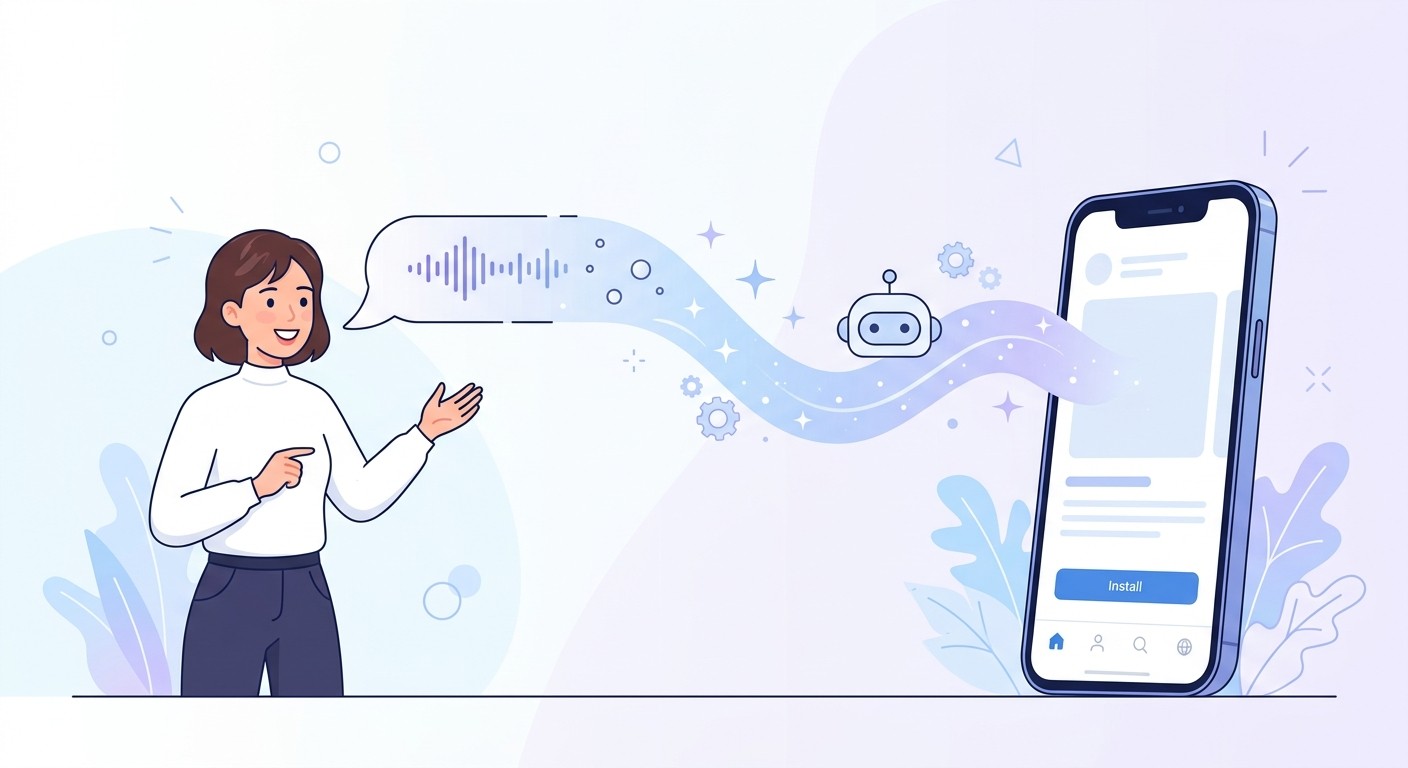
CatDoes is an AI agent that builds native iOS apps: React Native apps compiled into real App Store builds, not web wrappers. You describe what you want in plain English, and the agent designs the interface, writes the code, sets up the backend (database, auth, storage, and more are built in), and takes it all the way to a submittable build. Instead of managing a person, you direct an agent. Here's why that beats hiring for most projects:
Cost. Hiring means $80–$150/hr freelance, a $25K–$150K agency project, or a $200K+ salary. CatDoes plans start at $20/month, and you can start for free. A full year of the top plan costs about 3% of a single senior developer's salary.
Speed. A developer hire takes five to nine weeks before code even begins, then months of build time. An AI agent produces a working app in hours to days — you're iterating the same afternoon you start.
No management overhead. No job description, no interviews, no code review, no contracts, no onboarding. The four sections above? You skip all of them.
You own the code. On the right plan you can export the full codebase and connect your own GitHub repo, so you're never locked in, and you can hand it to a developer later if you scale.
It ships to the store. CatDoes deploys to the App Store and Google Play, and even simulates App Store review before you submit — closing the exact gap where first-time developers get rejected.
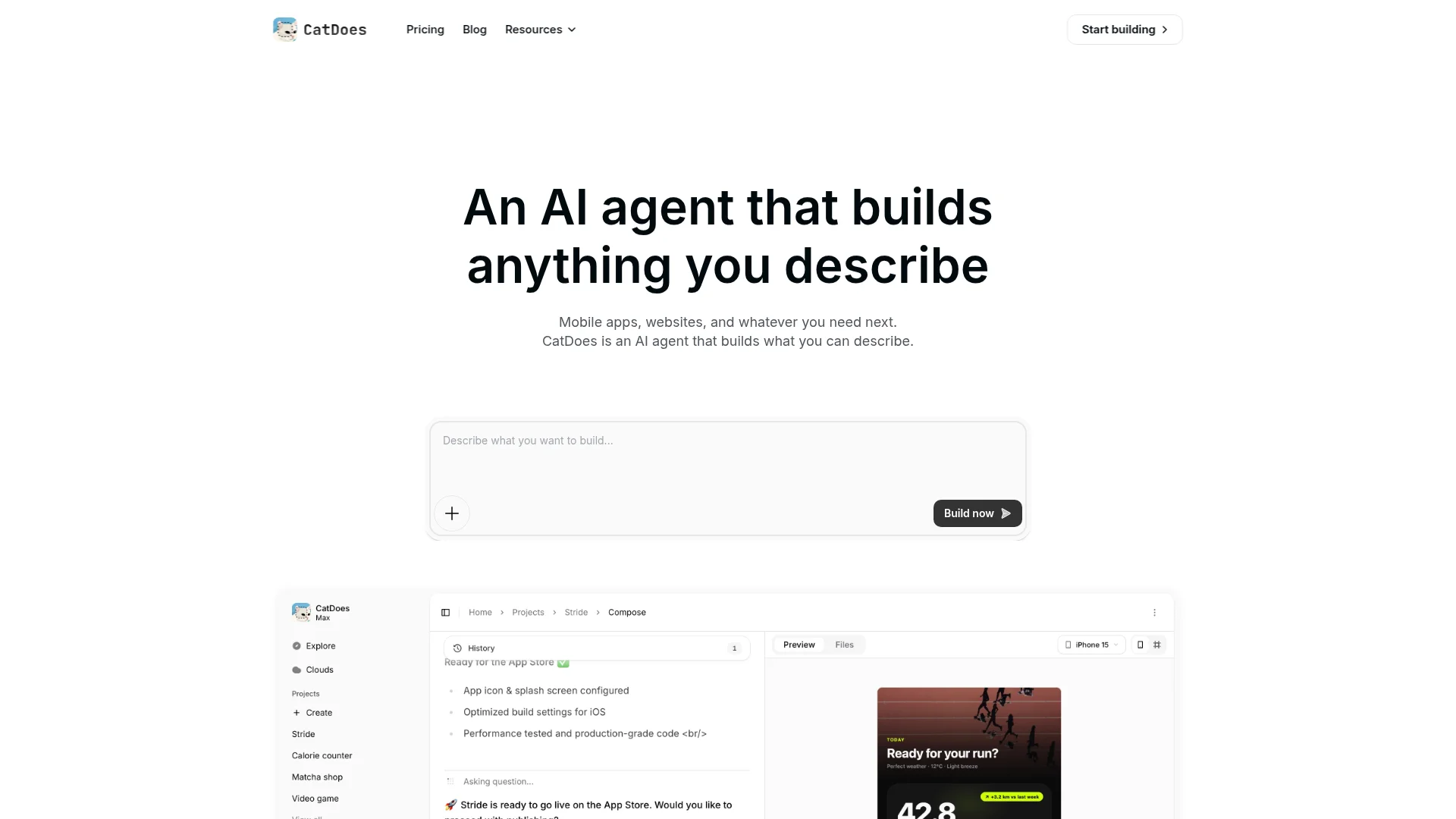
To be fair about it: hiring a human still wins in specific cases. If your app pushes the edge of what's possible (heavy custom hardware integration, novel real-time systems, or something that needs a dedicated team owning it for years), an experienced iOS engineer is worth every dollar. But for a booking app, a marketplace, an internal business tool, a content app, or almost any MVP you want in users' hands quickly, an AI builder gets you there for a fraction of the cost and time. If you're weighing tools, our comparison of the best AI app builders breaks down the options.
Which Option Is Right for You?
Match the path to your situation:
Validating an idea or building an MVP? Start with an AI builder. You'll have something real in users' hands before a job posting would even close.
Small, well-defined feature or fix? A vetted freelancer is a fine fit, as long as you manage the scope tightly.
Complex, funded product with a hard deadline? An agency's managed team earns its premium.
App is your core business and needs constant work? Hire in-house, but consider building the first version with AI while you recruit, so you're not burning two idle months.
Frequently Asked Questions
Do I need to hire a developer to make an iOS app?
No. In 2026 you can build a native iOS app without hiring anyone by using an AI app builder like CatDoes, where you describe the app in plain English and the agent writes the code and ships it to the App Store. Hiring a developer still makes sense for highly complex products or apps that need a dedicated team long-term.
How much does it cost to hire an iOS developer?
In the US, expect $95K–$120K in salary for a junior developer and $160K–$210K+ for a senior. Freelance rates range from about $20/hr in South Asia to $150/hr in North America. An agency project runs $25K–$350K+ depending on complexity.
Is it cheaper to hire an offshore iOS developer?
Per hour, yes. Eastern European, Latin American, and South Asian rates are 40–70% below US rates. But factor in timezone gaps, communication overhead, and the risk of rework. The lowest hourly rate isn't always the lowest total project cost. For most apps, the cheapest option is an AI app builder like CatDoes.
Should I build my app for iOS or Android first?
If your research shows your audience skews toward iPhone, start with iOS. For most businesses, a cross-platform build that ships to both from one codebase is the more efficient choice; you reach everyone without paying for two separate apps.
What skills should an iOS developer have?
The essentials are Swift, SwiftUI or UIKit, Xcode, and hands-on App Store submission experience. For anything connected, add API and backend integration. If you want Android too, React Native or Flutter experience lets one person cover both platforms.
Ready to skip the hiring process entirely? CatDoes turns your idea into a native iOS app, designed and built and ready for the App Store, without writing a line of code or interviewing a single developer. Start building your app for free at catdoes.com.
Nafis Amiri
Co-Founder of CatDoes