Blog
Tutorials
Custom Mobile App Development in 2026
Learn the full custom mobile app development process: real costs, timelines, and the 3 paths to building your app. Start building today with CatDoes.

Nafis Amiri
Co-Founder of CatDoes
TL;DR: Custom mobile app development means building an app tailored to your exact business needs instead of using generic software. It costs $25,000 to $500,000+ through traditional agencies, but AI-native platforms like CatDoes can deliver a production-ready MVP in days for a fraction of the cost. The three main paths are agencies (expensive, hands-off), in-house teams (maximum control, highest cost), and AI platforms (fast, affordable, accessible).
Table of Contents
What Is Custom Mobile App Development?
The Real Business Benefits of a Custom App
Choosing Your Development Path
The App Development Lifecycle
How AI Is Changing App Development
Your Pre-Launch Checklist
Frequently Asked Questions
What Is Custom Mobile App Development?
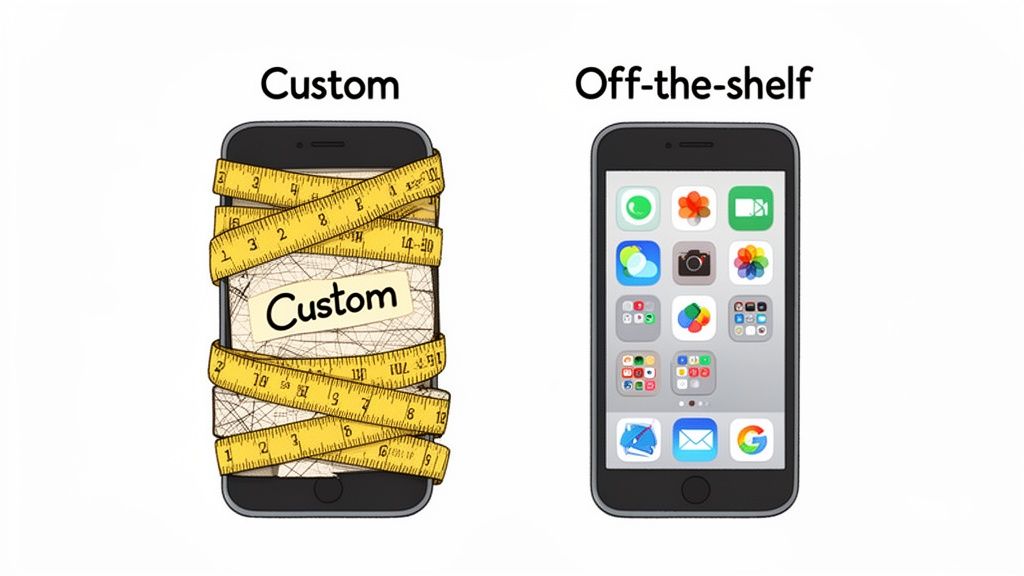
Custom mobile app development is the process of building a mobile app from scratch, designed to do exactly what your business needs. Unlike off-the-shelf solutions that give you a one-size-fits-all package, a custom app is built around your specific workflows, your customers' needs, and your growth plans.
Think of it like getting a suit tailored versus buying one off the rack. The store-bought suit might work, but a tailored one fits perfectly. Generic apps force you to adapt your processes to their limitations. Custom development flips that, creating a digital tool that adapts to you.
Here's what you get with a custom build:
Exact Feature Set: No bloated features nobody asked for. Just the tools your users actually need.
Tailored User Experience: The app's flow is designed around your specific audience, making it intuitive and enjoyable to use.
System Integration: A custom app connects directly to your existing CRM, ERP, or inventory system without clunky workarounds.
Scalability: Built for your future growth, so it won't crumble when your user base doubles or you need to add new capabilities.
The Growing Demand for Custom Solutions
This shift toward custom-built tools is backed by hard numbers. The custom software development market was valued at $43.16 billion in 2025 and is expected to reach $109.5 billion by 2034, growing faster than the general software market. Businesses are realizing that generic products can't give them the competitive edge they need.
When you move beyond generic solutions, you're building a digital presence that is unmistakably yours. A custom app is an asset you own, not a subscription you rent. For a detailed breakdown, check out our guide on custom software vs. off-the-shelf solutions.
The Real Business Benefits of a Custom App
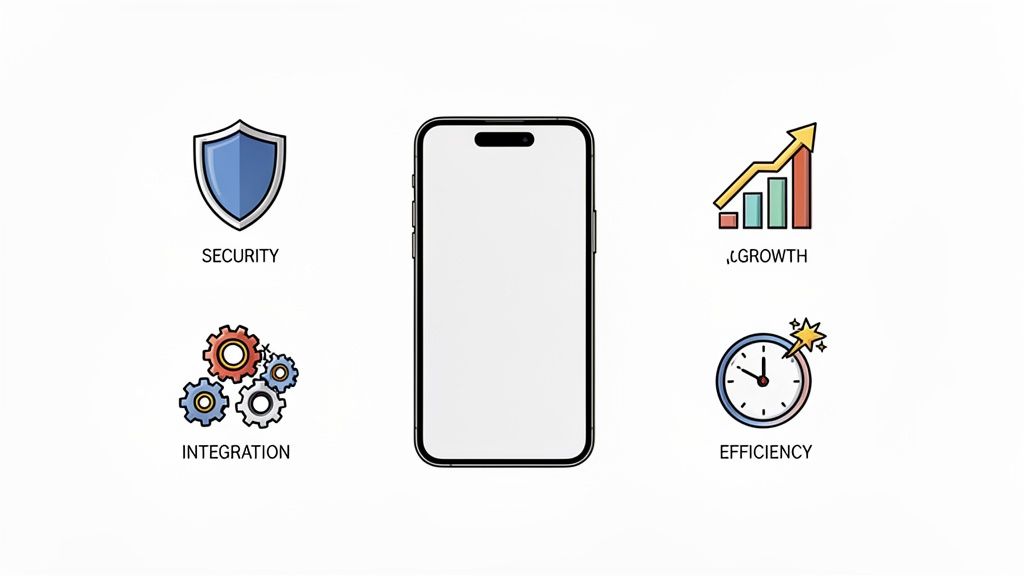
Custom apps give you three advantages off-the-shelf software cannot: security built for your compliance needs, seamless integration with your existing systems, and architecture that scales with your growth.
The global mobile app development market is valued at roughly $378 billion in 2026 and is on track to hit $553.57 billion by 2033, according to Grand View Research. A mobile-first approach is no longer optional for competitive businesses.
Enhanced Security
Generic apps come with one-size-fits-all security. With a custom build, security is designed around your specific business from the ground up. You can implement multi-factor authentication, end-to-end encryption, and role-based access controls that fit your workflow.
For anyone in finance or healthcare, this is a must-have for meeting regulatory standards like HIPAA or GDPR. Custom security means your data is treated like the valuable asset it is.
Seamless System Integration
Off-the-shelf apps often need clunky workarounds or expensive third-party connectors to talk to your CRM, ERP, or inventory system. A custom app is built to integrate with your other platforms from the start, creating a single, unified workflow.
The practical impact is significant: automated internal workflows that update records the moment a task is complete, real-time data sync across all departments, and smoother processes that reduce operational costs.
Superior Scalability
A custom app is architected from day one to handle more users, features, and data without performance issues. Unlike generic solutions that hit a wall as you grow, a custom app evolves alongside your business. Whether you're launching in new markets, adding product lines, or dealing with a surge in demand, your app scales to meet the challenge.
Choosing Your Development Path
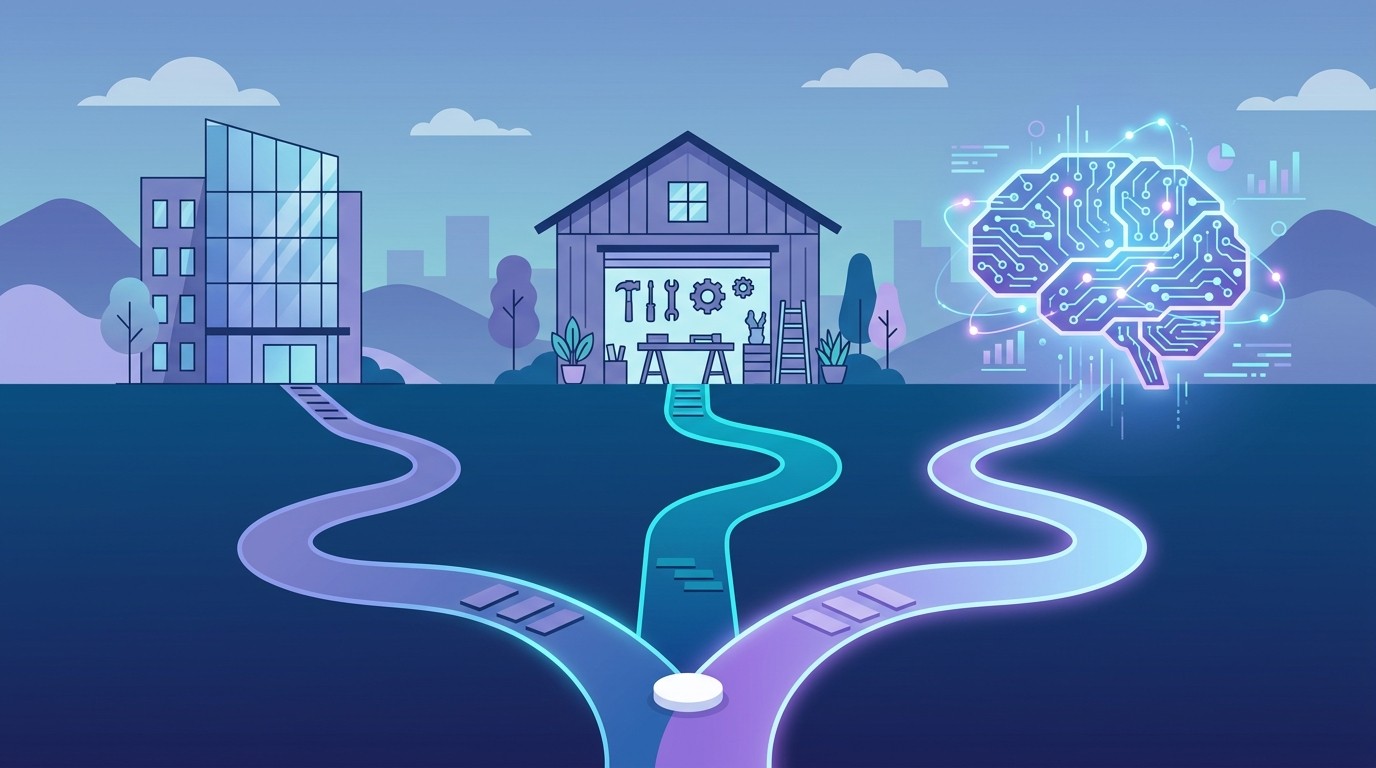
There's more than one way to build a custom app. The right path depends on your budget, timeline, and long-term goals. Each option comes with trade-offs between speed, cost, and control. Making the wrong call can mean blown budgets, missed deadlines, or an app that doesn't quite work.
Traditional Agency
Agencies bring project managers, designers, developers, and testers to the table. It's a reliable, hands-off approach that works well when you need deep expertise but lack an in-house team. However, it's the most expensive option. High overhead means high prices, and you may have less direct control over the day-to-day work.
In-House Team
Hiring your own developers and designers gives you total control and long-term ownership. The team lives and breathes your business and can iterate on the product constantly. The downside is that recruiting top tech talent is competitive and expensive, and you face ongoing costs for salaries, benefits, and tools. This path demands deep pockets and a serious commitment.
AI-Native Platform
AI-native platforms like CatDoes use artificial intelligence to automate huge chunks of app creation. You describe your app in plain English, and AI agents handle everything from UI/UX design to writing code and setting up cloud infrastructure. This approach slashes time and cost, letting non-technical founders build and launch apps without hiring a single developer.
If you're curious about the technologies behind this, learn more about cross-platform app development.
Comparing the Three Approaches
Approach | Time-to-Market | Upfront Cost | Ongoing Cost | Control | Expertise Needed |
|---|---|---|---|---|---|
Traditional Agency | 6-12+ months | Very High | High (Retainers) | Medium | Low |
In-House Team | Very Slow | Highest | Very High (Salaries) | Highest | Very High |
AI-Native Platform | Days to Weeks | Very Low | Low (Subscriptions) | High | Low |
A massive enterprise with deep pockets might build in-house, but a startup that needs to ship fast will find an AI-native platform to be the most logical choice.
Want to skip the agency costs and long timelines? Build your custom app with CatDoes. Our AI agents handle the design, code, and backend setup so you can focus on your vision.
The App Development Lifecycle
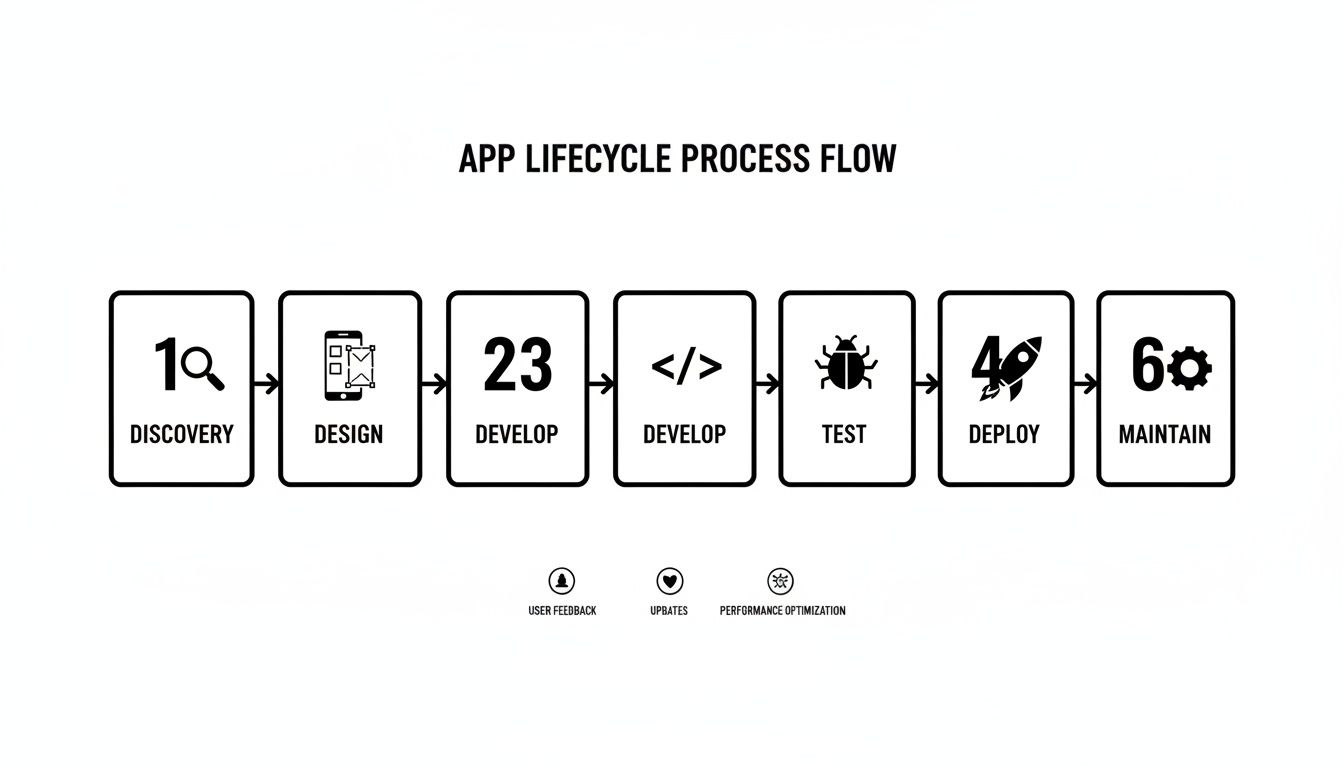
Every custom app goes through six stages: discovery, design, development, QA, deployment, and maintenance. Skipping any stage increases the risk of costly rework later.
Think of it like constructing a house: you start with blueprints, frame the structure, run the electrical, and do a final inspection before anyone moves in. Every stage builds on the last.
Stage 1: Discovery and Strategy
This is where you figure out what you're building and why before a single line of code gets written. Key activities include market research to identify competitors and gaps, defining measurable goals and KPIs (like increasing sales by 15% or reducing support tickets), and prioritizing features into "must-haves" for your MVP and "nice-to-haves" for later. Skipping this stage means building without a map.
Stage 2: UI/UX Design
The focus shifts to how the app looks, feels, and works for the end-user. The design journey moves through three key steps: wireframing (bare-bones screen layouts focused on user flow), mockups (high-fidelity visuals with colors, fonts, and branding), and prototyping (clickable, interactive models that let you test the experience before development begins).
Stage 3: Development
Blueprints and designs get turned into a real, functional application. This covers frontend development (everything the user sees and interacts with) and backend development (the server, database, and logic that power it all). For a deeper look at timelines, check out our guide on mobile app development timelines.
Stage 4: Quality Assurance
QA teams hunt for bugs, performance bottlenecks, and usability issues across multiple fronts. Functional testing checks that every feature works as expected. Performance testing measures speed and battery impact. Usability testing puts the app in front of real users. Compatibility testing verifies it works across devices, screen sizes, and OS versions.
Adopting solid software testing best practices is essential for shipping a product users will trust.
Stage 5: Deployment
Submit the app to the Apple App Store and Google Play Store. This involves preparing store listings, writing compelling descriptions, adding screenshots, and following each store's submission guidelines. For a step-by-step walkthrough, see our guide on app store optimization tips. Each platform has its own review process that can take anywhere from a few hours to several days.
Stage 6: Maintenance
Ongoing maintenance separates successful apps from abandoned ones. Monitor performance, fix bugs, roll out regular updates with new features and security patches, and ensure compatibility with the latest iOS and Android versions. The work is never really "done."
How AI Is Changing App Development
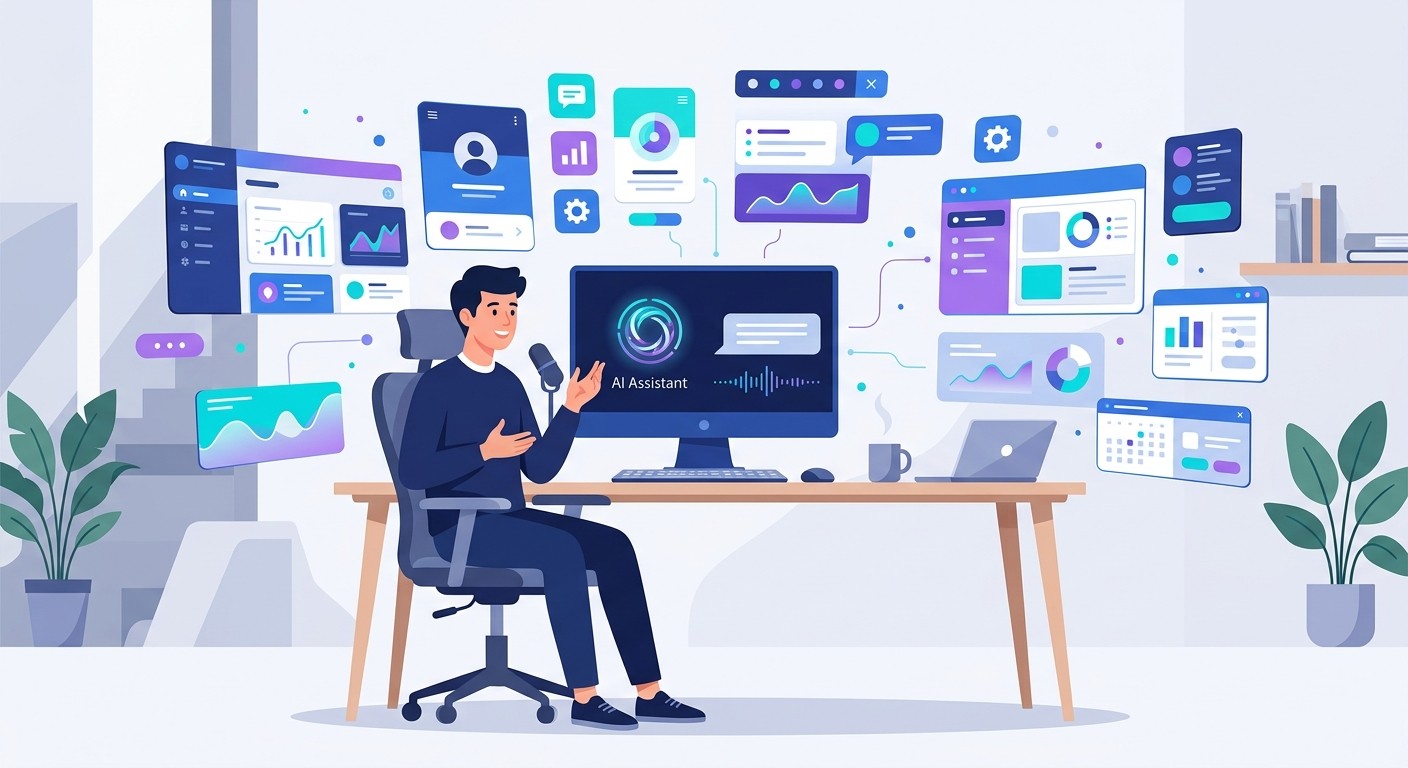
AI-native platforms are driving a massive shift in custom mobile app development. They let founders, business owners, and creators with no technical background describe what they want in natural language. From there, AI agents handle the design, code, and infrastructure setup automatically. That shift matters most to early teams, which we cover in mobile app development for startups.
The Numbers Behind the Shift
This isn't a small trend. 80% of new apps are expected to use low-code tools by 2026, according to Gartner. The low-code/no-code market is on track to grow from $57 billion in 2025 to $388.6 billion by 2034. And 40% of enterprise apps are expected to use AI agents by 2026.
This shift dramatically shortens the feedback loop. You can see your ideas come to life almost instantly, make changes on the fly, and get a real product into users' hands in a fraction of the time traditional development requires.
What AI Handles Today
AI's role goes far beyond code generation. Here are the key areas where it's making the biggest difference:
Automated UI/UX Generation: AI analyzes your app's purpose to create intuitive interfaces, keeping branding consistent and accelerating the design phase significantly.
Intelligent Code Completion: AI models write entire functions and modules while following best practices and keeping the codebase clean.
Automated Testing: AI runs thousands of user simulations to find bugs, performance bottlenecks, and usability issues faster than any manual process.
Backend Setup: AI automatically provisions databases, file storage, user authentication, and serverless functions, removing a huge technical roadblock.
By automating these tasks, AI lets you focus on strategy, market fit, and delivering real value to your users.
Your Pre-Launch Checklist
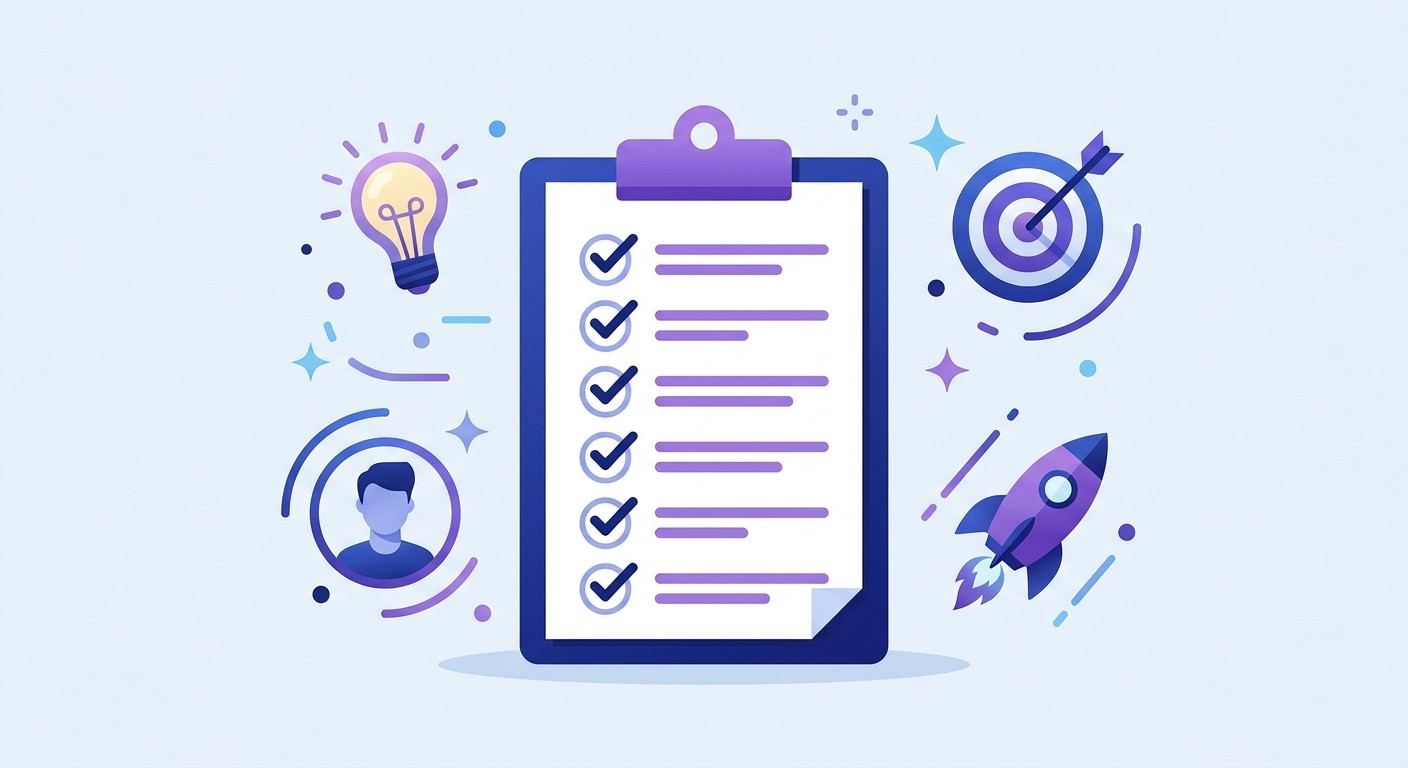
Before writing code or talking to vendors, nail down four things: the core problem you solve, your target audience, your MVP feature list, and your top 2-3 competitors.
A little prep work up front makes all the difference between a smooth launch and a frustrating mess. It starts with one simple question: what problem are you really solving?
Define the Core Problem: Write a single sentence explaining the issue your app fixes. Example: "Our app helps small cafes reduce food waste by connecting them with customers for last-minute sales."
Identify Your Target Audience: Sketch a quick user persona. What are their daily habits, biggest needs, and comfort level with tech? This clarity makes designing a great user experience much easier.
List Your MVP Features: What are the absolute non-negotiable features for day one? Keep the list tight. Solve the core problem, nothing more.
Analyze Key Competitors: Pick 2-3 similar apps. What are they great at? Where do they fall short? A quick analysis reveals exactly where the gaps are and how you can do it better.
Frequently Asked Questions
How Much Does Custom Mobile App Development Cost?
Through a traditional agency, a simple app runs $25,000 to $50,000. Complex apps with custom backends and third-party integrations cost $75,000 to $250,000+. Large-scale enterprise apps can exceed $500,000.
AI-native platforms like CatDoes offer a much lower entry point with subscription pricing, making custom development affordable for startups and small businesses.
How Long Does It Take to Build a Custom App?
With conventional methods, an MVP takes 3-6 months. A full-featured app takes 6-12 months or longer. AI-native platforms cut this dramatically: you can get a production-ready MVP built in days or weeks instead of months.
What Is the Difference Between Native and Cross-Platform Apps?
A native app is built for one specific OS (iOS or Android), giving the best performance and full access to device features like camera, GPS, and push notifications. A cross-platform app uses a single codebase for both platforms, making it faster and more budget-friendly to build.
Modern platforms build high-quality cross-platform apps that feel as smooth as native, giving you the best of both worlds for most business needs.
Ready to turn your idea into a production-ready app without the traditional costs and timelines? With CatDoes, our AI agents handle the design, coding, and backend setup so you can focus on your vision. start building your custom app today at CatDoes.com.
Nafis Amiri
Co-Founder of CatDoes