Blog
Insights
CatDoes vs Base44: Native Apps vs Web (2026)
CatDoes vs Base44 compared for 2026: pricing, native mobile publishing, backend ownership, and who each tool is really for. See which one ships real apps.

Nafis Amiri
Co-Founder of CatDoes

TL;DR: CatDoes vs Base44 comes down to where your app runs. Both turn plain English into working software with no coding, but Base44 (acquired by Wix in 2025) builds web apps that install as PWAs, with the backend managed on Wix infrastructure. CatDoes is an AI agent that ships real native mobile apps to the App Store and Google Play, plus websites with custom domains, and includes a portable backend on every plan. For an internal tool or a web app, Base44 is fast. For a native app in the stores, CatDoes is built for it.
You typed a prompt, Base44 spun up a working web app in minutes, and the first version felt like magic. Then you tried to put it on the App Store.
That is where a lot of Base44 projects stall. Base44 outputs web apps that install as Progressive Web Apps, and the backend stays on Wix. If your goal is an icon on someone's home screen that behaves like a real app, with push notifications and store distribution, the web-app route runs into a wall. Pick the wrong tool and you either ship the wrong kind of app or rebuild it later.
This guide compares the two head to head for 2026: what each one builds, real pricing, the native mobile question, backend ownership, and who should pick which.
Table of Contents
What Is Base44?
What Is CatDoes?
CatDoes vs Base44: The Core Difference
Feature Comparison
Pricing: CatDoes vs Base44 in 2026
Can You Publish a Native Mobile App?
The Backend Question: Locked vs Portable
Which One Should You Choose?
Frequently Asked Questions
The Bottom Line
What Is Base44?
Base44 is an AI app builder that turns a chat prompt into a full-stack web app: frontend, database, auth, and hosting from one description, no code required. It earned a reputation for speed, and in June 2025 Wix acquired it for around $80 million. Today it runs as a distinct product inside Wix, with a managed backend and hosting built in.
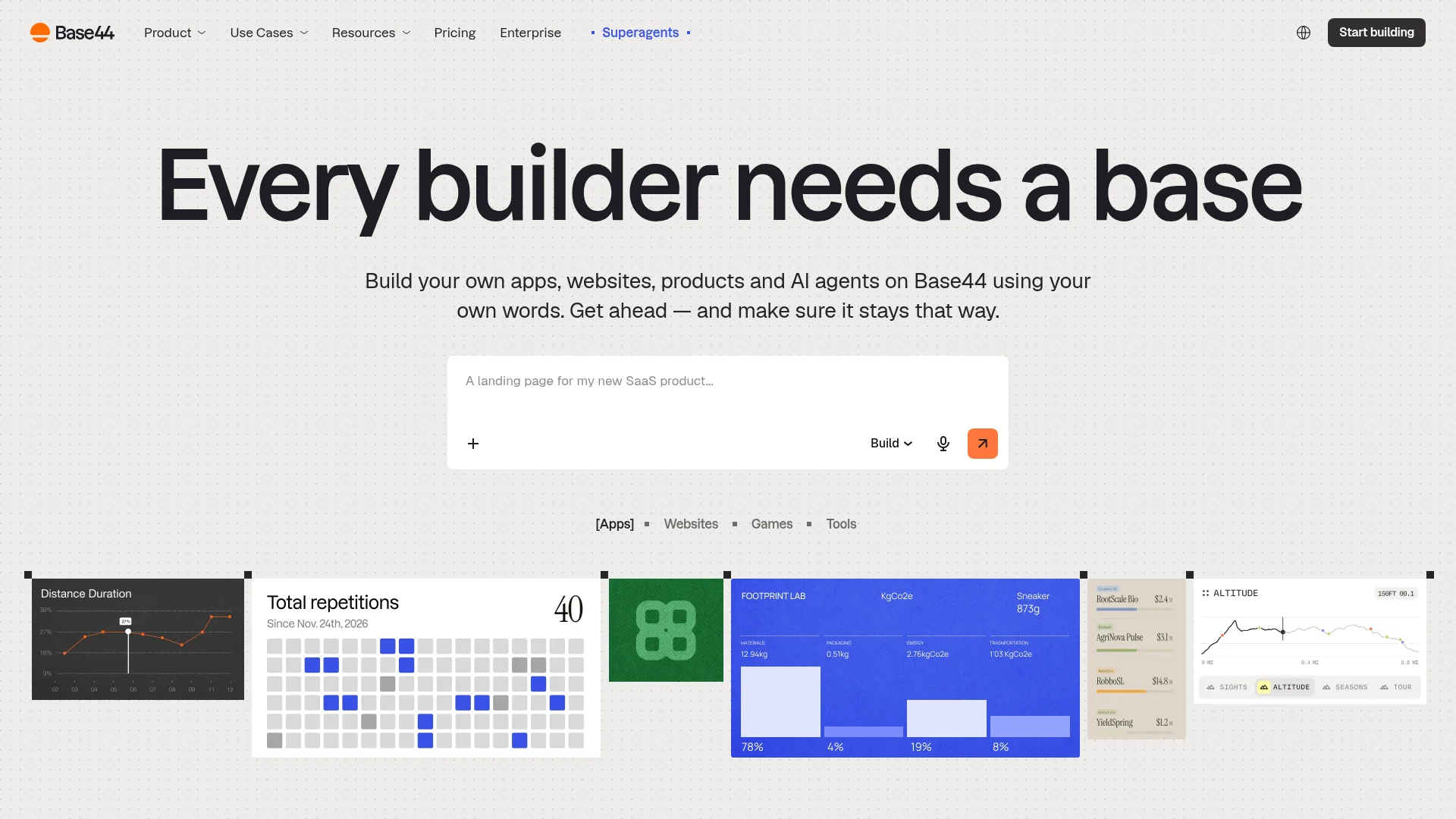
Under the hood, Base44 generates React web apps and serves them on Wix infrastructure. On mobile, those apps install as Progressive Web Apps: a home-screen icon and offline caching, delivered through the browser rather than the App Store. That makes it a strong fit for internal tools, dashboards, business apps, and prototypes, the kind of software that lives happily in a browser tab.
What Is CatDoes?
CatDoes is an AI agent that builds mobile apps and websites from natural language. You describe the app, the agent runs in the cloud, writes the code, and ships the result to the App Store, Google Play, or the web with a custom domain. There is no IDE to install and no code you are required to touch, though developers can bring a GitHub repo or export the project.
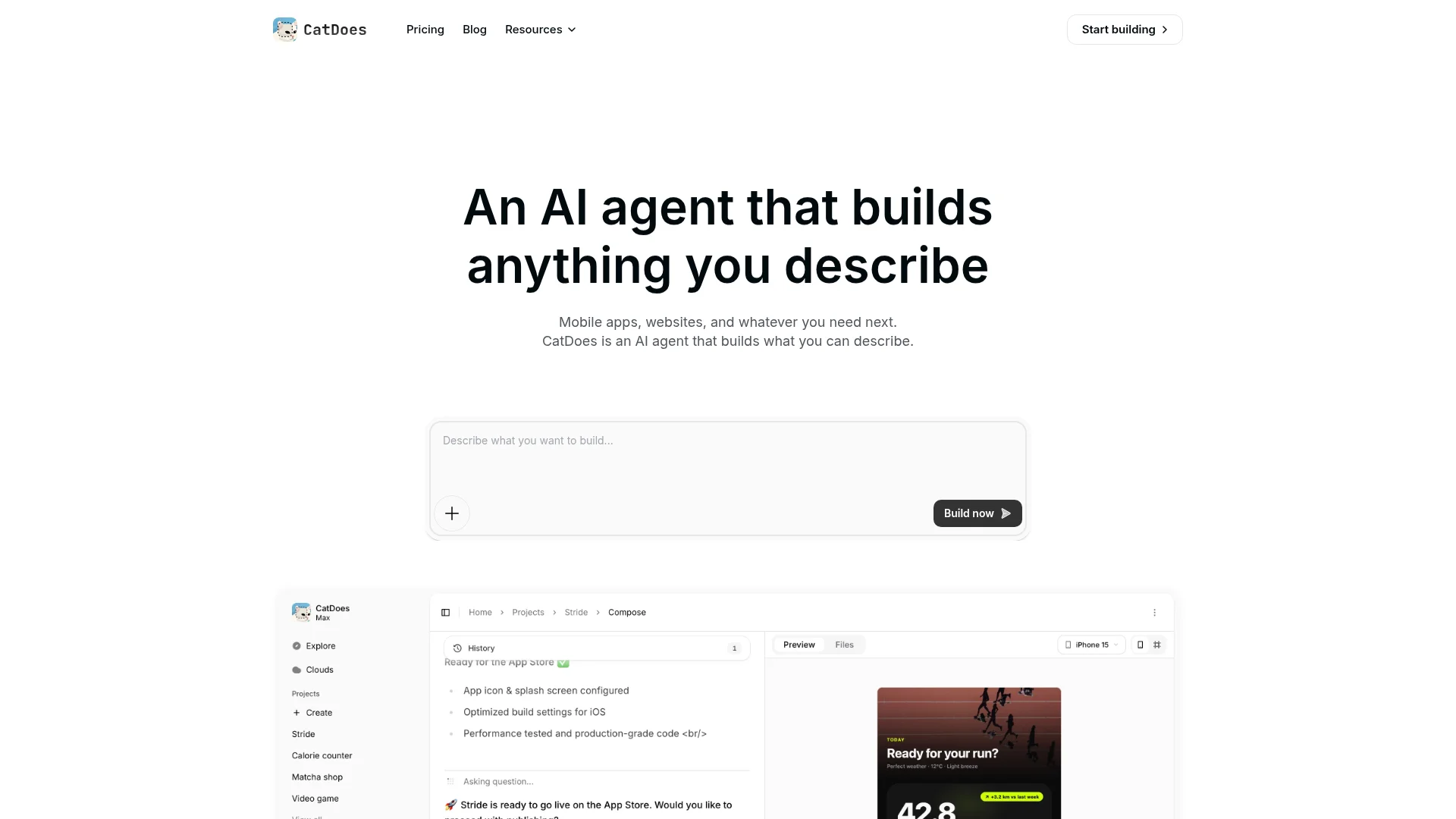
Every plan includes CatDoes Cloud, a built-in backend with database, authentication, storage, edge functions, and realtime. The real difference from a web-only builder is what comes out the other end: a native app you can submit to the stores, not just a web page saved to a home screen. For the wider landscape, our guide to the best AI app builder options puts CatDoes in context.
CatDoes vs Base44: The Core Difference
The cleanest way to frame it: Base44 builds web apps you open in a browser, while CatDoes builds native apps you download from a store, plus websites.
Base44 is tuned for internal tools and web prototypes, generated fast and hosted on Wix. That is a genuine strength when the destination is a browser. CatDoes treats the whole lifecycle as the agent's job, from code and backend to deployment and app-store submission, which is what it takes to land a native app on iOS and Android. One gets you a working web app in minutes. The other gets you a shipped product in the stores.
Feature Comparison
Here is how the two line up on the things that decide whether you end up with the app you actually wanted.
Feature | CatDoes | Base44 |
|---|---|---|
What it is | AI agent that builds & ships apps | AI web-app builder (Wix-owned) |
Coding required | No | No |
Native mobile apps | Yes, real iOS & Android binaries | No, PWA (web) only |
Publishes to App Store / Google Play | Yes | No |
Websites & custom domains | Yes | Yes (Wix infra) |
Backend included | Yes (CatDoes Cloud) | Yes (locked to Wix) |
Full code export | Whole project (Plus+) | Frontend only (Builder+) |
Version history | Checkpoints (up to 1,000) | None |
AI models | 4 agent tiers (Low, Medium, High, Max) | Single model (select on Builder+) |
Best for | Native apps + web, shipped for you | Internal tools & web prototypes |
Both build full-stack apps from a prompt with a backend included, so on a web project they can feel similar. The gap opens the moment your project needs to leave the browser.
Pricing: CatDoes vs Base44 in 2026
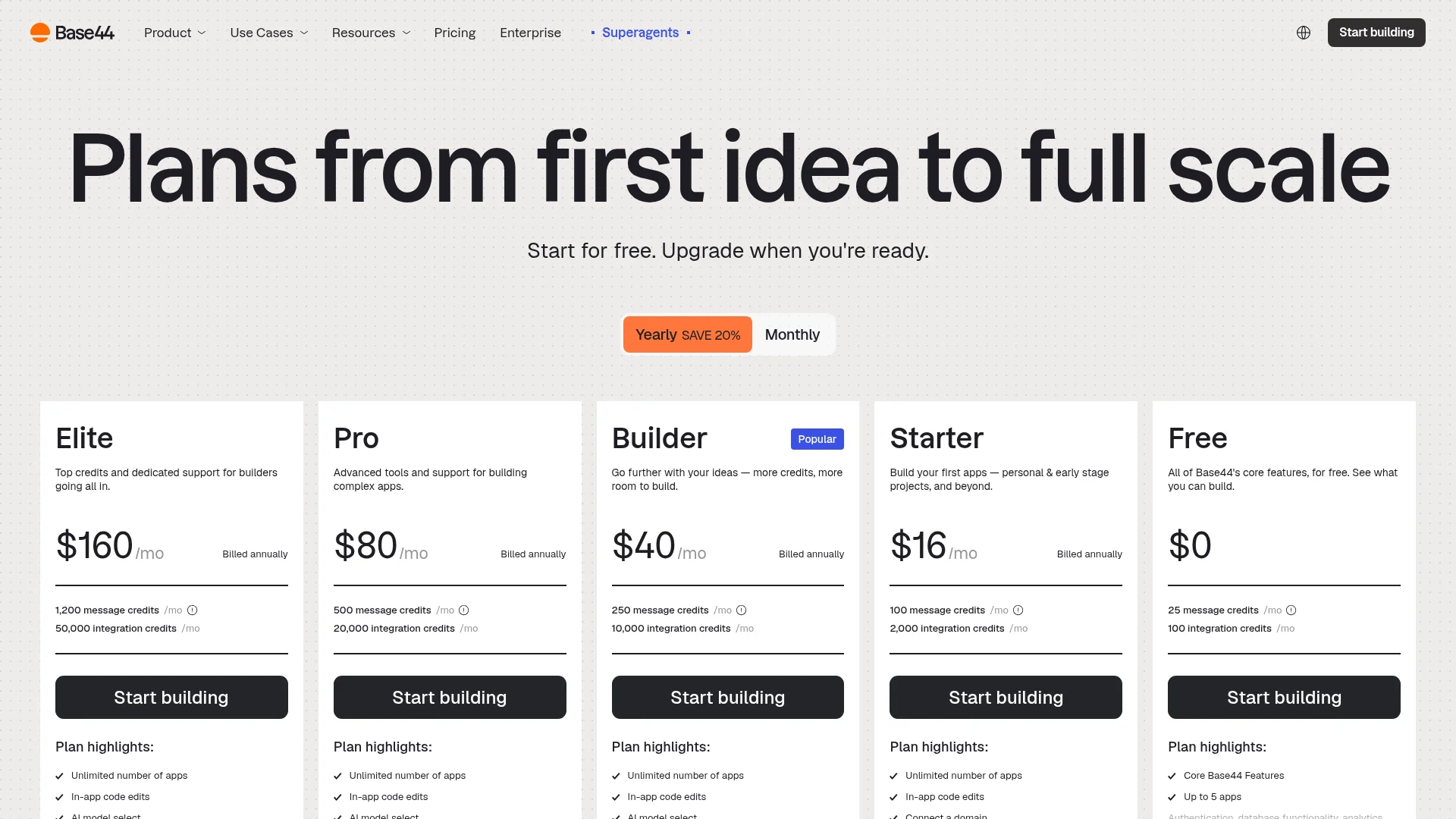
Both tools start free and both have a $20 entry tier, but they meter usage differently. Base44 runs a dual-credit model: message credits for prompting the AI, plus a separate pool of integration credits for external calls. Credits reset monthly and do not roll over. Current plans, per the Base44 pricing page:
Base44 Plan | Price (monthly) | AI messages/mo | Notable |
|---|---|---|---|
Free | $0 | 25 (5/day cap) | Up to 5 apps, no code export |
Starter | $20 | 100 | Unlimited apps, connect a domain |
Builder | $50 | 250 | Model select, GitHub, backend functions |
Pro | $100 | 500 | Early access to beta features |
Elite | $200 | 1,200 | Premium support |
CatDoes uses a single monthly credit allocation, and CatDoes Cloud is included on every plan:
CatDoes Plan | Price (monthly) | Credits/mo |
|---|---|---|
Free | $0 | 15 (one-time) |
Core | $20 | 50 |
Starter | $50 | 200 |
Plus | $100 | 400 |
Pro | $200 | 900 |
Max | $399 | 2,000 |
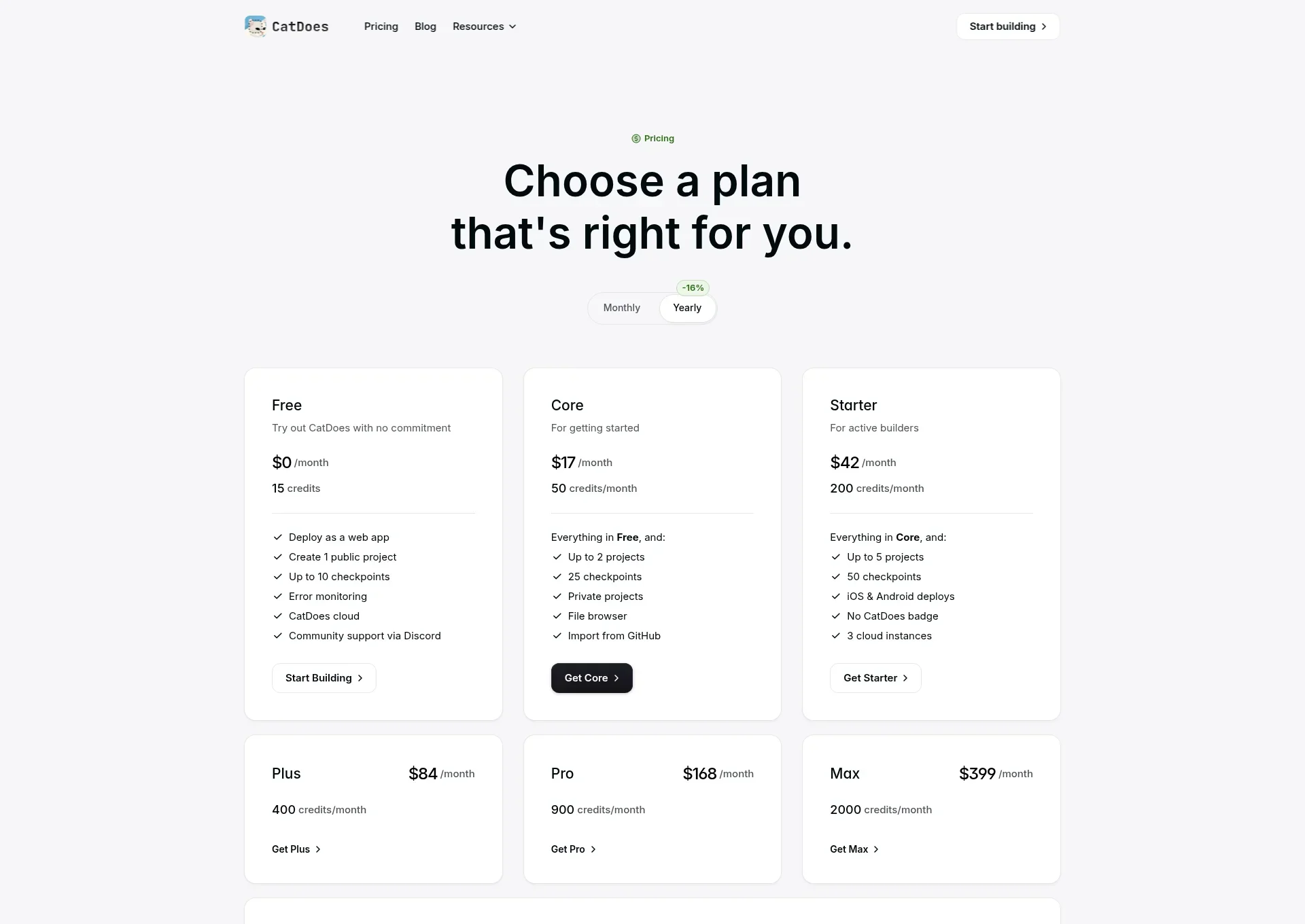
Prices above are monthly; both tools discount annual billing (Base44 by about 20%, CatDoes by about 16%), which is what the screenshots show. The sticker prices rhyme, but you are buying different outcomes. On Base44, backend functions and external integrations sit behind the $50 Builder plan, and each integration call draws from that second credit pool. On CatDoes, the backend is included from the first prompt, and one-time credit bundles ($0.30 per credit) let you top up a heavy week without changing tiers. If you want to see how Base44 stacks up against the wider field, we ranked the best Base44 alternatives separately.
Can You Publish a Native Mobile App?
This is where the two separate most clearly, and for a lot of people it is the question that decides the tool.
Base44 builds web apps. On mobile, they install as Progressive Web Apps, so the browser adds a home-screen icon and caches assets for offline use. Base44 can generate the IPA and AAB files or point you to wrappers like Capacitor, but a wrapped web app is not a native app. Per Base44's own mobile docs, push notifications are not supported, and Apple's Guideline 4.2 routinely rejects apps that are just a website in a shell. If that distinction matters for your project, we break down PWA vs native apps in detail.
CatDoes builds the real thing. The agent generates native code, compiles it to App Store and Play Store binaries, and handles submission, with web deployment and custom domains on the same project. If you already have a Base44 app, you can convert it into a native iOS and Android app by handing the URL to CatDoes. Native output is the whole point of the difference.
The Backend Question: Locked vs Portable
A working app is more than screens. It needs data, logins, and a server, and this is the second place the two tools diverge.
Base44 includes a managed backend, but it lives on Wix infrastructure. You can export the React frontend on the Builder plan; the backend logic and database stay put. Migrating off Base44 means rebuilding the server side from scratch, which is a real consideration if you plan to scale or move later.
CatDoes includes CatDoes Cloud (database, auth, storage, edge functions, realtime) on every plan, and Plus and above export the full project, backend included, with GitHub sync. You are renting the convenience, not locked into it. CatDoes also saves a checkpoint on every change, so an edit that breaks something is a one-click rollback instead of a debugging session, which Base44's lack of version history makes harder.
Which One Should You Choose?
Choose Base44 if: you are building an internal tool, dashboard, or web app that lives in a browser, you want it generated fast, and native mobile is not on the roadmap. Its speed on web prototypes is genuinely good, and the Wix backing means it is not going anywhere.
Choose CatDoes if: you need a native app in the App Store or Google Play, a website, or both, with the backend and store submission handled for you. Founders and non-developers get a finished product instead of a codebase, and developers get the release pipeline off their plate. If your app has to leave the browser, this is the one built for it.
The two are not really rivals so much as answers to different questions. "I need an internal web tool, fast" points to Base44. "I need my app in the stores" points to CatDoes.
Frequently Asked Questions
Does Base44 build native mobile apps? Not real ones. Base44 generates web apps that install as PWAs on iOS and Android, which gives a home-screen icon and offline caching but no true native components, no iOS push notifications, and no standard App Store distribution. CatDoes ships real native binaries to both stores.
Is Base44 owned by Wix? Yes. Wix acquired Base44 in June 2025 for around $80 million. It runs as a standalone product, and its managed backend and hosting sit on Wix infrastructure.
Do I need to know how to code to use either one? No. Both are built for non-developers to describe an app in plain English and get a working result. CatDoes adds GitHub import and full code export for developers who want to go deeper, while Base44 exports the frontend only.
Which is cheaper? Both start free and both have a $20 tier. But Base44 gates backend functions behind its $50 Builder plan and meters integrations from a second credit pool, while CatDoes includes the backend on every plan and sells one-time credit top-ups. Compare the job, not just the sticker.
Can I move my Base44 app to CatDoes? Yes. You can point CatDoes at a Base44 app's URL and rebuild it as a native iOS and Android app, backend included. It is a common path for builders who hit Base44's web-only ceiling.
The Bottom Line
CatDoes vs Base44 comes down to where your app needs to live. Base44 (now a Wix product) is a fast way to build full-stack web apps and internal tools that run in a browser, with a managed backend on Wix. CatDoes is an AI agent that turns plain-English ideas into real native mobile apps and websites, with the backend, deployment, and App Store and Google Play publishing included, no code required.
If your goal is a finished app in the stores rather than a web page saved to a home screen, try CatDoes free and describe your first app. The agent takes it from there.
Nafis Amiri
Co-Founder of CatDoes