Blog
Insights
7 Best Base44 Alternatives in 2026 (Free & Paid)
Base44 has no native mobile output and locks its backend to Wix. Compare 7 Base44 alternatives for iOS, Android, and web in 2026, free and paid, with pricing.

Nafis Amiri
Co-Founder of CatDoes
TL;DR: Base44 generates web apps fast, but credits burn during debugging, the backend stays locked to Wix infrastructure, and there is no native mobile output. CatDoes is the closest match for builders who need a real mobile app or a web app with a built-in backend included from the first prompt. Lovable, Bolt.new, Replit, v0, Bubble, and FlutterFlow each fit different needs depending on code ownership, visual editing, or production scale.
You wrote a prompt, Base44 generated a working web app, and the first version felt like magic. Then came the second prompt. The third. The agent broke something that worked yesterday, ate 11 credits trying to fix itself, and now you are eyeing the $50 Builder plan just to unlock a backend function.
You are not alone. Base44's own feedback forum has open threads about regression loops where the agent reintroduces bugs into working features and consumes credits debugging itself. After Wix acquired Base44 for $80 million in June 2025, the platform grew fast but kept the same credit-based pricing and locked backend that frustrate builders trying to scale.
This guide ranks the 7 best Base44 alternatives for 2026 (free and paid), starting with the one that solves the biggest gap in Base44's product: shipping a real native mobile app, not just a PWA. Whether you want a free Base44 alternative to test an idea or a production-grade tool to ship a real app, there is a match below.
Table of Contents
Why Builders Are Switching Away from Base44
Quick Comparison Table
1. CatDoes
2. Lovable
3. Bolt.new
4. Replit
5. v0 by Vercel
6. Bubble
7. FlutterFlow
How to Choose the Right Base44 Alternative
FAQ
Why Builders Are Switching Away from Base44
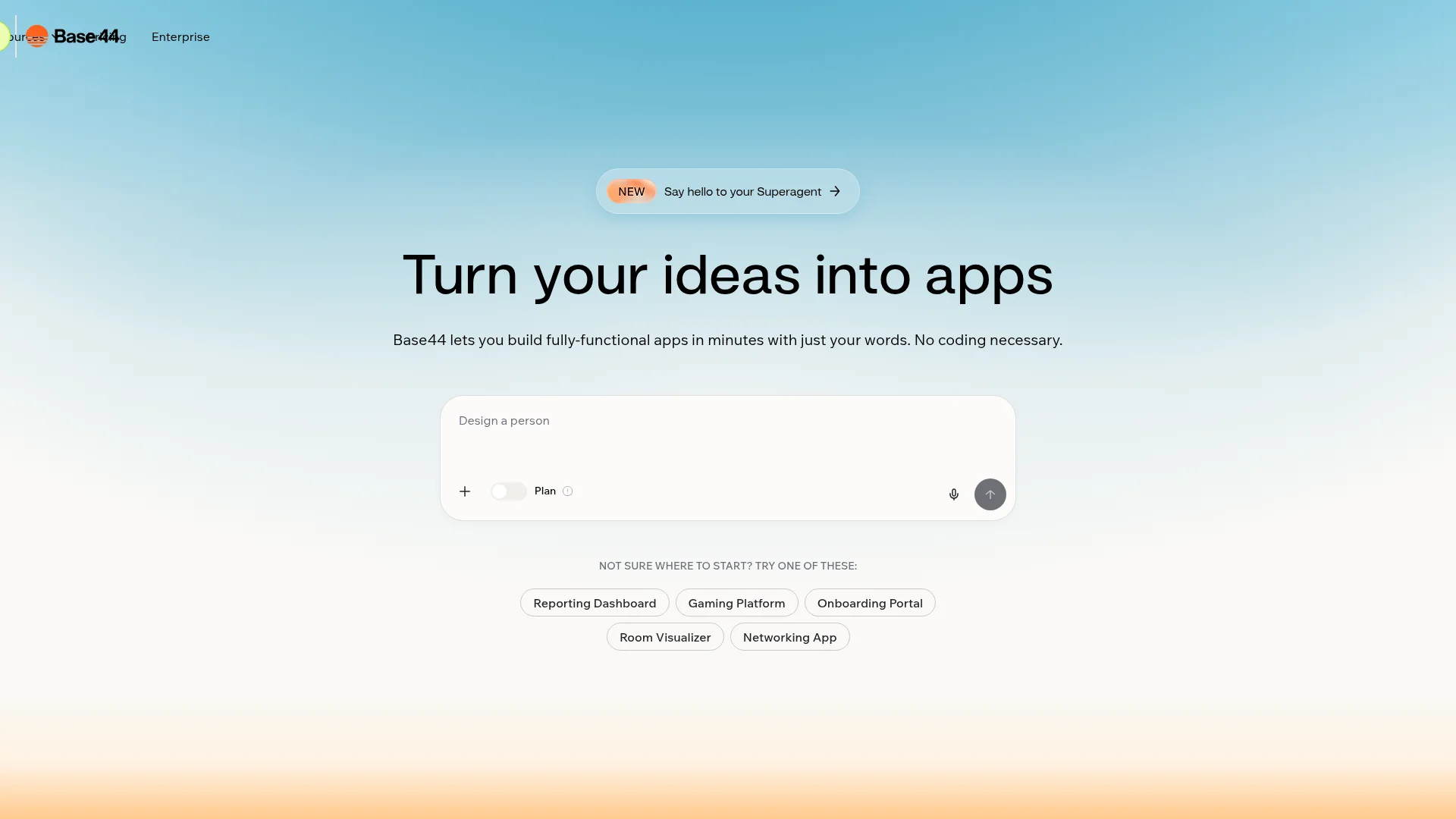
Base44 does one thing well: turn a chat prompt into a working full-stack web app in minutes. Backend, frontend, database, auth, and deployment all come from one prompt. For a fast prototype, that speed is hard to beat.
The problems start when the project gets serious. The complaints below come up consistently across Trustpilot, the Base44 feedback board, and reviews on banani.co and nocode.mba.
Credit burn during debugging. Each AI message costs 1 to 3 credits. The free tier caps at 25 credits per month with a 5 per day limit, which most users hit within their first session. Asking the agent to fix its own bugs consumes the same credits as building new features.
Regression loops. Base44 has no checkpoint or rollback system. The agent often breaks features that worked in earlier versions, then spends more credits trying to fix itself. One user report on Base44's feedback board documents the majority of credits going to fixing AI-introduced bugs rather than new features.
No native mobile output. Base44 generates web apps that can install as Progressive Web Apps. There is no path to the App Store or Google Play with native components, real push notifications, or offline storage.
Locked backend. You can export the React frontend on the Builder plan, but the backend logic and database stay on Wix infrastructure. Migrating off Base44 means rebuilding the server side from scratch.
Hard 600-page limit. Apps over 600 pages start running into builder availability issues, per Base44's own documentation.
Backend functions are paywalled. External integrations require the $50 Builder plan, and each external service call deducts from a separate integration credit pool.
No SOC 2 or ISO 27001. For internal tools handling sensitive data, the missing compliance certifications rule Base44 out before the build starts.
If you have hit any of these walls, the alternatives below address them directly.
Quick Comparison Table
Tool | Focus | Built-in Backend | Code Ownership | Free Tier | Starting Price |
|---|---|---|---|---|---|
CatDoes | Mobile + Web | Yes (full BaaS) | Plus+ (export + GitHub) | Yes | $20/mo |
Lovable | Web | Supabase | Yes (GitHub) | Yes | $20/mo |
Bolt.new | Web | No | Yes | Yes | $25/mo |
Replit | General | Partial | Yes | Yes | $20/mo |
v0 | Web (Next.js) | Add-ons | Yes | Yes | $20/mo |
Bubble | Web (no-code) | Yes | Limited (visual) | Yes | $29/mo |
FlutterFlow | Mobile + Web | Firebase | Paid plans | Yes | $39/mo |
Base44 | Web (PWA) | Yes (locked) | Frontend only | Yes | $20/mo |
CatDoes is the only alternative on this list that ships native iOS, Android, and web from the same project. Lovable matches Base44's web focus while letting you own the GitHub repo. The other options trade speed for code control, visual editing, or framework flexibility. That native-versus-web split is the whole story in CatDoes vs Base44.
1. CatDoes
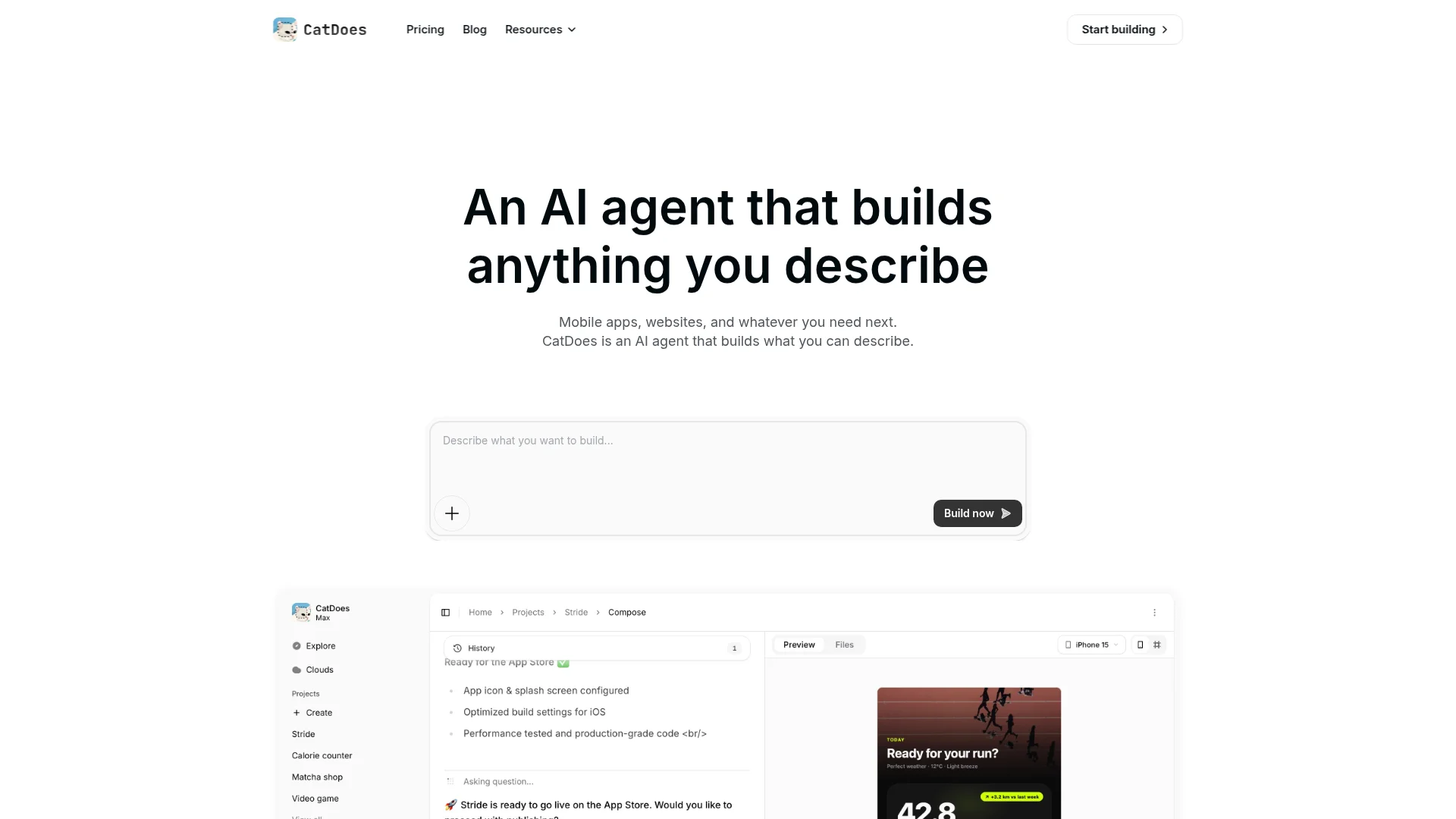
Best for: Builders who want a native mobile app, a web app, or both from one prompt, without paying extra for backend functions or losing credits to debugging loops.
CatDoes is the closest Base44 alternative for anyone whose project needs to live in the App Store or Google Play. Both tools generate full-stack apps from natural language and both ship with a built-in backend (CatDoes Cloud and Base44's bundled BaaS). The differences show up in what you can ship, how reliably you can iterate, and what happens when you need to top up credits mid-project.
What CatDoes Fixes That Base44 Gets Wrong
Native iOS, Android, and web from one project. Base44 only ships PWAs. CatDoes generates real React Native code that compiles to App Store and Play Store binaries, plus a Vite or Next.js website if you want one. If your Base44 app already exists, you can convert it into a native iOS and Android app by pasting the URL into CatDoes.
Checkpoints prevent regression loops. Base44's biggest workflow problem is the agent breaking features it built earlier. CatDoes saves a checkpoint with every change (up to 1,000 on higher plans), so if an edit breaks something you roll back to a working version instead of paying credits to debug your way out.
Four agent tiers control credit spend. CatDoes lets you switch between Low, Medium, High, and Max agent tiers. Low handles small visual changes and repetitive work at the lowest cost, while High and Max are for planning complex features and the hardest problems. Base44 charges the same per message regardless of complexity, which is why credits burn fast on quick UI tweaks.
One-time credit bundles for busy weeks. Base44 has no top-up option, so running out mid-project means waiting for the monthly reset or upgrading to a higher tier. CatDoes sells credit bundles at $0.30 per credit on top of any plan: 100 for $30, 200 for $60, 500 for $150.
Compose runs in the cloud. Base44's chat agent stays in your browser. Compose, the CatDoes cloud agent, runs on its own machine, installs packages, executes tests, and fixes its own errors before handing work back. That extra context window is what keeps it from losing track of your project after the third or fourth iteration.
Code export covers the full project. Base44 only exports the React frontend. CatDoes exports the full project (frontend, backend, infrastructure config) on Plus and above, with GitHub sync included.
CatDoes vs Base44: Head-to-Head
Feature | CatDoes | Base44 |
|---|---|---|
Output | Native iOS, Android, Web | Web (PWA) |
Built-in backend | Yes (database, auth, storage, edge functions, realtime) | Yes (locked to Wix) |
App Store publishing | Yes (real native binary) | No |
Version control | Checkpoints (up to 1,000) | None |
AI models | 4 agent tiers (Low, Medium, High, Max) | 1 model |
Credit top-ups | Yes ($0.30/credit) | No |
Cloud agent | Yes (Compose) | Browser-based |
Code export | Full project (Plus+) | Frontend only (Builder+) |
Free tier | 15 one-time credits | 25/mo (5/day cap) |
Starting price | $20/mo (50 credits) | $20/mo (Starter) |
Pricing: Free tier with 15 one-time credits. Paid plans run from $20/mo (Core, 50 credits) to $399/mo (Max, 2,000 credits). Credit bundles at $0.30/credit work on every plan, so you do not have to upgrade just because one week was heavier than usual.
2. Lovable
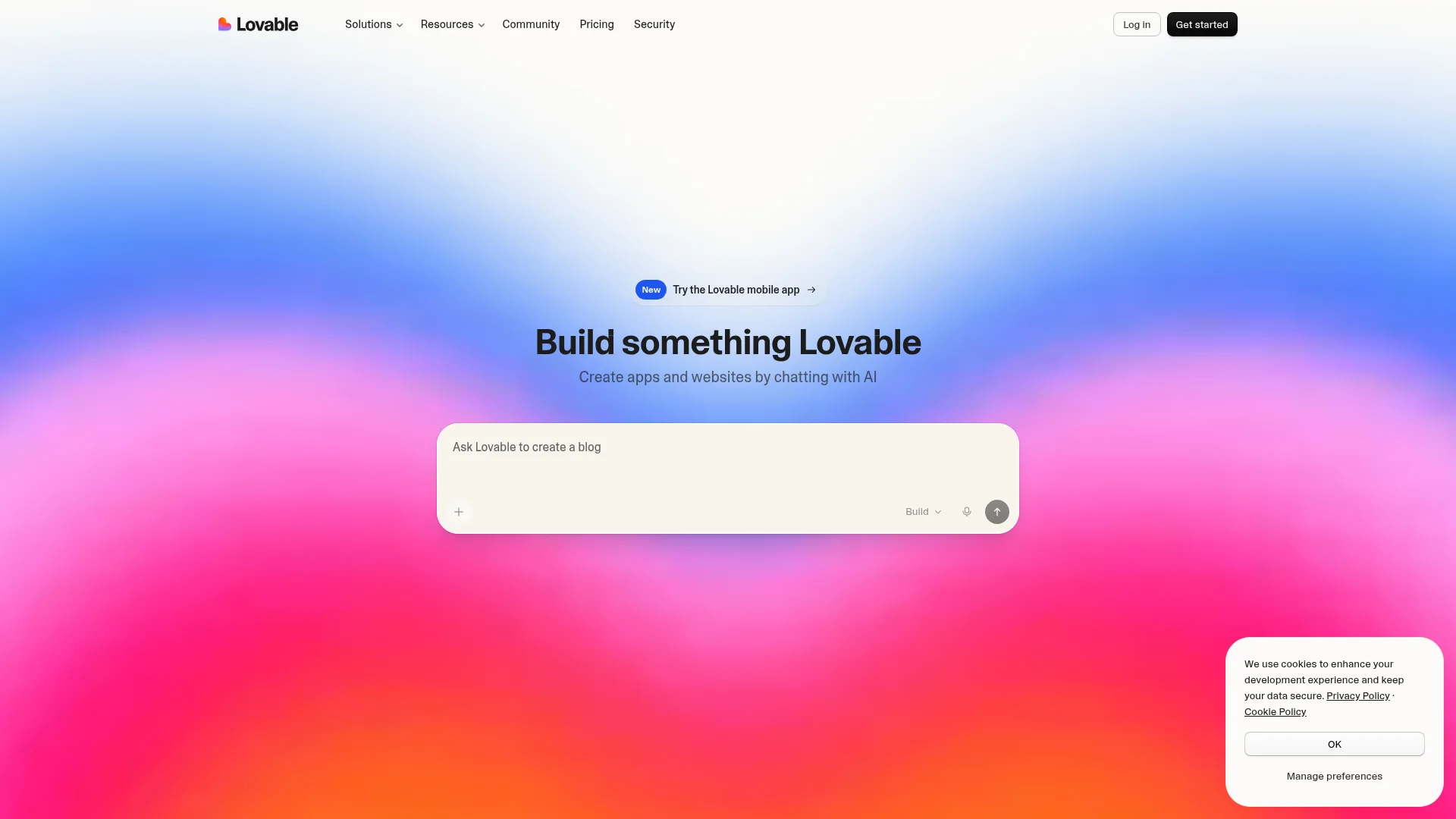
Best for: Web app builders who want code ownership and a Supabase backend they can migrate later.
Lovable is the most direct Base44 alternative for web apps. It generates full-stack React and TypeScript projects from prompts, and every project lands in a GitHub repo you own. The backend connects to Supabase, so the database and auth layer live on infrastructure you can take with you if you leave Lovable.
The catch versus Base44: Lovable is web-only. If your project needs a real mobile app, Lovable alone will not get there. You can turn a Lovable web app into a native mobile app using CatDoes, which is a common path for builders who hit the same web-only ceiling on Base44.
Lovable raised $330M at a $6.6B valuation and reached $200M ARR by early 2026, so it is the most well-funded option on this list.
Pricing: Free tier available. Paid plans from $20/mo.
3. Bolt.new
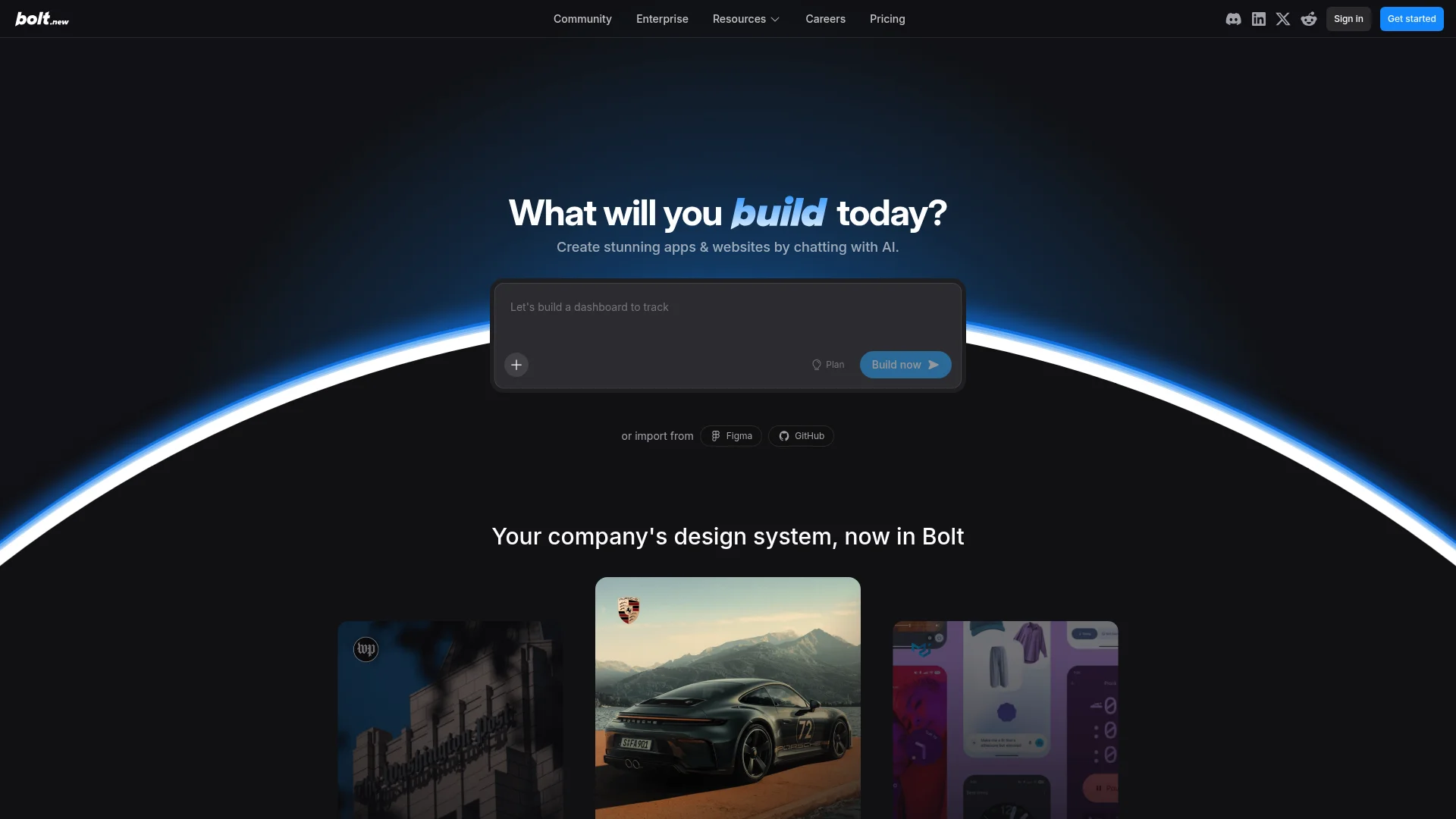
Best for: Web developers who want framework choice (React, Next.js, Vue, Svelte) and a browser IDE to edit generated code directly.
Bolt.new is the closest match to Base44's vibe-coding feel for web. You describe what you want, the agent generates a full-stack app, and you keep editing in the same browser tab. Bolt supports more frontend frameworks than Base44, which is useful if you have an opinion about React vs Next.js vs Svelte.
The gap: Bolt.new has no built-in backend. You wire up Supabase, Firebase, or another database yourself. For a Base44 user who liked the all-in-one feel, that is a step backward. For a developer who wants control over backend choice, it is the point.
Pricing: Free tier available. Bolt.new Pro at $25/mo.
4. Replit
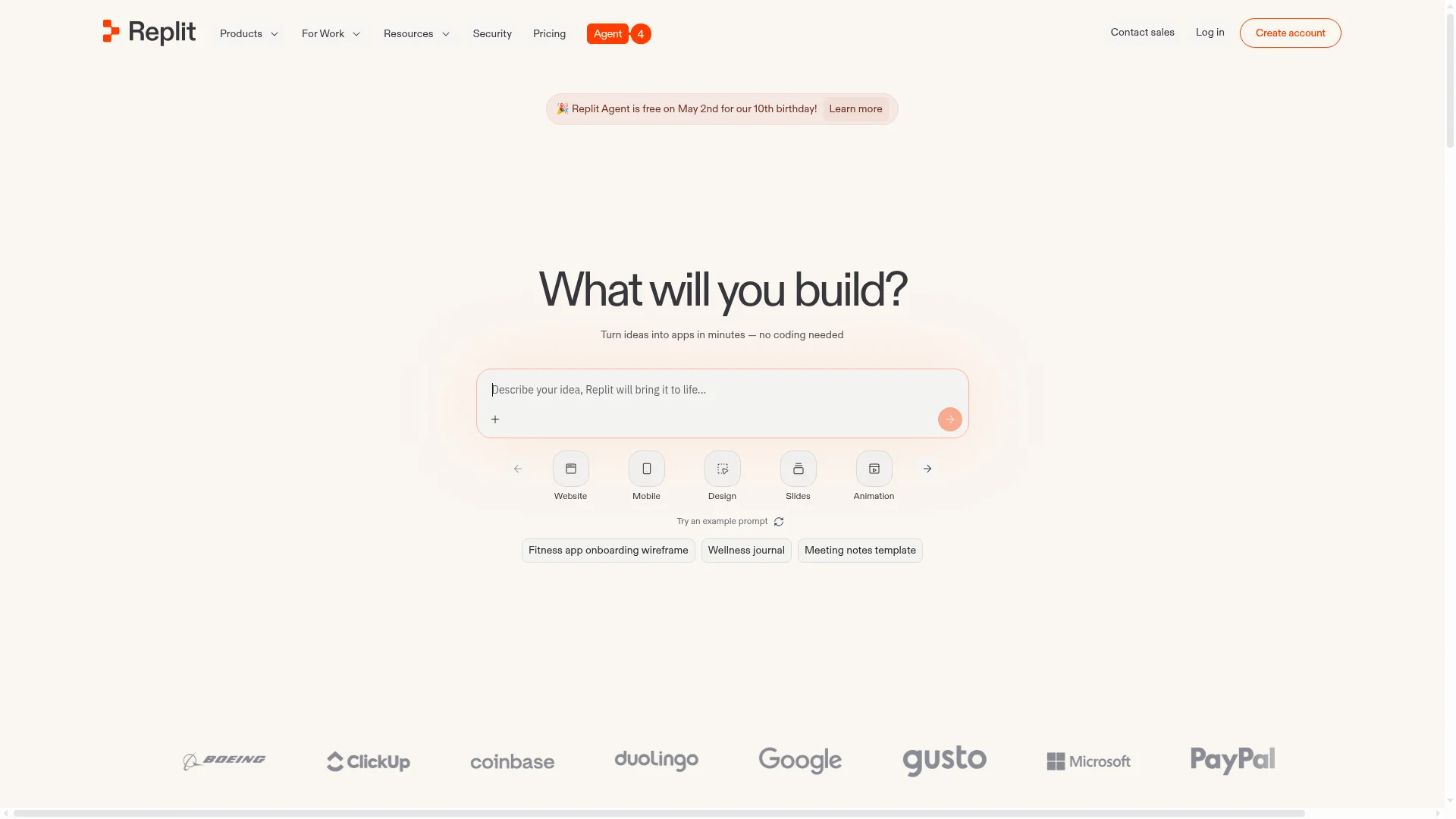
Best for: Builders who want one workspace for code, AI generation, hosting, and deployment.
Replit started as a browser-based code editor and grew into a full app builder with an AI agent that handles entire builds from a prompt. It can generate web apps, scripts, mobile apps via React Native, and backend services from the same workspace.
For Base44 users, the appeal is flexibility. You are not boxed into one stack or one app pattern. The downside is that Replit is more general-purpose, so building a polished frontend takes more guidance than Base44 or Lovable, and the backend pieces (auth, database, storage) require manual setup.
Pricing: Free tier available. Replit Core at $20/mo (annual billing).
5. v0 by Vercel
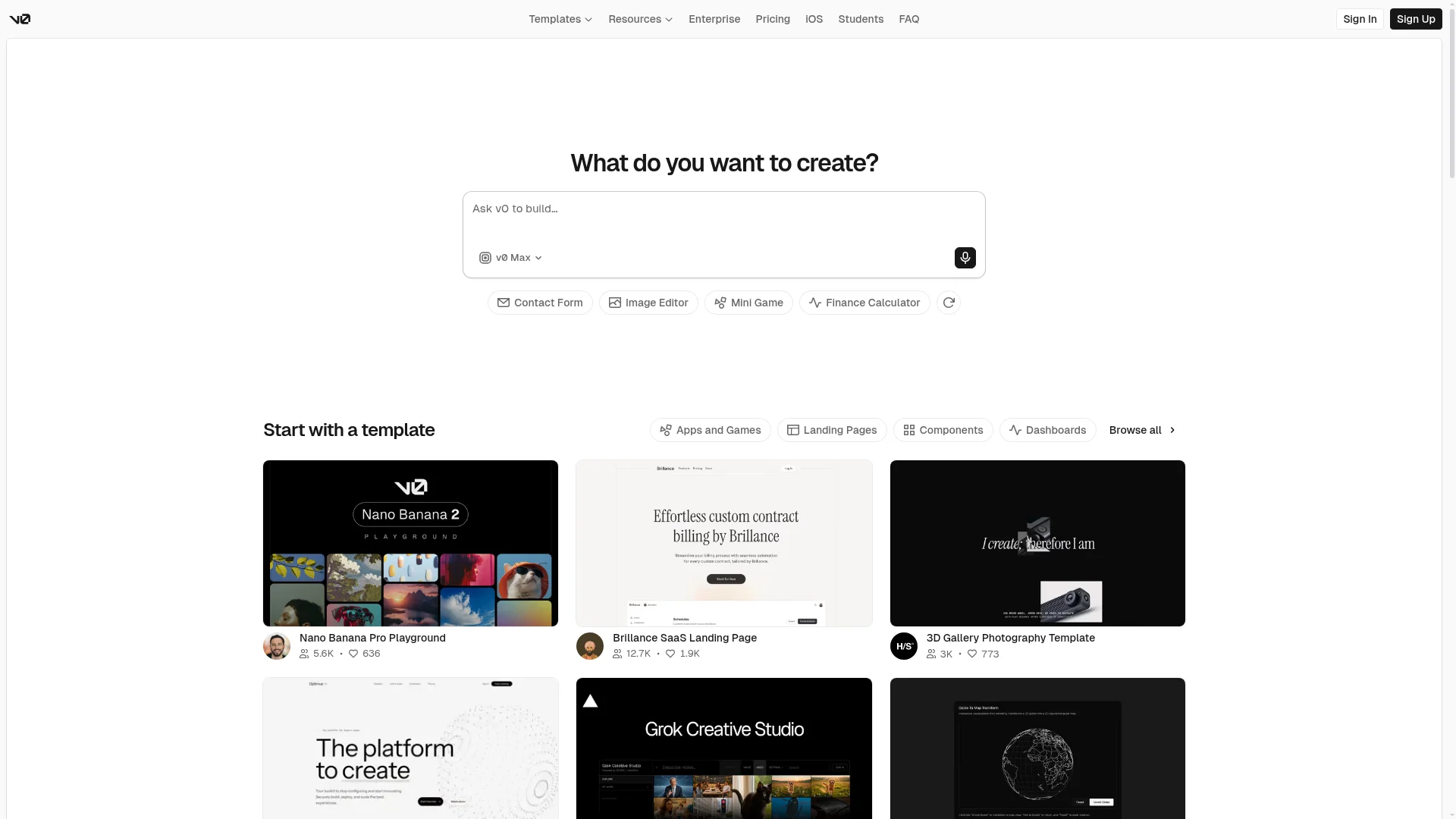
Best for: Builders standardizing on Next.js who want polished UI generation tied directly to Vercel deployment.
v0 generates Next.js apps with shadcn/ui components and pushes them to Vercel for hosting. The output is clean React code that experienced developers can extend, which puts v0 closer to a developer tool than Base44's chat-first interface.
v0 does not include a built-in backend. You bring Vercel Postgres, Neon, Supabase, or your own database. If your goal is a full-stack web app from one prompt with database and auth included, Base44, Lovable, and CatDoes are closer matches. If your goal is the cleanest Next.js code and zero-friction Vercel deployment, v0 wins.
Pricing: Free tier available. v0 Premium at $20/mo.
6. Bubble
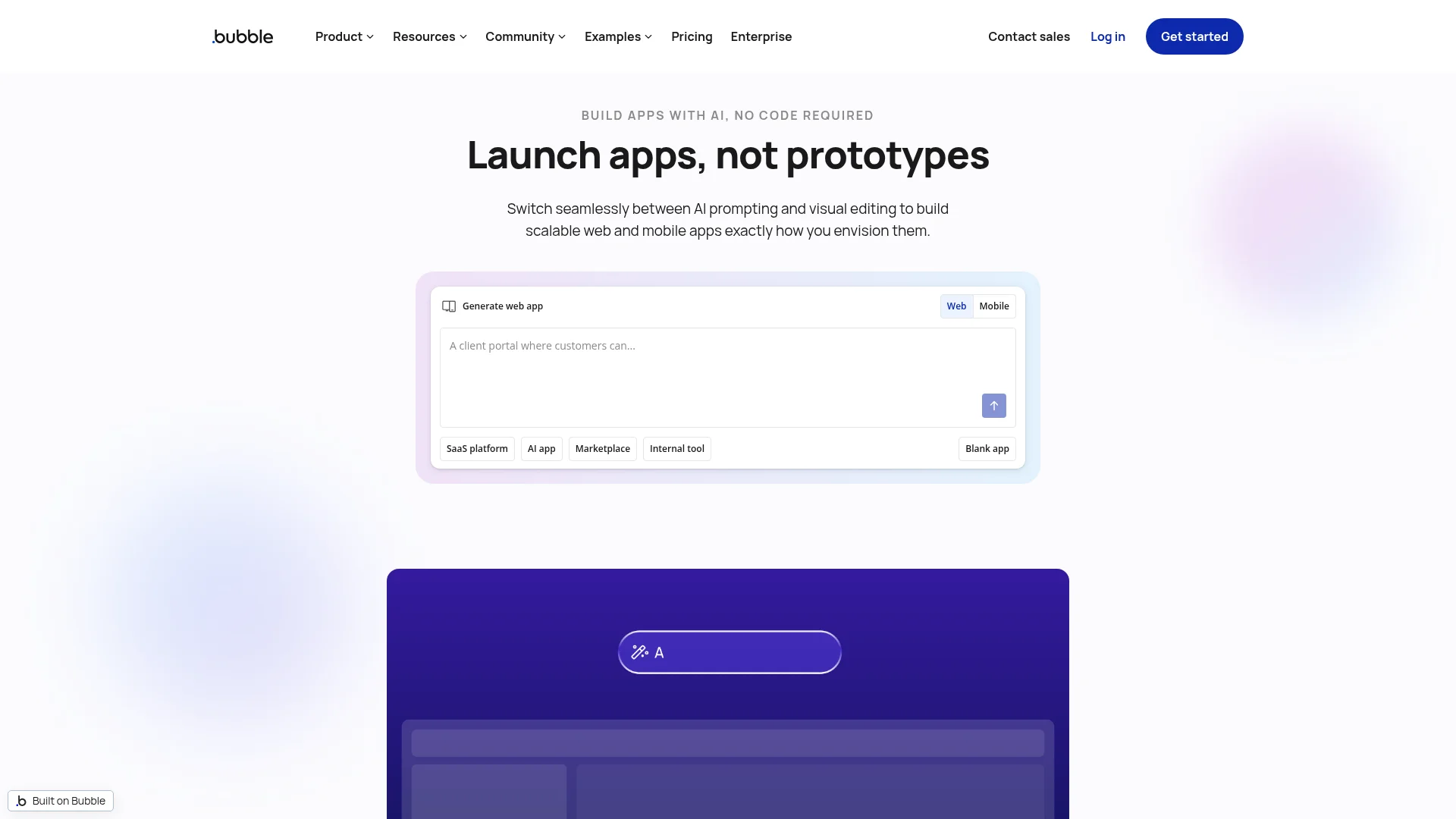
Best for: Non-technical builders shipping complex multi-role web apps with workflows that AI alone struggles to model.
Bubble is the established no-code platform Base44 is partly competing against. Instead of generating code from prompts, Bubble gives you a visual canvas, a workflow editor, and a built-in database. It can model intricate business logic that AI prompts often get wrong, like multi-role permissions, conditional approval flows, and complex data relationships.
The cost: Bubble is slower to start. Base44 builds a working app in minutes, while Bubble takes hours to days for the same functionality. For internal tools with real business logic, that predictability is worth the time. For prototypes, Base44 is faster.
Pricing: Free tier available. Paid plans from $29/mo.
7. FlutterFlow
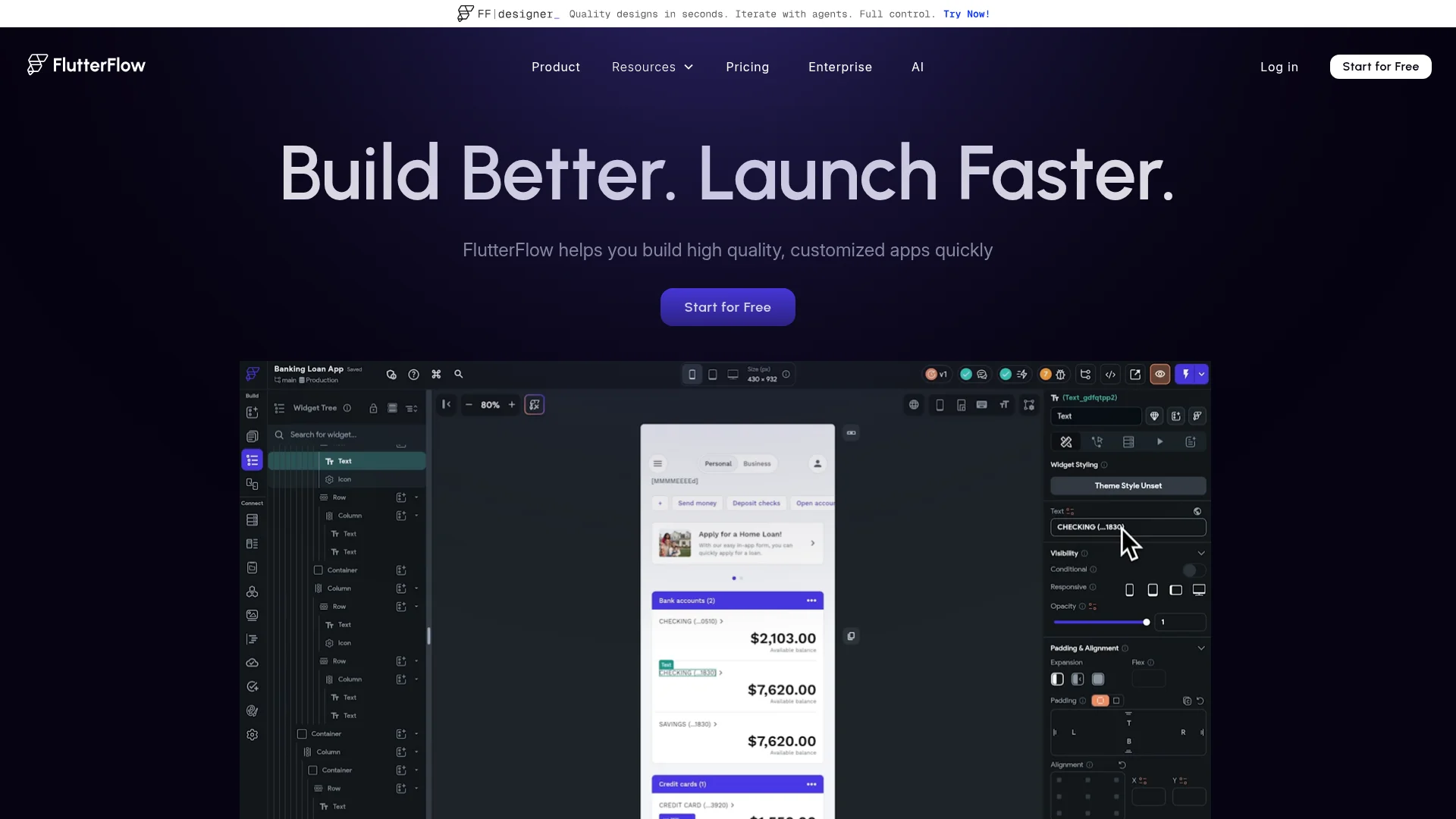
Best for: Builders who want native mobile apps from a visual canvas with Firebase as the backend.
FlutterFlow takes a different angle: visual editing for native mobile apps built on Flutter. You drag UI components, wire up Firebase, and preview on a simulator. AI features assist with component generation, but the core experience is manual.
For Base44 users who realized they actually need a native mobile app and want pixel-perfect control, FlutterFlow is the closest visual match. The cost is a steeper learning curve (state management, Firebase rules, Flutter widgets) and slower iteration speed than chat-based tools. CatDoes covers the same mobile use case via prompts instead of canvases, with the backend included by default.
Pricing: Free tier available. Paid plans from $39/mo.
How to Choose the Right Base44 Alternative
These seven are the strongest Base44 competitors in 2026. Three questions narrow the list quickly:
Do you need a native mobile app? If yes, CatDoes is the strongest match. It is the only chat-based tool here that ships real native iOS and Android binaries. FlutterFlow gets you there too, but with a manual visual canvas instead of prompts. Lovable, Bolt.new, Replit, v0, and Bubble are web-first.
Do you need to own the backend? Base44's locked backend is a deal-breaker for anyone planning to scale. Lovable and CatDoes both let you take backend code with you (Lovable via Supabase plus GitHub, CatDoes via full project export on Plus+). Bolt.new, Replit, and v0 let you choose your own backend from the start. For a wider view of the category, see our 2026 guide to AI app builders.
How predictable does pricing need to be? If credit burn during debugging is the reason you are leaving Base44, the order matters. CatDoes sells one-time credit bundles ($0.30 each) on every plan, which means a heavy debugging week does not force an upgrade. Lovable and Bolt.new run usage-based plans similar to Base44. Bubble and FlutterFlow charge per workspace, so debugging does not eat directly into a separate credit pool.
Looking for a free Base44 alternative? Every tool on this list has a free tier. Bolt.new, Lovable, Replit, and v0 all let you start building at no cost, and CatDoes gives you 15 one-time credits to test a real mobile build before you pay. If a free Base44 alternative is your priority, start there and upgrade only once you are ready to ship.
What about Base44 vs Kiro or Quickbase? Kiro (Amazon's agentic IDE) and Quickbase (an enterprise no-code database platform) show up in Base44 comparisons too, but they serve different users. Kiro targets developers writing production code with AI assistance, and Quickbase focuses on internal business apps rather than customer-facing web or mobile products. For the prompt-to-app workflow most Base44 users want, the seven tools above are closer matches.
FAQ
Is Base44 free to use?
Yes, Base44 has a free tier with 25 message credits per month and a 5 per day cap, plus 500 integration credits. Most users hit the free ceiling within their first session because debugging consumes the same credits as building. Paid plans start at $20/mo (Starter), with backend functions and external integrations gated behind the $50/mo Builder plan.
What does Base44 actually build?
Base44 generates full-stack web applications using React on the frontend, with a managed backend that includes a database, authentication, API routes, and hosting. Apps install as Progressive Web Apps (PWAs) on mobile, but they are not real native apps. There is no path to the App Store or Google Play with native components.
Can I export my code from Base44?
Frontend only, on the Builder plan and above. The backend logic and database stay locked to Wix infrastructure. If you migrate off Base44, you keep your React frontend but rebuild the server side from scratch.
What is the best Base44 alternative?
It depends on what you are missing. For native mobile apps, CatDoes is the closest match because both Base44 and CatDoes generate full-stack apps from prompts, but only CatDoes ships native iOS and Android binaries. For web apps with code ownership, Lovable is the closest match because it stores every project in a GitHub repo you own with a Supabase backend you can migrate. For developer-controlled web stacks, Bolt.new and v0 give you more framework flexibility.
Why do builders leave Base44?
The most common reasons in 2026 are credit burn during debugging, regression loops where the agent breaks features it built earlier, the locked backend that blocks migration, and the lack of native mobile output. Compliance is a separate factor for internal tools, since Base44 has neither SOC 2 nor ISO 27001 certification.
Does Base44 build mobile apps?
Not real ones. Base44 generates web apps that can install as PWAs on iOS and Android, which gives a home screen icon and offline caching, but no real push notifications on iOS, no in-app purchases, and no App Store distribution. For a true native mobile app, you need a tool that generates React Native or Swift code, or you rebuild the project in Flutter.
Bottom line: Base44 made AI web app building approachable, and Wix saw enough in that approach to write an $80 million check after six months. But the credit model, locked backend, and PWA-only output keep it boxed into prototypes. If you want a tool that ships to the App Store, owns the full project, and lets you top up credits when debugging eats into your week, try CatDoes free and see where the workflow lands.
Nafis Amiri
Co-Founder of CatDoes