Blog
Tutorials
Convert a Website to a Mobile App (iOS & Android) 2026
Learn how to convert a website to a native mobile app for iOS and Android with CatDoes — no code, no webview wrapper, no agency. A real native app, built by AI.

Nafis Amiri
Co-Founder of CatDoes
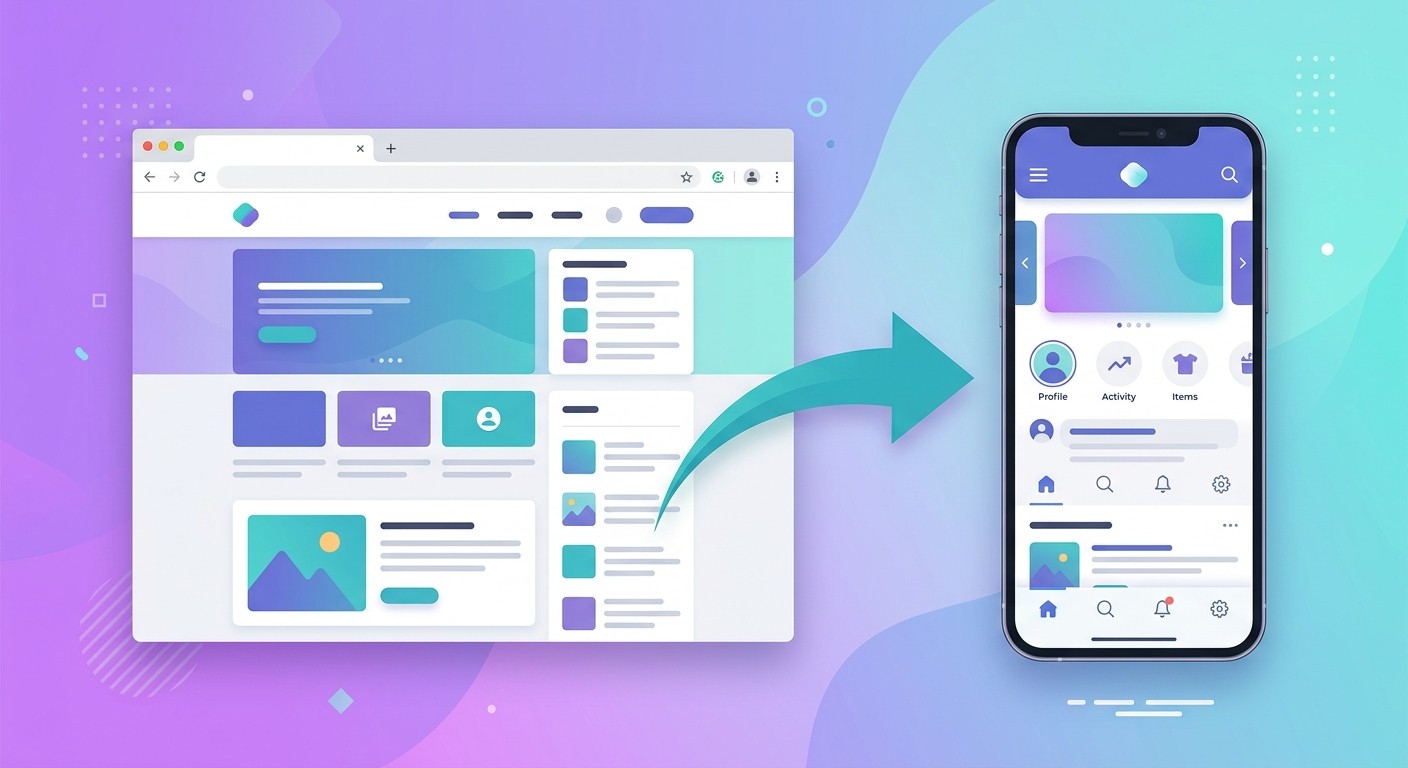
You built a website. Now your customers keep asking the same thing: "Is there an app?" A mobile app on the App Store and Google Play gives you push notifications, a home-screen icon, offline access, and the credibility that a bookmark in Safari never will.
The problem is that turning a website into a real mobile app has always meant one of two bad options: pay a development agency $20,000+ and wait six months, or use a cheap "webview wrapper" that Apple rejects for being a glorified browser. There is now a third path. This guide shows you how to convert a website into a genuine native iOS and Android app with CatDoes, an AI agent that does the rebuild for you.
Table of Contents
Can You Turn Any Website Into a Mobile App?
WebView Wrapper vs. Native App: What Actually Works
Why WebView Wrapper Apps Get Rejected From the App Store
How CatDoes Converts Your Website Into a Native App
Three Ways to Convert Your Website with CatDoes
Step-by-Step: Convert Your Website to a Mobile App
Native Features You Can Add After Converting
How Much Does It Cost to Convert a Website to an App?
Frequently Asked Questions
Can You Turn Any Website Into a Mobile App?
Yes. Any website or web app can be converted into a mobile app for iOS and Android. The important question is how you convert it, because the method decides whether you end up with a real app that gets approved on the App Store or a wrapper that gets rejected.
There are three common approaches: a WebView wrapper that loads your site inside a native shell, a full native rebuild in Swift and Kotlin, and an AI-generated native app that recreates your site as a true cross-platform app. The first is fast but fragile, the second is powerful but slow and expensive, and the third, the approach CatDoes uses, gives you a native app without the agency price tag.
WebView Wrapper vs. Native App: What Actually Works
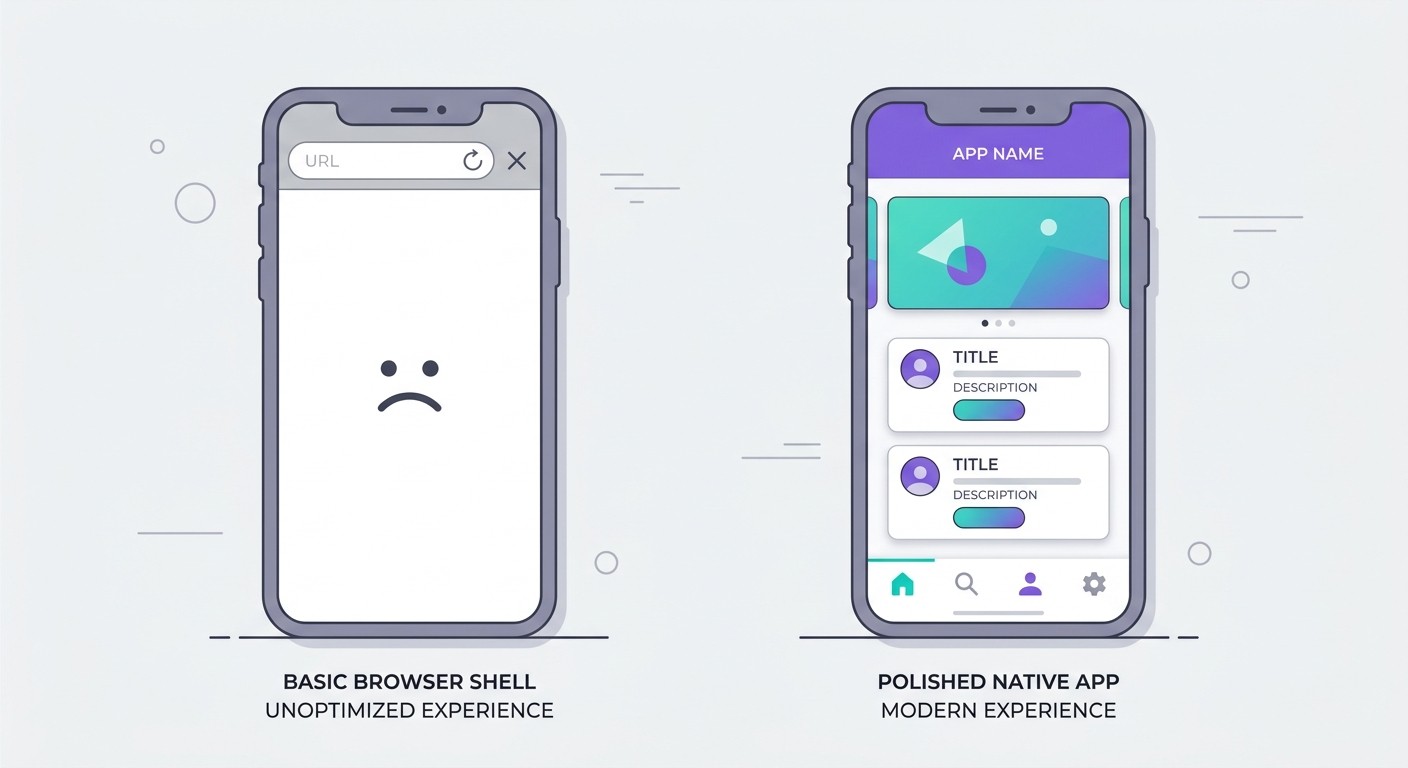
Most "website to app converters" you find online are WebView wrappers. They take your existing URL and display it inside a mobile browser component (WKWebView on iOS, WebView on Android). It is essentially your website running in a frame with an app icon on top. We unpack that wrapper problem in more depth in our guide to converting a website to an app, and the same trap catches Netlify web apps moving to mobile.
A native app is different. The interface is built from real native components (native navigation, native gestures, native performance) and it can use device hardware directly. Here is how the three paths compare.
Factor | WebView Wrapper | Native Rebuild (Agency) | CatDoes (AI Native) |
|---|---|---|---|
Build time | Hours | 3–6+ months | Minutes to hours |
Typical cost | Low | $20,000+ per platform | Subscription |
App Store approval | Often rejected | Yes | Yes, built native |
Native feel & speed | Poor | Excellent | Excellent |
Offline support | None | Full | Full |
Push notifications | Limited | Yes | Yes |
Engineering needed | Some | A whole team | None |
If you only need a quick internal tool, a wrapper might be fine. But if you want an app that customers download, trust, and keep on their home screen, you need something native. That is also what keeps you out of trouble with Apple.
Why WebView Wrapper Apps Get Rejected From the App Store
Apple's App Store Review Guideline 4.2 (Minimum Functionality) is the single most common reason web-wrapper apps get rejected. The guideline states plainly: "Your app should include features, content, and UI that elevate it beyond a repackaged website."
In practice, reviewers reject apps that open a single webview with no native UI, no tab bar, no offline support, and no features Safari does not already offer. If your app is just your website in a frame, Apple sees no reason for it to exist on the store. Google Play applies similar scrutiny to low-functionality apps.
The fix is not a trick. It is genuinely making the experience native. Apple's own guidance to developers is to "write those pages as native pages inside your app rather than merely views onto a web page." That is exactly the gap an AI-built native app closes, and why converting properly matters more than converting quickly.
How CatDoes Converts Your Website Into a Native App
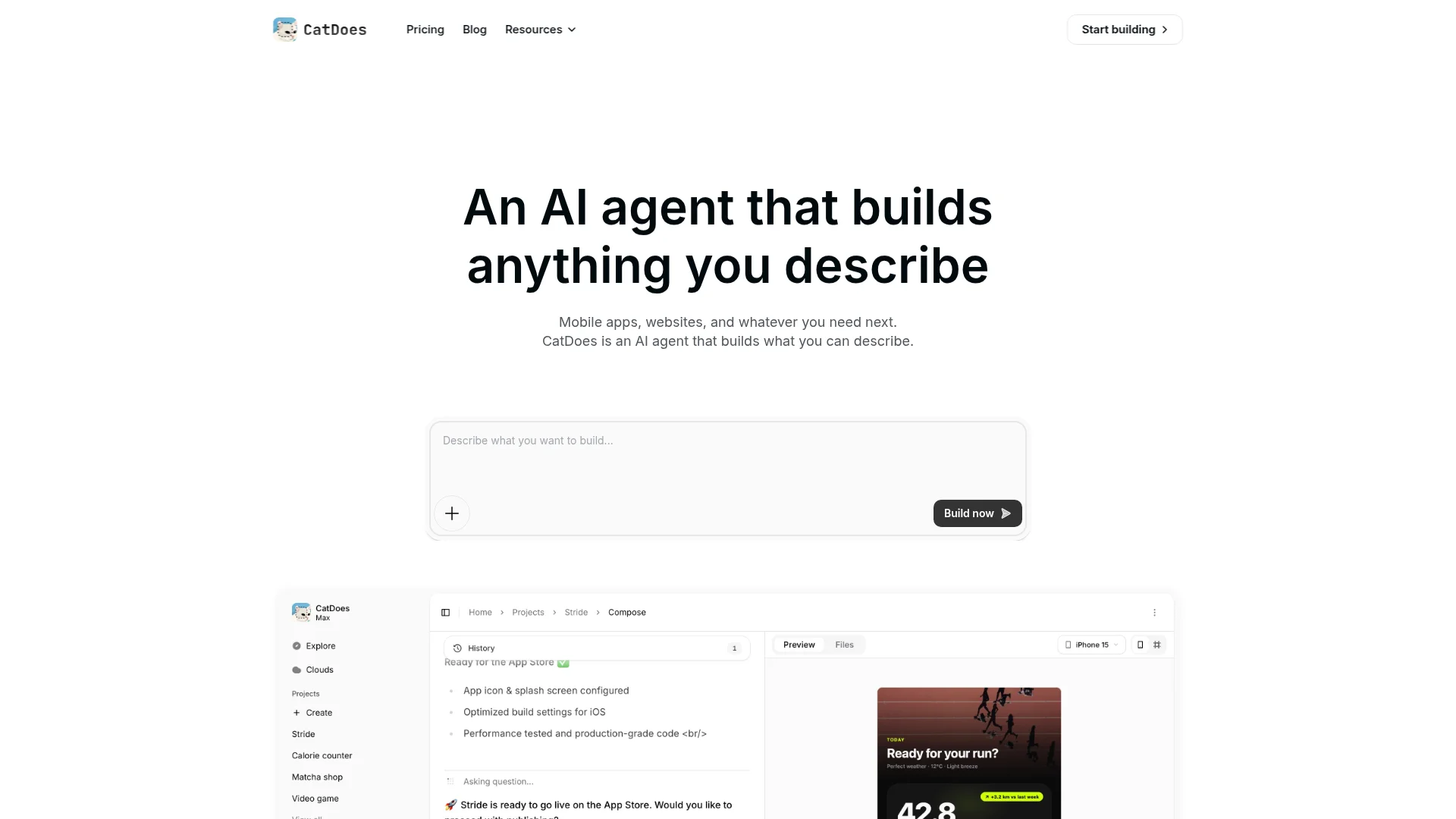
CatDoes is an AI agent that builds, deploys, and maintains mobile apps from natural language. Instead of wrapping your site in a browser, it reads your website and rebuilds it as a real cross-platform native app, then ships it to the App Store, Google Play, and the web.
Here is what makes the CatDoes conversion different from a wrapper:
Real native output. The agent generates a genuine cross-platform app with native navigation and components, not a webview, so it passes App Store review on functionality.
Three ways in. Paste your URL, connect a GitHub repo, or upload a screenshot of your site, and the agent rebuilds from any of them (more on this below).
Backend included. CatDoes Cloud ships with database, authentication, storage, edge functions, and realtime, so your app has a backend from day one.
Full deployment. The agent handles building and shipping to the App Store and Google Play, including custom domains for the web version.
It maintains the app too. Because the agent built it, you can ask it for changes in plain language later instead of hiring a developer for every update.
If you have already built a web app on a tool like a no-code or AI website builder, the same flow applies. See our guide on turning a Lovable web app into a mobile app for a related walkthrough. Our companion guide on turning a website into a mobile app covers the non-Lovable versions of the same job.
Three Ways to Convert Your Website with CatDoes
You do not have to hand over your website in any one specific way. CatDoes gives you three ways to get your site to the agent, and it rebuilds a native app from any of them. Use whichever you already have.
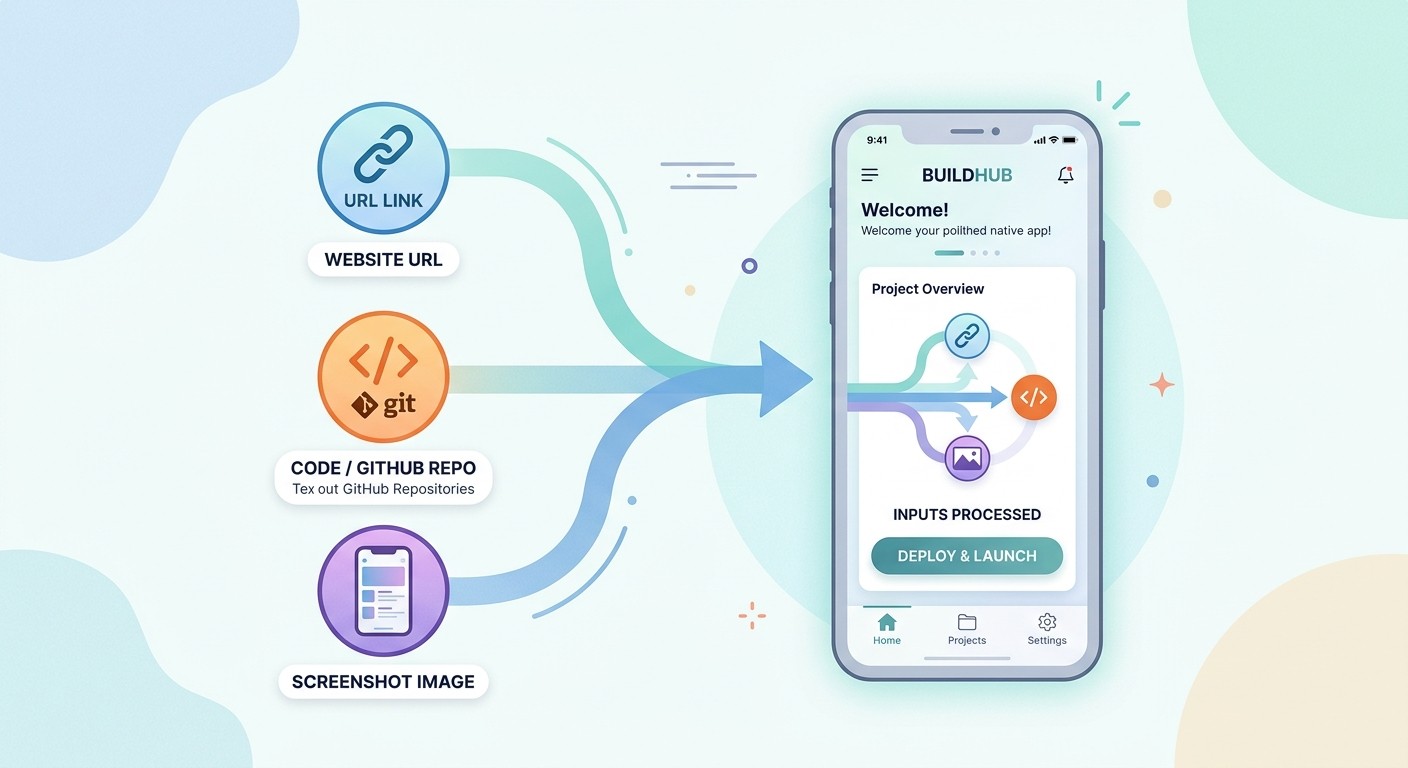
Paste your website URL. Drop in your live website link and CatDoes fetches everything, your pages, content, layout, and structure, then rebuilds it as a native app. Nothing to export and nothing to upload.
Import your code. Connect a GitHub repository and the agent reads your existing codebase, understands how your site is built, and converts that code into a real native app.
Upload a screenshot. Have a screenshot of your site, or even a design mockup? Add the image, tell the agent "I want this as a mobile app," and it recreates the look and flow as a native app.
All three paths land in the same place: a genuine cross-platform native app, not a webview wrapper. Pick the input that is easiest for you and let the agent do the rebuild.
Step-by-Step: Convert Your Website to a Mobile App
Converting a website to a native iOS and Android app with CatDoes takes a handful of steps. You do not write any code.
Start a project and give the agent your site. Sign in to CatDoes and create a new project, then hand over your site any of three ways: paste your website URL, connect your GitHub repository, or upload a screenshot of your site.
Describe the app you want. Tell the agent what to build. For example, "Turn my website into a native app with a bottom tab bar, push notifications, and offline support." Natural language is the only input required.
Let the agent build. CatDoes runs in the cloud, spins up subagents, and generates a real native app from your site. You watch it work and preview the result live.
Refine in plain language. Ask for changes: adjust the navigation, restyle a screen, add a login flow. The agent edits the app and re-renders.
Deploy to the stores. When you are happy, have the agent build and ship to the App Store and Google Play, plus the web with a custom domain.
For more on the broader idea, our post on how to turn your website into an app covers the strategy side in depth.
Native Features You Can Add After Converting
The whole point of converting to a native app is to do things a website cannot. Once your site is a CatDoes app, you can ask the agent to add native capabilities that also satisfy Apple's "minimum functionality" requirement.
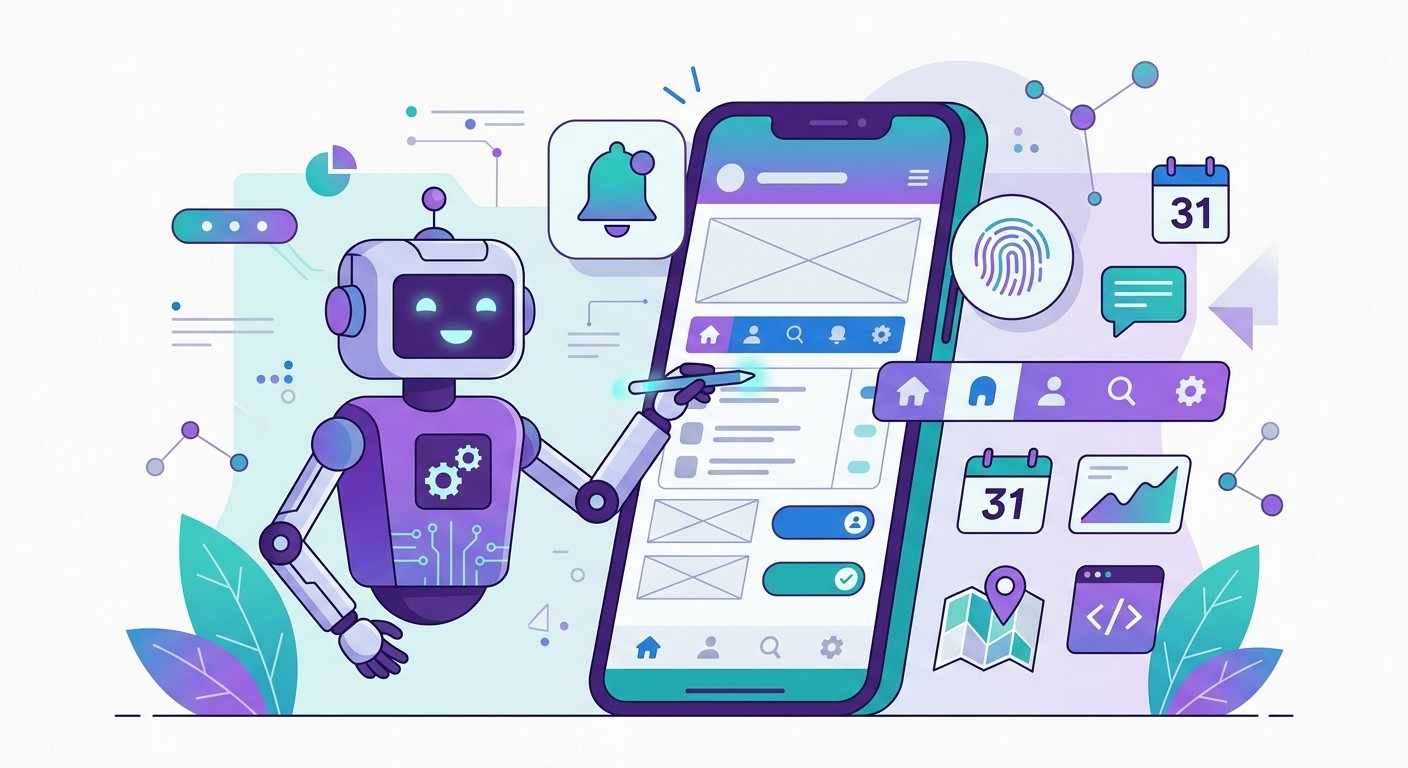
Push notifications. The number-one differentiator between a website and an app. Re-engage users directly on their device.
Biometric login. Face ID and fingerprint authentication for fast, secure sign-in that a browser cannot offer.
Offline access. Cache content so the app keeps working without a connection, with no white screen when the network drops.
Native navigation. Bottom tab bars, swipe gestures, and smooth transitions that make the app feel like an app.
Device hardware. Camera, location, and other device features your web app could not reach.
How Much Does It Cost to Convert a Website to an App?
Hiring an agency to build native iOS and Android apps typically costs $20,000 or more per platform and takes three to six months. A WebView wrapper is cheaper but risks rejection and gives users a second-rate experience.
CatDoes replaces both with a subscription. You get a real native app, deployment to both stores, and a backend included, all at a fraction of agency cost and without hiring engineers. Because the same AI agent maintains the app afterward, you also avoid the ongoing cost of a development team for every future update. You can start on a free plan and upgrade when you are ready to publish.
Frequently Asked Questions
Can I convert my website to both iOS and Android at once?
Yes. CatDoes builds a cross-platform native app, so a single conversion produces apps for both the App Store and Google Play, plus a web version.
Is a converted app a real native app or just a webview?
CatDoes generates a real native app with native components and navigation, not a webview wrapper. That is what lets it pass App Store review on functionality.
Do I need to know how to code?
No. You describe what you want in plain language and the AI agent builds it. The same applies to future changes.
Can I import an existing codebase?
Yes. You can connect a GitHub repo to import your existing web app, paste your live website URL, or upload a screenshot of your site. The agent rebuilds a native app from any of the three.
Will my app get published on the App Store and Google Play?
Yes. CatDoes handles building and deploying to both stores, and includes custom domains for the web version.
Turn Your Website Into a Real App Today
Converting a website to a mobile app no longer means choosing between an expensive agency rebuild and a wrapper that Apple rejects. With an AI agent doing the work, you get a genuine native iOS and Android app from the website you already have, built, deployed, and maintained in plain language.
Try CatDoes and convert your website into a native mobile app.
Nafis Amiri
Co-Founder of CatDoes


