Blog
Tutorials
Lovable to Mobile App: Native, Not a Wrapper
Lovable builds web apps, not native ones. Skip the WebView wrapper Apple rejects and convert your Lovable project into a real React Native iOS and Android app.

Nafis Amiri
Co-Founder of CatDoes
TL;DR: To convert a Lovable app to a mobile app, you rebuild it in React Native, because Lovable only builds React web apps that run in browsers and cannot produce native iOS or Android apps. WebView wrappers like Capacitor, Cordova, and Median often get rejected by Apple under Guideline 4.2. CatDoes converts your Lovable project into a real React Native and Expo app that passes App Store review and runs natively on both platforms. Import via URL for a quick start, or connect your Lovable GitHub repo so the AI agent can read your actual source code, including login-protected pages like dashboards and admin panels. No code required.
Table of Contents
Can Lovable Make Mobile Apps?
What Lovable Actually Builds
Does Lovable Work with React Native or Expo?
Your Options for Converting a Lovable App to Mobile
Why WebView Wrappers Get Rejected by Apple
How to Convert Your Lovable App Step by Step
Native App vs WebView Wrapper Comparison
Common Questions About Lovable to Mobile App Conversion
If you built something with Lovable and now want it on the App Store, you are not alone. Lovable is great for generating web apps, but it stops at the browser. Whether you used Lovable, Bolt.new, v0, or Replit, the problem is the same: you have a working web app and no clear path to a native mobile app.
This guide covers every option for going from Lovable to mobile app, explains why most approaches fail, and walks you through converting your Lovable project to a native iOS and Android app without writing code.
Can Lovable Make Mobile Apps?
No. Lovable cannot make native mobile apps. It builds React web apps that run in a browser, and it has no iOS, Android, React Native, or Expo export — there is no setting inside Lovable that produces an App Store or Google Play build.
What you can do is convert the code Lovable already wrote. A Lovable project is a standard React plus Vite app, so a tool like CatDoes can read it and rebuild it as a real React Native and Expo app that compiles to native iOS and Android binaries. Lovable itself does not create mobile apps, but a Lovable app can become one.
Does Lovable Work on Mobile?
A Lovable site works in a mobile browser and can be made responsive, but that is not the same as a mobile app. There is no App Store or Google Play listing, no native push notifications, and no access to the camera, Bluetooth, or offline storage. Users have to visit a URL instead of installing an icon on their home screen.
If you have not started building yet and are deciding whether Lovable is the right tool for a mobile product, read our evaluation of Lovable for mobile apps first. It covers where a mobile-friendly site stops being enough.
What Lovable Actually Builds
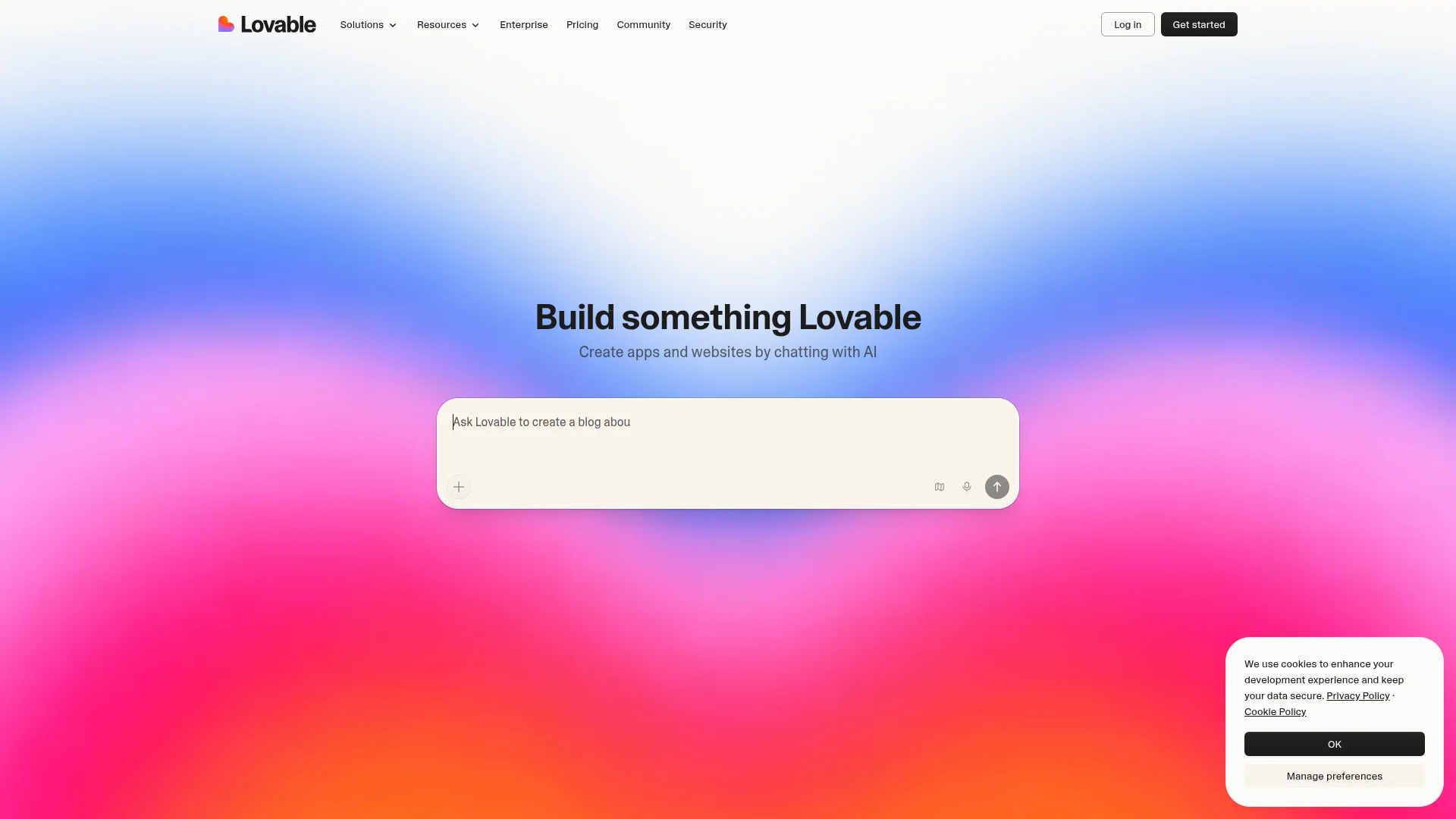
Lovable generates React web apps that run in the browser. Under the hood, your Lovable project is a standard React plus Vite application with Tailwind CSS styling and a Supabase backend. It deploys to a web URL and renders using React DOM, the browser rendering engine.
A native mobile app is fundamentally different. iOS apps render with UIKit or SwiftUI. Android apps render with Jetpack Compose or Android Views. React Native bridges this gap by compiling JavaScript to actual native components, but it uses a completely different component library than React DOM.
This is why you cannot simply export a Lovable project and run it on a phone as a native app. The React components Lovable generates — div, span, input — do not exist on iOS or Android. They need to be translated into native equivalents like View, Text, and TextInput. That translation is what separates a real Lovable to native app conversion from a wrapper that loads your website inside a browser shell.
Does Lovable Work with React Native or Expo?
No. Lovable builds React web apps with React DOM, and it has no React Native or Expo output. There is no export setting, plugin, or hidden mode that turns a Lovable project into a native mobile app on its own. If you searched for "Lovable React Native" or "Lovable Expo support," the honest answer is that the conversion happens outside Lovable: a separate tool reads your Lovable code and rebuilds it in React Native.
That is exactly what CatDoes does. It converts your Lovable project into a real React Native and Expo app. Your div, span, and input elements become native View, Text, and TextInput components, your web routes become native stack and tab navigation, and the project compiles to actual iOS and Android binaries through Expo. You preview it on a real device with Expo Go instead of loading a website inside a shell. So while Lovable itself cannot make a React Native mobile app, your Lovable code can absolutely become one.
Your Options for Converting a Lovable App to Mobile
When you search for how to convert a Lovable app to a mobile app, you will find several approaches. Here is an honest comparison of each one. If you would rather switch to a different builder, our guide to the best Lovable alternatives compares 8 of them.
WebView Wrappers: Capacitor, Cordova, and Median
Services like Capacitor, Cordova, and Median.co take your Lovable URL and package it inside a native shell. The app loads your website in a full-screen browser view. It is the fastest path but comes with serious trade-offs: Apple frequently rejects these under Guideline 4.2, performance feels sluggish compared to native, and you lose access to most device APIs beyond basic browser capabilities.
Progressive Web Apps
A Progressive Web App adds a home screen icon and some offline caching, but it still runs in the browser engine. On iOS, PWAs cannot send push notifications reliably, cannot access Bluetooth or NFC, and do not appear in App Store search results. For products where discovery and retention matter, a PWA is not a substitute for a listed native app.
Native App Conversion with CatDoes
CatDoes takes a different approach to Lovable to native app conversion. Instead of wrapping your web app in a browser shell, it analyzes your Lovable project and generates a real React Native plus Expo application. Your UI components are translated into native equivalents. Navigation becomes native stack and tab navigation. Animations run at 60fps on the device GPU instead of a browser rendering engine.
You can import your Lovable project two ways: paste your deployed URL for a quick start, or connect your GitHub repository so the AI agent gets direct access to your source code. The GitHub route is especially useful if your Lovable app has login-protected pages like dashboards or admin panels that a URL scan cannot reach.
The result is an app that Apple and Google treat as a first-class native application, because it is one. Your Lovable web app stays untouched and keeps running independently.
Why WebView Wrappers Get Rejected by Apple
Apple Guideline 4.2 explicitly targets apps that are simply a website bundled in a native shell. If your Lovable app loads identically in Safari and inside your wrapper app, reviewers will reject it. This is the most common reason Lovable users fail to get their app on the App Store.
Beyond rejection risk, wrapped apps have measurable problems. WebView rendering is slower than native UI. Scrolling feels off. Transitions lack the fluid feel iOS and Android users expect. WebView behavior also differs across OS versions and devices, creating maintenance headaches where you debug browser quirks instead of building your product.
Wrappers work for internal tools or quick MVPs where App Store approval is not critical. For anything you want real users to download and depend on, you need a real native app.
How to Convert Your Lovable App Step by Step
CatDoes gives you two ways to import your Lovable project. Choose based on what your app needs.
Method 1: Import via URL (Quick Start)
Go to catdoes.com/lovable and enter the URL of your deployed Lovable site. This can be your lovable.app subdomain or a custom domain. CatDoes works with any publicly accessible web app, whether built with Lovable, Bolt.new, v0, or any other tool.
The URL method is the fastest way to get started. CatDoes scans your live site, extracts your design, content, colors, fonts, and layout structure, then builds a native app from what it finds. This works well for public-facing sites where every page is accessible without logging in.
Method 2: Import via GitHub (Recommended)
If your Lovable app has login-protected pages — dashboards, admin panels, user settings, or any authenticated content — the GitHub import gives the AI agent direct access to your full codebase. Instead of scanning what is publicly visible, the agent reads your actual React components, routes, and logic.
First, connect your Lovable project to GitHub. In Lovable, go to your project settings and connect to GitHub. Your code pushes automatically to a repository. If you already have a GitHub repo connected, skip this step.
Then in CatDoes, create a new app and select Import from GitHub. Authorize access, choose your Lovable repository and branch, name your project, and click Import. The agent now has full access to every component, route, and page in your Lovable project — including the ones behind authentication.
The GitHub method produces better results for complex apps because the agent understands your actual code structure rather than inferring it from a visual scan of your deployed site.
What Happens After Import
Regardless of which method you choose, the CatDoes AI agent translates your Lovable app’s React component structure into equivalent React Native components. Authentication flows, data fetching, and Supabase integrations carry over to the native version automatically. The AI adapts your web layout for mobile patterns like tab bars, stack navigation, and pull-to-refresh.
Preview, Customize, and Deploy
Preview the app on your phone using Expo Go or directly in the browser. Make adjustments using CatDoes AI chat by describing changes in plain language. When you are ready, publish to the App Store, Google Play, or both. The whole process typically takes less than a day for a standard Lovable site.
Sharing Your Supabase Backend
Most Lovable projects use Supabase for auth, database, and storage. Your CatDoes native app connects to the same Supabase instance with no migration or duplication needed. Users sign in with the same credentials on both web and mobile. Data stays in sync across platforms automatically.
This means you can keep your Lovable web app running for desktop users while your native app serves mobile users, both reading and writing to the same database. Auth flows including email and password, OAuth providers, and magic links all work on both platforms out of the box.
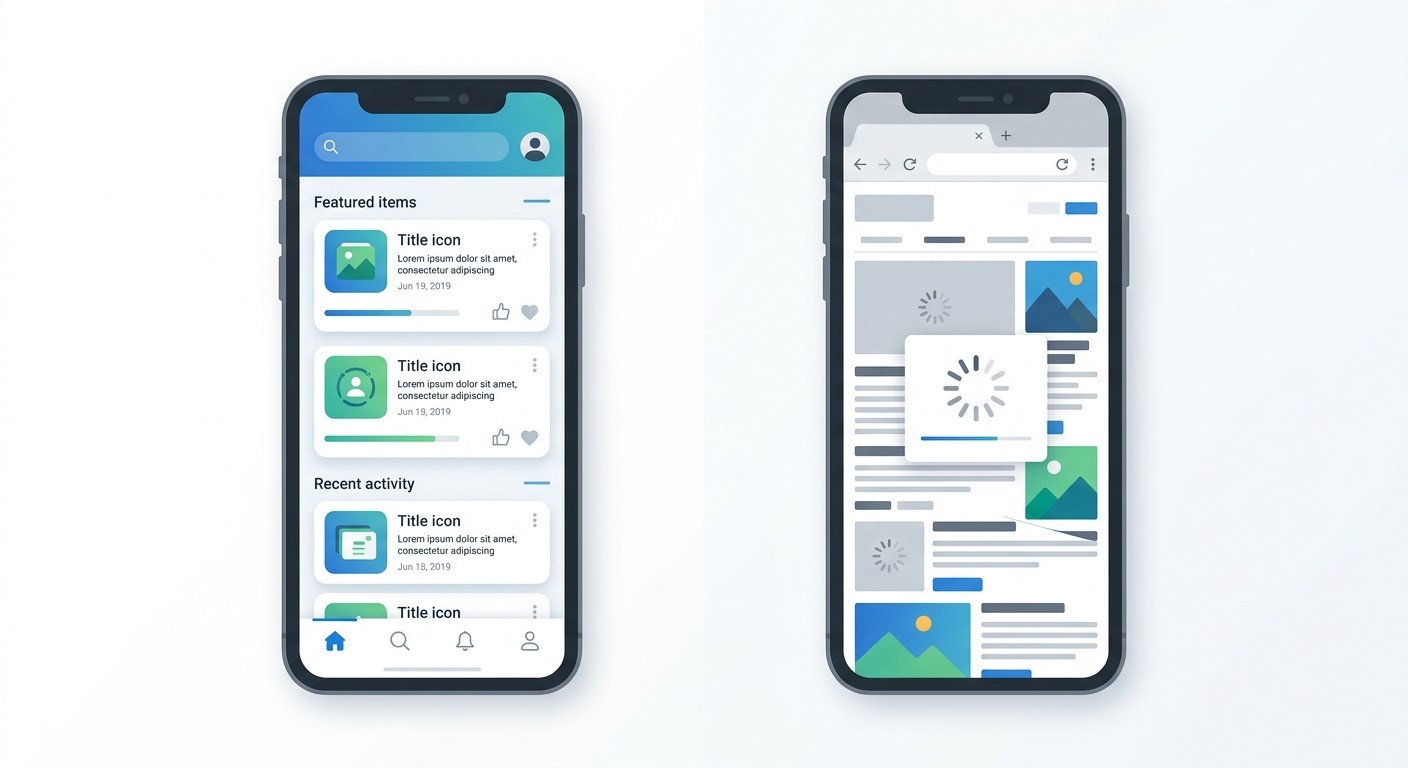
Native App vs WebView Wrapper Comparison
Here is what you actually get when you convert your Lovable app to native versus wrapping it in a WebView.
Feature | WebView Wrapper | Native App (CatDoes) |
|---|---|---|
Rendering | Browser engine (WebView) | Native iOS/Android components |
Performance | Slower, browser-limited | 60fps native animations |
App Store approval | High rejection risk (Guideline 4.2) | Passes as native app |
Push notifications | Limited or no web push | Full native push (APNs + FCM) |
Offline support | Limited (service workers) | Full native offline |
Navigation | Browser-style back button | Native stack/tab navigation |
Gestures | Web touch events | Native gesture system |
Camera and sensors | Limited browser APIs | Full device access |
Code required | Minimal to none | None |
Year 1 cost (both platforms) | $2,270+ (Median.co) | From $504/year |
The cost difference is significant. Wrapper services like Median.co charge $790 upfront plus $490 per year per platform, totaling $2,270 for both Lovable iOS and Android apps in year one. CatDoes starts at $42 per month with deployment to both platforms included.
Common Questions About Lovable to Mobile App Conversion
Can You Convert a Lovable Project Directly to a Mobile App?
Not directly. Lovable outputs React DOM code that runs in browsers. A native mobile app requires React Native components. CatDoes handles this translation automatically by analyzing your Lovable project and generating equivalent native code.
Can You Use Capacitor or Cordova to Wrap a Lovable App?
Capacitor and Cordova embed your web app inside a native WebView. This technically creates an installable app, but Apple frequently rejects these under Guideline 4.2 for being websites in a native shell. Performance also suffers compared to a real native app.
Does My Lovable Web App Keep Working After Conversion?
Yes. CatDoes reads your site but does not modify it. Your Lovable project continues running independently.
Will My Supabase Data Carry Over?
Your native app connects to the same Supabase instance your Lovable app uses. Auth, database, and storage all work across both platforms with no migration needed.
Can Apple Tell the App Was Built With AI?
No. The output is standard React Native code compiled into native binaries. Apple reviews the app like any other native submission.
Do I Need an Apple Developer Account?
Yes, for App Store publishing. Apple charges $99 per year. Google Play charges a one-time $25 fee.
Is React Native Really Native?
Yes. React Native compiles to actual iOS and Android native components, not a WebView. Apps built with React Native power products at Meta, Shopify, and Discord. It is a proven production-grade framework.
Can Lovable Make Mobile Apps in React Native?
Not by itself. Lovable outputs React DOM for the web and has no React Native or Expo export. CatDoes bridges that gap by reading your Lovable project and generating a real React Native and Expo app, so your Lovable build ends up as a native iOS and Android app without you writing React Native by hand.
Should I Use URL Import or GitHub Import?
Use URL import if your Lovable app is a public-facing site with no login-required pages — it is the fastest way to get started. Use GitHub import if your app has dashboards, admin panels, or any pages behind authentication. The GitHub route gives the AI agent access to your full source code, which produces better results for complex apps with multiple routes and protected content.
What If I Built With Bolt.new, v0, or Replit Instead of Lovable?
The same approach works. Any publicly accessible web app can be converted to a native mobile app with CatDoes, regardless of which AI tool or framework built it. If your project is on GitHub, you can use the GitHub import method for better results.
Can Lovable Make iOS and Android Apps?
Not on its own. Lovable has no iOS or Android build target, so it cannot produce an .ipa or .aab file to submit to either store. Converting the project to React Native gives you both platforms from one codebase, which is how a Lovable project ends up as a real iOS and Android app.
Can You Export Code From Lovable?
Yes. Connect your Lovable project to GitHub from the project settings and Lovable pushes the full React source to a repository you own. That repo is what you point CatDoes at for a GitHub import, which is why it produces better results than a URL scan.
From Web App to App Store
Lovable builds great web apps, but it cannot produce a native Lovable mobile app for iOS or Android. Wrappers get rejected. PWAs lack features. The real path from Lovable to mobile app is converting to native code.
CatDoes bridges that gap. Paste your URL for a quick conversion, or connect your GitHub repo so the agent can read your full codebase. Deploy to both app stores without writing a line of code.
Nafis Amiri
Co-Founder of CatDoes