Blog
Insights
10 Mobile App Ideas Worth Building in 2026
Looking for a mobile app to build in 2026? 10 high-demand, low-competition app ideas, which ones work best as iOS app ideas, and how to validate each.

Nafis Amiri
Co-Founder of CatDoes
TL;DR: The mobile app ideas worth building in 2026 are specific, niche, and built for one kind of person doing one kind of thing. Below are 10 mobile app ideas you can ship this year, each with a target user, a wedge angle, a way to test demand before you write any code, and whether to launch on iPhone or Android first.
Most "app idea" lists are useless. They're either too vague ("build a fitness app!") or recycled copies of apps that already won a decade ago. The crowded App Store makes it feel like every good mobile app idea is taken.
It isn't. The mobile app market is on track to clear $613 billion by 2026 according to Statista's app industry forecast. More useful for a solo builder: 2025 was the first year non-game apps out-earned games on in-app purchases, with non-game IAP revenue up 21% year over year, per Sensor Tower's State of Mobile 2026. The money is moving toward exactly the kind of utility and subscription apps one person can build.
Below are 10 mobile app ideas worth building in 2026. Each comes with a target user, a wedge angle that hasn't been done to death, a way to test demand before you commit a weekend to it, and a copy-paste prompt you can drop into CatDoes to start building. If you need a process for finding your own idea instead, see our guide on how to find a good app idea.
Table of Contents
All 10 mobile app ideas at a glance
What makes a mobile app idea worth building in 2026
1. AI Voice Journaling App
2. Niche Habit Tracker
3. AI Skill Coach
4. Hyperlocal Community App
5. Couples Shared Planner
6. Vertical Inventory Tracker
7. Context-Aware Reminder App
8. Local Business Ordering App
9. Subscription and Bill Tracker
10. Single-Purpose AI Utility
Best iOS app ideas from this list
How to validate an app idea before you build
How to build any of these without code
FAQ
All 10 mobile app ideas at a glance
Every mobile app idea below targets one specific person doing one specific thing. Here is the full list with the wedge that keeps incumbents from bothering to copy it, and which platform to ship first.
Mobile app idea | Who it's for | Wedge angle | Ship first on |
|---|---|---|---|
1. AI voice journaling | Commuters, parents, founders | Finds themes across weeks, not just transcription | iPhone first |
2. Niche habit tracker | ADHD adults, language learners, recovery groups | One community's exact needs, not a generic grid | iOS + Android |
3. AI skill coach | Self-taught hobbyists | Vision models grade your actual attempt | iPhone and iPad first |
4. Hyperlocal community app | One building, dorm, or HOA | Scoped to a single verified address | iOS + Android |
5. Couples shared planner | Couples without kids | Shared money and memories, no family clutter | iOS + Android |
6. Vertical inventory tracker | Collectors and small resellers | Photo-to-value for one collectible category | iPhone first |
7. Context-aware reminder app | Busy parents, ADHD users | Fires on place and context, not clock time | iPhone only |
8. Local business ordering app | Independent cafes and salons | Branded ordering without a 30% marketplace cut | iOS + Android |
9. Subscription and bill tracker | Anyone leaking money every month | One job done well, not a finance suite | iOS + Android |
10. Single-purpose AI utility | Anyone with a 30-second annoyance | One input, one output, one share button | iPhone first |
What makes a mobile app idea worth building in 2026
A good mobile app idea in 2026 has to clear three quick filters.
Demand has to be growing, not peaked. Look for categories where Reddit threads about a problem keep getting longer, where Google search interest is up year over year, or where the closest existing apps have angry one-star reviews about missing features.
The wedge has to be something incumbents won't bother copying. Big apps optimize for the average user. That leaves room for tools built for one specific group doing one specific thing, especially when the workflow involves AI.
Revenue has to be obvious. If you can't sketch the model on a napkin in one sentence (a $5/month subscription, a one-time purchase, a transaction fee, a paid AI plan), the idea isn't ready.
Each idea below clears those filters.
Before you pick one, Starter Story walks through apps that look almost too simple to work but quietly make real money (17 min):
1. AI Voice Journaling App

Who it's for: commuters, parents, founders, and anyone who wants to journal but hates typing on a phone.
Voice-first journaling has been quietly growing. Apps like Rosebud and Stoic Voice broke into the App Store top 200 in mental health throughout 2025, and the category is still small enough that there's room for focused entrants. The wedge is an AI that does more than transcribe what you said. It pulls out themes, mood patterns, and recurring stressors across weeks of entries.
Build it for one niche first (recovery journaling, founder anxiety, postpartum mental load) and grow from there. Subscription pricing of $7-12/month is standard. Weekly summaries and a "year in review" feature drive retention.
Validation tip: post a free version on Reddit communities like r/journaling or r/mentalhealth. If you get 50 daily users in a week without paid acquisition, you have a real signal.
Build with CatDoes: A voice journaling app for founders dealing with anxiety. The home screen is a single big mic button — tap to record up to 60 seconds. Whisper transcribes the audio and GPT-5 extracts mood, themes, and recurring stressors across the user's history. Each entry shows on a private feed with a weekly summary and a streak counter. Apple Sign-In, all entries stored in CatDoes Cloud, $9/month subscription via RevenueCat. Ship iOS first with a Lock Screen widget as the daily entry point.
2. Niche Habit Tracker
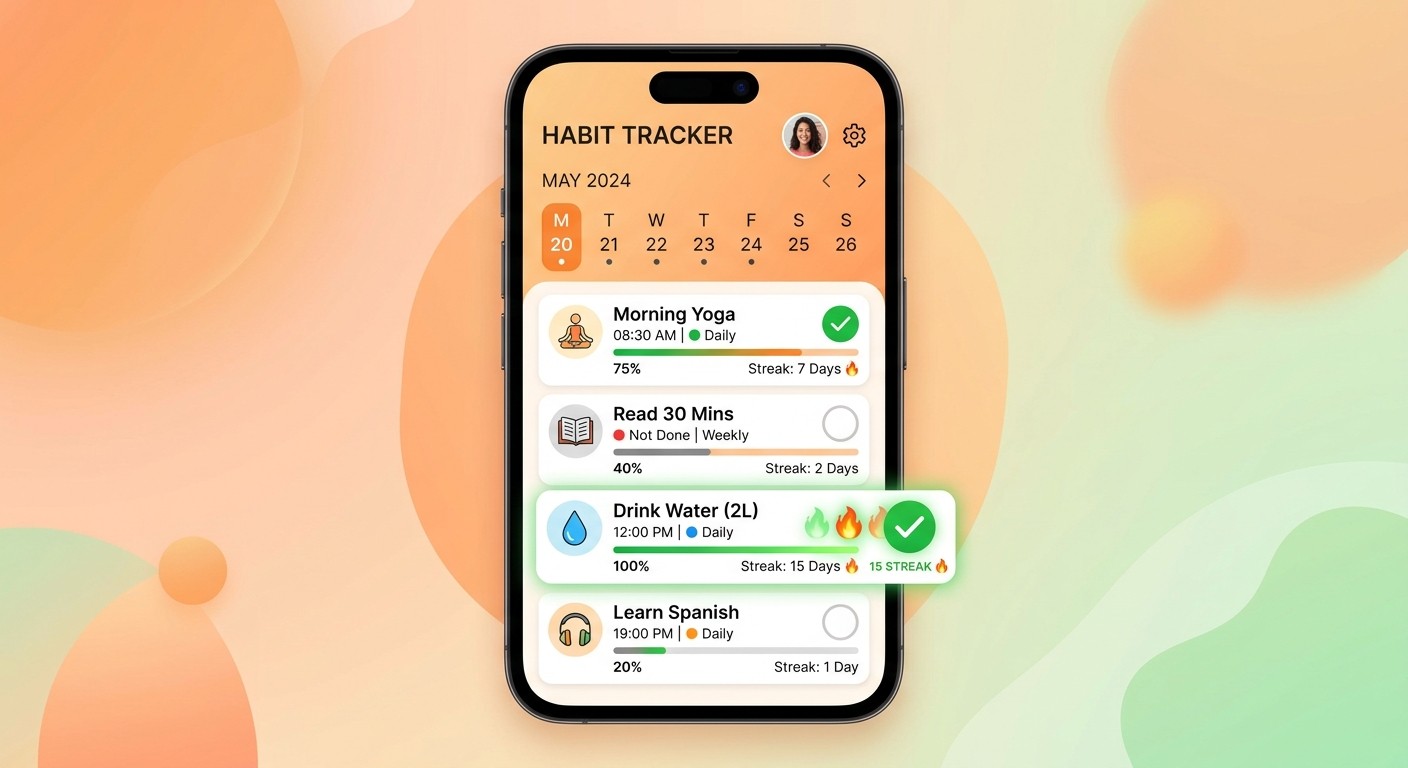
Who it's for: people whose habit needs don't fit a generic tracker. Think language learners, ADHD adults, recovery communities, and intermittent fasters.
Generic trackers like Habitica and Streaks are saturated, but the category keeps growing because every niche wants its own version. A habit tracker for recovering addicts looks nothing like one for people learning Spanish, even though the underlying pattern is the same.
These niches are bigger than they look. The CDC estimates 6.0% of US adults — roughly 15.5 million people — have a current ADHD diagnosis, and more than half of them were diagnosed as adults. That is a large group actively looking for tools built the way their brain works, not a smaller version of a productivity app.
The opportunity is to pick one community, build for them deeply, and price at $4-8/month. Add features they actually want: a sponsor messaging button for sobriety apps, spaced repetition prompts for language learners, or a sensory-friendly UI for ADHD users.
Validation tip: search Reddit for "[your niche] habit tracker" and read the top posts. The complaints in those threads are your feature spec.
Build with CatDoes: A habit tracker built only for adults with ADHD. Users add habits, mark them done with a single tap, and see streaks on a calendar grid. The differentiator is the UI: high-contrast colors, no shame screens when streaks break, gentle voice reminders instead of red badges. Apple Sign-In, habits and check-ins stored in CatDoes Cloud, push notifications fire at user-chosen times. $5/month subscription. iOS and Android.
3. AI Skill Coach
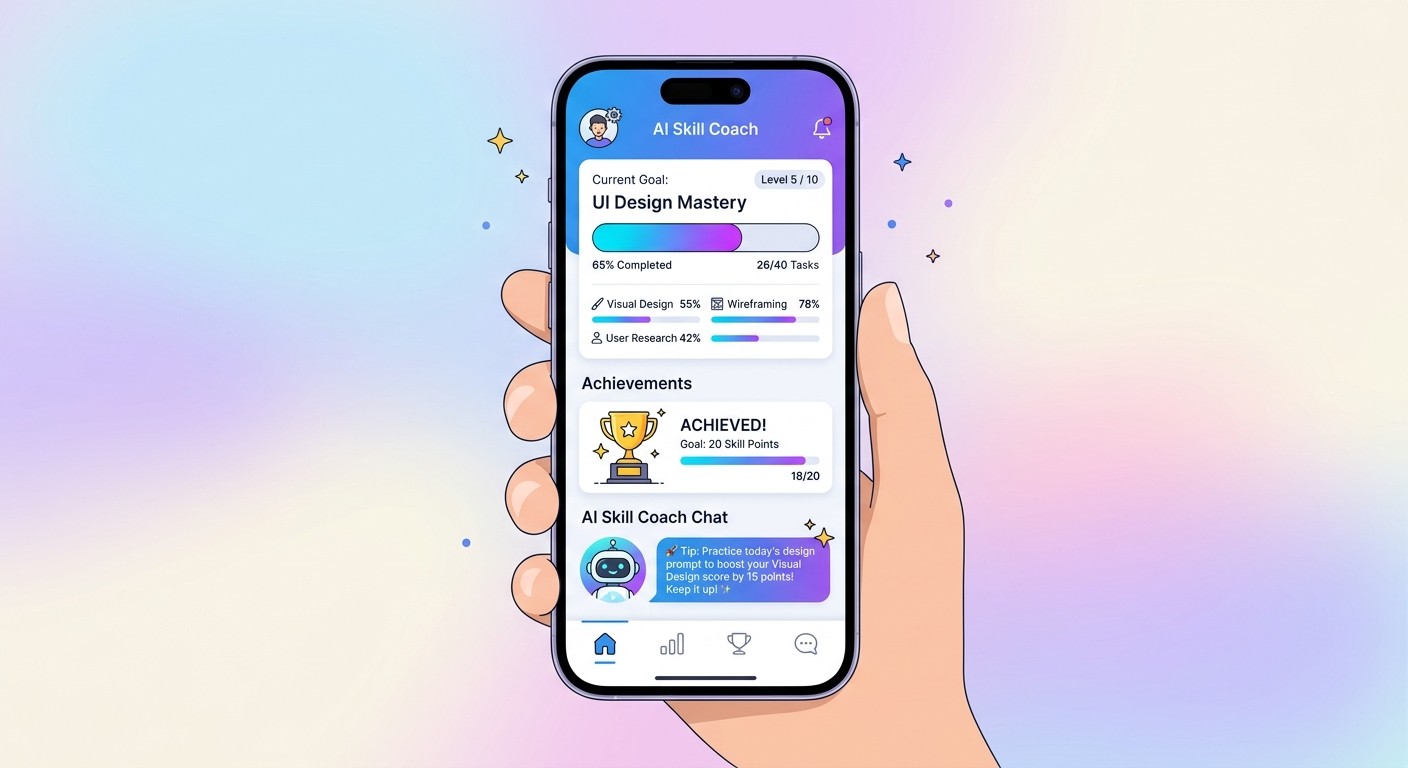
Who it's for: hobbyists picking up a skill on their own. Cooking, public speaking, guitar, chess, climbing, drawing.
An AI coach can now watch a 30-second video clip and give specific feedback. That used to be impossible. Vision-language models like GPT-5 and Gemini 3 will critique guitar fingering, score free-throw form, or grade a sourdough crumb to a level that's actually useful.
Pick one skill where the feedback loop is slow today (lessons cost $80/hour) or generic (YouTube tutorials don't grade your specific attempt). Build a coach that records, analyzes, and prescribes the next drill. Charge $15-25/month, well below a human coach.
Validation tip: manually offer "AI coaching" in a niche subreddit using Loom videos for a week. If 5 strangers pay you $20 to grade their next attempt, demand is real.
Build with CatDoes: An AI guitar coach. Users record a 30-second clip of themselves playing a chord or scale. Gemini 3 Vision watches the fingering, scores it, and prescribes the next drill. A skill tree unlocks new exercises as users improve. Email + Apple sign-in, video clips and feedback stored in CatDoes Cloud, $19/month subscription. Ship iPhone and iPad first, since most guitar learners prop up an iPad to practice. (Same architecture works for public speaking, free throws, knife skills.)
4. Hyperlocal Community App
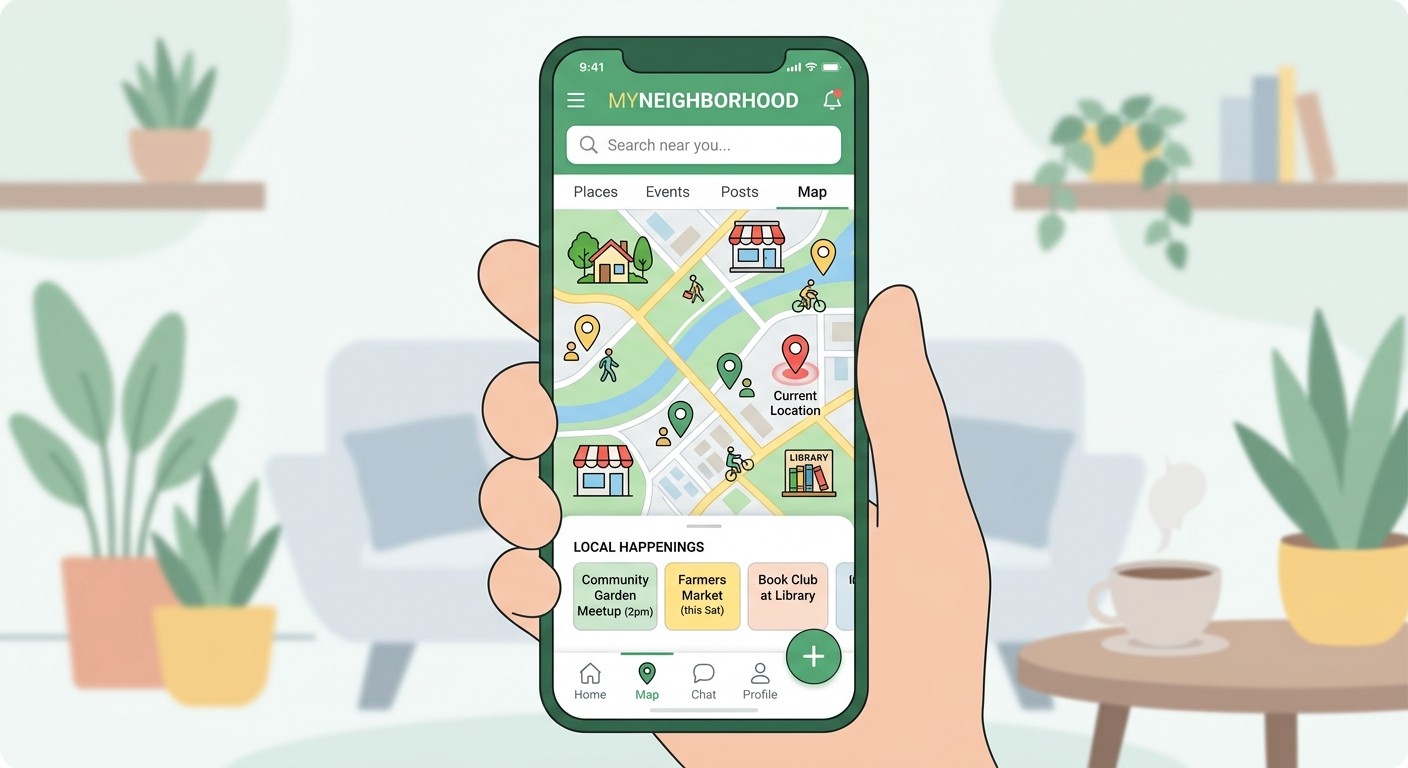
Who it's for: residents of one neighborhood, building, or small town.
Nextdoor became too big and too generic. The opening is small, focused community apps tied to one identity: a single apartment building, a college dorm, a local sports league, or a homeowners association. People want to ask the neighbor two doors down about a leaky faucet, not engage with strangers across an entire city.
Charge a small per-user fee, or sell a flat license to property managers and HOAs at $50-150/month per building. It's a boring business with sustainable cash flow.
Validation tip: get 3 property managers to commit to using a free version for 60 days. If they're emailing residents about your app at day 30, you have a wedge.
Build with CatDoes: A private community app scoped to one apartment building. Each instance has a feed limited to verified residents, a shared event calendar, a lend-or-borrow board, and direct messages between neighbors. Property managers get an admin panel to verify new residents and post building-wide announcements. Magic-link sign-in (no passwords), posts and events stored in CatDoes Cloud, $99/month per building paid by the property manager. iOS and Android — a building split across both platforms breaks the whole point.
5. Couples Shared Planner

Who it's for: couples managing shared finances, calendars, errands, and memories without piling on top of work-mode productivity apps.
Cozi and FamCal serve families well, but couples without kids fall through the cracks. They want a clean shared space for date plans, gift ideas, joint goals, and a private memory feed. AI can write the grocery list from a "meals this week" prompt, or suggest date nights based on past favorites.
Tier the pricing: free for the two-person planner, $6-9/month for shared finance and AI features. Cohorts that sign up after major life events tend to retain well past the honeymoon phase.
Validation tip: the wedding industry is a hot start. Run a small ad targeting "newly engaged" interests with a "shared wedding planner" hook to test conversion.
Build with CatDoes: A shared planner app for couples without kids. Pair partners with an invite code, then both sides see the same calendar, gift idea list, joint savings goals, and a private photo feed for date memories. The hook: an AI grocery list that takes "Tuesday is pasta, Wednesday is tacos" and outputs a single shopping list. Email sign-in, all data in CatDoes Cloud, free for the planner and $7/month for shared finance and AI. iOS and Android.
Found one to start? Paste the prompt into CatDoes — it ships a TestFlight build with the backend, auth, and database wired up.
6. Vertical Inventory Tracker
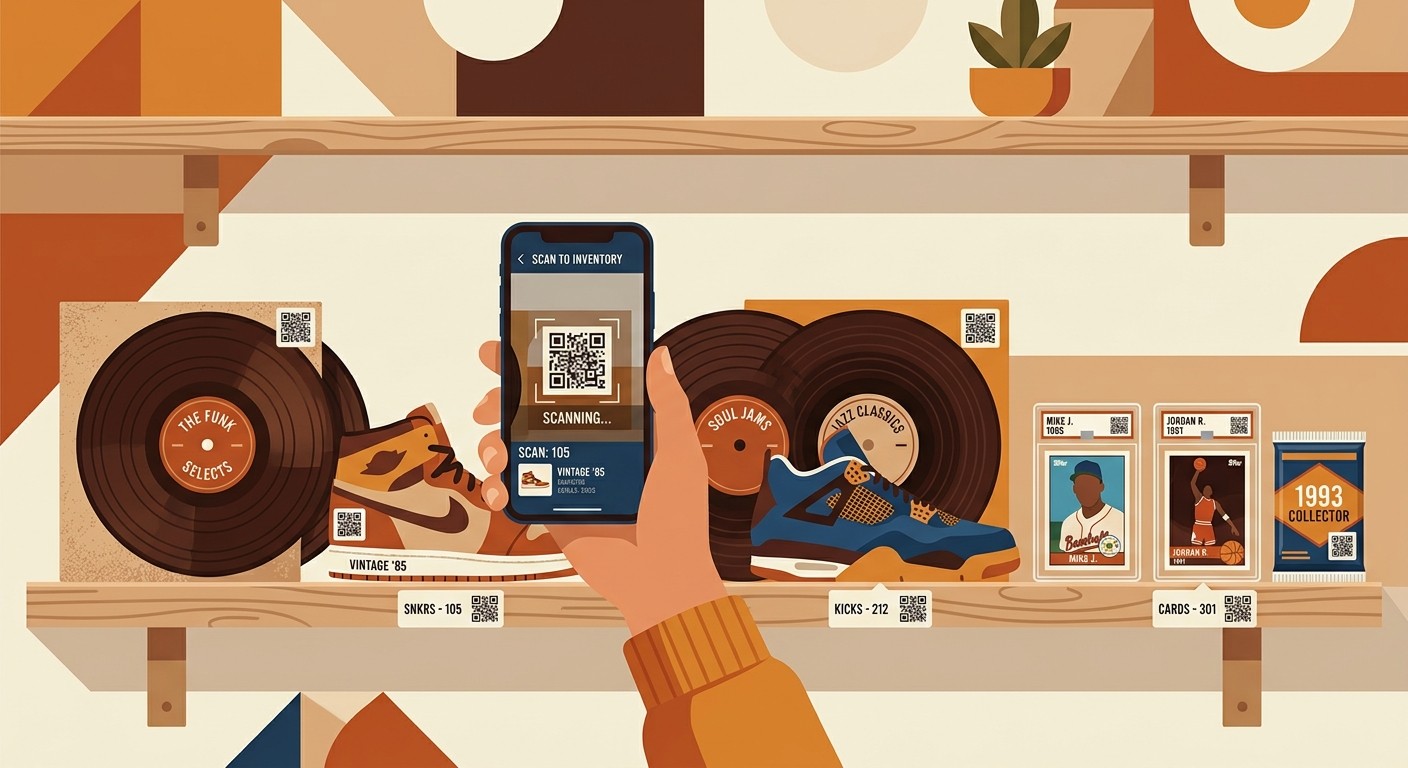
Who it's for: collectors, small resellers, and hobbyists who manage inventory in a spreadsheet today. Think sneaker resellers, comic book collectors, vintage vinyl traders, and antique dealers.
Every collector niche has the same workflow: scan or photograph an item, log condition and value, track sales. Generic inventory tools like Sortly are too business-y. eBay's tools are too transactional. A vertical tracker built for one community can charge $5-10/month and feel native instead of generic.
Add AI for value estimates, automatic title generation for listings, and condition grading from photos. Resale demand also moves fast — the categories that sold in 2022 are not the ones selling now — so the real product is a catalog that keeps up, not a spreadsheet the reseller maintains by hand.
Validation tip: post in your target collector subreddit asking how people track inventory today. If half the answers are "messy spreadsheet," you have a market.
Build with CatDoes: An inventory tracker for sneaker resellers. Users photograph a pair, GPT-5 Vision identifies the model and pulls a market value estimate from StockX or Goat. Each item logs purchase price, condition grade, and a notes field. One-tap "list to eBay" generates a title and description from the photo. Apple Sign-In, items stored in CatDoes Cloud, $8/month subscription. iPhone first — resellers photograph stock on their phone all day. (Same template works for vinyl, comics, watches, trading cards.)
7. Context-Aware Reminder App
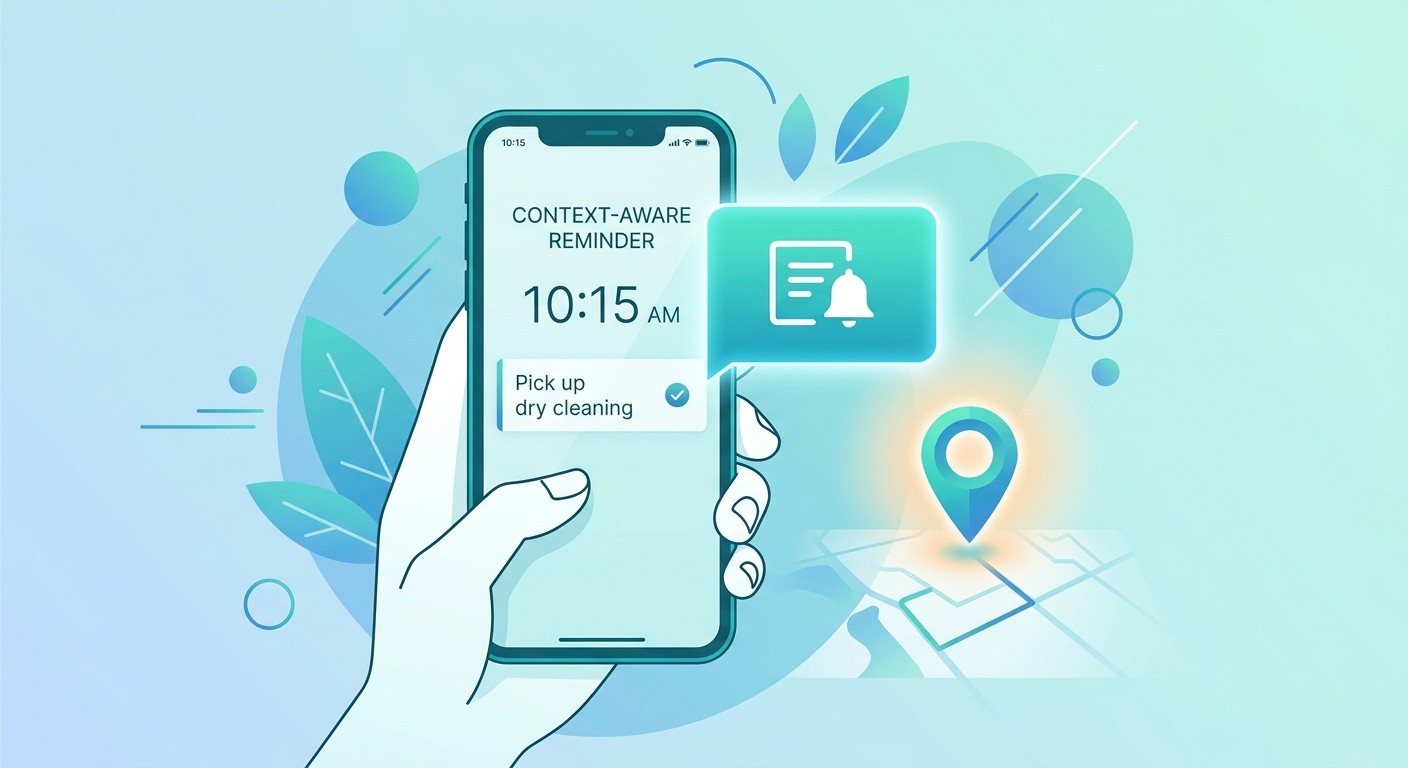
Who it's for: anyone tired of writing reminders that fire at the wrong time or place.
Apple's Reminders and Google Tasks handle simple cases. They fail at "remind me about the dentist appointment when I'm in the car," "ping me about Mom's birthday once I'm at the grocery store," or "tell me to take my medication after I finish dinner."
A context-aware reminder app uses location, calendar events, screen time, and natural language to fire the right ping at the right moment. Voice input lets you create them in seconds. Charge $3-5/month and target busy parents and ADHD users who'll happily pay for the cognitive offload.
Validation tip: run a Google Form survey in r/ADHD asking which everyday reminders fail people most often. Build for the top three answers first.
Build with CatDoes: A reminder app that fires based on context, not just time. Users speak something like "remind me to take meds after dinner" or "ping me about Mom's birthday next time I'm at the grocery store." The app uses location, calendar, and screen time to pick the right moment. Show all reminders on a single feed sorted by next likely trigger. Apple Sign-In, reminders stored in CatDoes Cloud, $4/month. iPhone only — Core Location geofencing and Focus modes fire reliably in the background, and Android's equivalents don't.
8. Local Business Ordering App
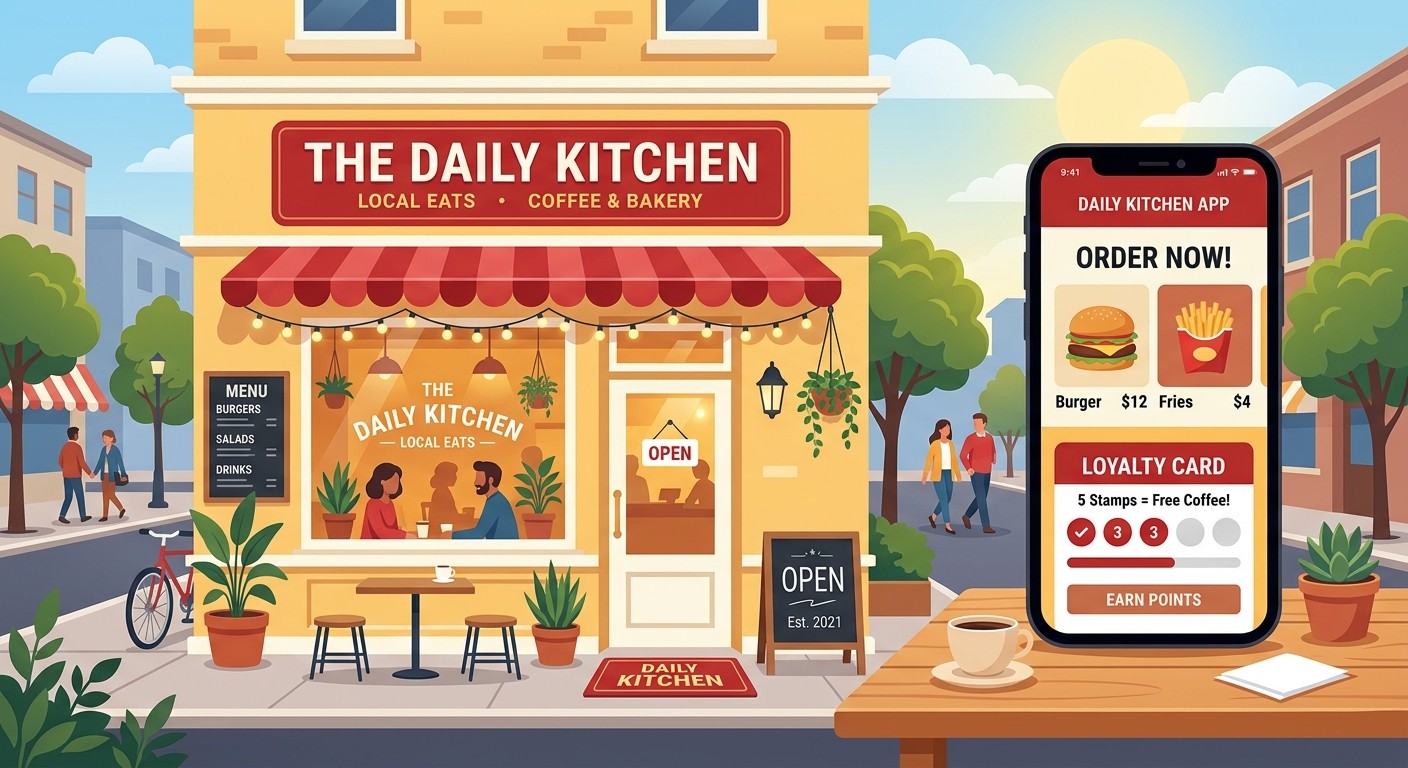
Who it's for: independent restaurants, bakeries, coffee shops, and salons that don't want to give DoorDash or Toast 30% of every order.
Most local businesses don't have a real digital presence beyond Instagram. They want a simple branded ordering app for regulars, with a built-in loyalty program and a way to push specials to repeat customers. Build a white-label template and onboard local shops at $99-149/month per location.
This isn't a venture-scale idea, but a one-person operator can hit $10K MRR with 100 stores. There are roughly 750,000 independent restaurants in the US alone according to the National Restaurant Association.
Validation tip: walk into 10 local cafes and ask the owner whether they'd pay $99/month for a branded app with a loyalty card. If 3 say yes, you have a starting roster.
Build with CatDoes: A white-label ordering app for independent cafes. Each cafe gets a branded shopfront with menu, cart, and Apple Pay checkout. Add a digital punch-card loyalty program ("free coffee on the 10th visit") and push notifications for daily specials. The cafe owner gets an admin dashboard to update the menu, mark items sold out, and view today's orders. Stripe Connect for payments, menus and orders in CatDoes Cloud, $99/month per location billed monthly. iOS and Android — a cafe can't turn away half its regulars.
9. Subscription and Bill Tracker
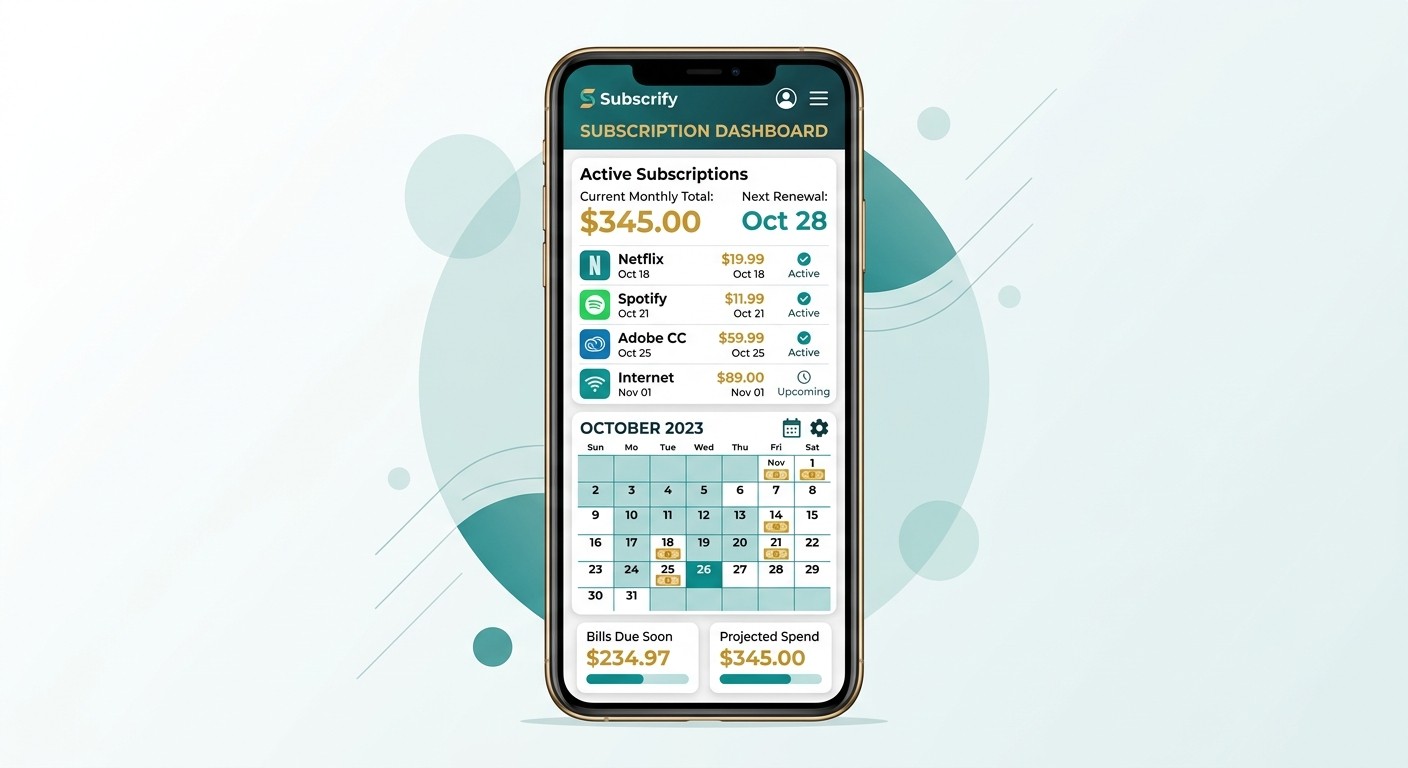
Who it's for: anyone losing money to forgotten subscriptions, free trials that auto-converted, and creeping price hikes.
Deloitte's 2026 Digital Media Trends survey found 90% of US households pay for streaming video, averaging four services each — and that is before music, fitness, cloud storage, and software. Most people can't list half of them from memory. Existing apps like Rocket Money work but feel like full personal-finance suites. There's room for a focused tracker that does one thing well: scans email or bank feeds, surfaces every recurring charge, and prompts cancellation or negotiation in two taps.
Charge a flat $3/month or take a cut of every dollar saved. AI can write the cancellation email and even handle the chat with customer support.
Validation tip: offer a free "subscription audit" service on Twitter for a week. If 30 strangers send you their statements, the pain is widespread.
Build with CatDoes: A subscription tracker that connects to email and bank feeds, surfaces every recurring charge, and prompts the user to cancel or negotiate. GPT-5 drafts the cancellation email and parses retention offers when chat support fires back. Show monthly spend, the biggest "forgotten" charges, and a one-tap unsubscribe button. Plaid for bank feeds, Apple Sign-In, the recurring ledger stored in CatDoes Cloud, $3/month flat. iOS and Android.
10. Single-Purpose AI Utility
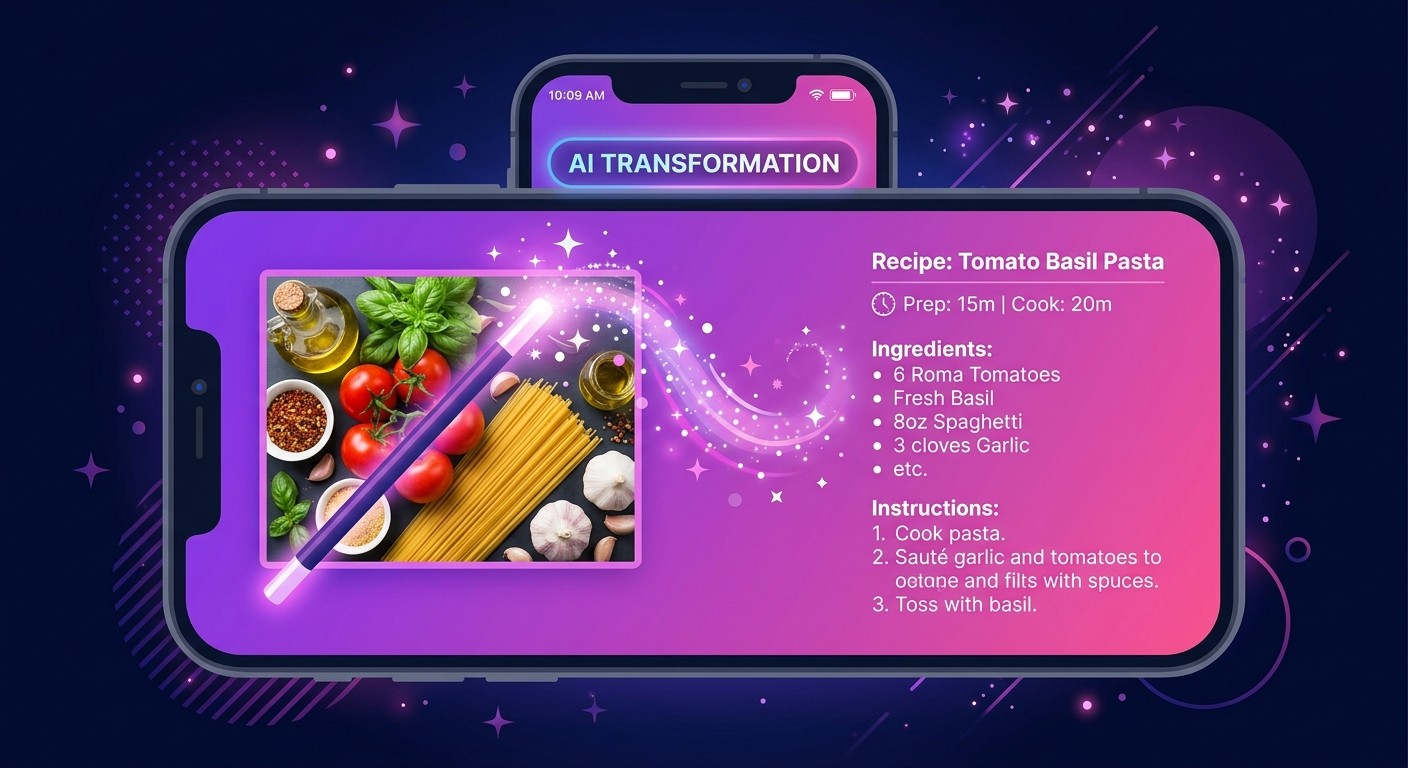
Who it's for: anyone who wants AI to solve one annoying micro-task without subscribing to a giant general-purpose assistant.
The biggest opportunity in mobile AI right now is small focused tools that do one job well, not another ChatGPT clone. Photo-to-recipe. Handwriting-to-Notion. Receipt-to-spreadsheet. Voice-to-meeting-notes. Each is a 100-line app idea, each can charge $2-5/month or a one-time fee, and none of them requires deep AI expertise.
The pattern: pick a 30-second task someone does often, use a vision or audio model to handle it, and make the output copyable to wherever the person actually needs it. AudioPen built a six-figure business on exactly this template.
Validation tip: post a Loom demo on Twitter or Indie Hackers showing the tool working in 15 seconds. If 20 people DM asking for early access, ship it.
Build with CatDoes: Pick one micro-task and build for it: photo-to-recipe, handwriting-to-Notion, receipt-to-spreadsheet, or voice-to-meeting-notes. One screen, one input (photo/voice/text), one output (copyable result), one share button. Use the relevant Vision or Whisper API. First three uses are free, then Apple Sign-In unlocks unlimited. History stored in CatDoes Cloud, $4/month or a $19 one-time unlock. iPhone first — impulse unlocks convert best through Apple Pay.
Best iOS app ideas from this list
If you can only ship one platform, ship iPhone first. iOS accounted for roughly 70% of global app consumer spending in 2025 — about $117 billion on the App Store against $49 billion on Google Play — even though Google Play saw close to three times more downloads, according to Business of Apps. Fewer users, far more of them paying.
Four of the ten mobile app ideas above work best as iOS app ideas specifically.
The context-aware reminder app (#7) is iPhone-only in practice. It leans on Core Location geofencing, Focus modes, Screen Time, and EventKit. Android has equivalents, but they fire less reliably once the app is backgrounded, so the product feels broken to half your users. Build it for iOS and keep it there.
The AI voice journaling app (#1) belongs on iPhone. Journaling and mental-health subscriptions over-index on iOS, and Apple's own Journal app already taught millions of iPhone owners to expect the category. You also get Apple Sign-In, clean on-device audio capture, and a Lock Screen widget as the daily entry point.
The AI skill coach (#3) needs the camera and the iPad. Guitar, cooking, and climbing learners record themselves on an iPhone or prop up an iPad to practice. iOS gives you consistent camera capture across a handful of devices instead of a thousand Android sensor combinations to test against.
The single-purpose AI utility (#10) monetizes best on iOS. These live or die on impulse purchases — a $19 one-time unlock or a $4/month subscription decided in ten seconds. Apple Pay and StoreKit make that a two-tap decision on iPhone, which is exactly why the spending gap above exists.
The other six should ship on both. Habit trackers, community apps, couples planners, local ordering, and subscription tracking all depend on the other person having the app too. If half your neighbors or half a cafe's regulars are on Android, an iPhone-only build kills the core loop before it starts.
A practical sequence for any iOS app idea: launch on TestFlight, get 50 iPhone users, prove 30-day retention, then add Android once the product stops changing every week.
How to validate an app idea before you build
Picking a mobile app idea from this list is the easy part. Validating it before you spend a month building is what saves you a wasted month. It is also the failure mode that kills the most companies: of 431 VC-backed startups that shut down since 2023, CB Insights found 43% cited poor product-market fit. Run these four checks before you commit.
Start with Google. Search your idea plus the year. If 10 startups already pop up with VC funding, you're late. If you find Reddit threads asking "does an app like this exist?", you're early in a good way.
Then read the App Store reviews of the closest competitor. Sort by 1-star and read every complaint. Those gaps are your launch features.
Next, recruit 5 potential users for a 15-minute call. Don't pitch. Ask how they handle the problem today, what they tried, and what made them stop. If they describe pain in unprompted detail, you have a real problem to solve.
Last, post a landing page with a waitlist before you write any code. If 50 people sign up from one Reddit post or one Twitter thread, the idea is alive.
Set your expectations with real numbers while you are at it. RevenueCat's State of Subscription Apps 2026 tracked over 115,000 apps and found only 17.3% reach $1,000 a month and 4.6% reach $10,000 a month. Validation is what moves you into that top slice before you have spent the month, not after.
How to build any of these without code
Every prompt above is written to be pasted directly into CatDoes. The agent reads the brief, spins up subagents to build the screens, sets up the database and auth on CatDoes Cloud, and hands you a TestFlight build to share with early users. You don't write code — you describe the app, review screens in chat, and iterate.
If you've never shipped an app before, start with the basics in our beginner's guide to app development. If you want to compare CatDoes against other tools first, the best AI app builders for 2026 breaks down the major platforms by output quality, pricing, and what they actually deploy.
The bottleneck in 2026 isn't building. It's picking the right user, validating before you commit a month, and shipping fast enough to iterate on real feedback.
FAQ
What is the easiest mobile app idea to build in 2026?
A single-purpose AI utility is the easiest. Pick one micro-task (photo-to-recipe, handwriting-to-text, voice-to-meeting-notes) and ship it as a focused tool. The build is small, the pricing is simple, and one good tweet can drive the first 100 users.
What are the best iOS app ideas to build in 2026?
The strongest iOS app ideas are the ones that depend on iPhone hardware or impulse purchases: a context-aware reminder app built on Core Location and Focus modes, an AI voice journaling app with a Lock Screen widget, an AI skill coach that uses the iPhone and iPad camera, and a single-purpose AI utility monetized through Apple Pay. iOS drove roughly 70% of global app consumer spending in 2025 despite far fewer downloads than Google Play.
Should I build my mobile app idea for iPhone or Android first?
Build for iPhone first if the app makes money from subscriptions or one-time unlocks, because iOS users spend more per install. Build for both at launch if the app only works when other people also have it — community apps, couples planners, local ordering, and anything with a shared feed. A split audience breaks those products.
How do I know if my app idea is good?
Three signals: people are already complaining about the problem in public (Reddit, App Store reviews, Twitter), they're paying for a worse alternative today, and you can describe the customer in one sentence. If two of those three are missing, the idea isn't ready yet.
How long does it take to build a mobile app from an idea?
A focused MVP using AI app builders takes 1-3 weekends. A polished v1 with App Store deployment takes 2-4 weeks. The big variable is scope: a single-purpose utility ships in days, while a community app or a marketplace takes months because of moderation, payments, and real-time features.
Can I build a mobile app without coding?
Yes. AI app builders like CatDoes generate full native apps from a description and handle deployment to the App Store and Google Play, including the backend, auth, and database. You don't write code — you describe screens, flows, and data models in plain English, then iterate in chat.
How much can a small mobile app earn in its first year?
Less than most idea lists imply. RevenueCat's State of Subscription Apps 2026, which tracked more than 115,000 apps, found the median subscription app earns about $72 a month one year after launch. 17.3% of new apps reach $1,000 a month, at a median of 58 days, and only 4.6% ever reach $10,000 a month. The apps that clear those bars aren't in bigger markets — they have a more specific user and a faster iteration loop after launch.
Pick one and ship it this month
The 10 mobile app ideas above all share one trait: they're concrete enough to start tomorrow. Pick the one where you have the strongest intuition about the user, validate it in a week, and ship a v1 on TestFlight in the second week. The longer an idea sits in your notes app, the more likely someone else builds it first.
When you're ready to build, try CatDoes. It's an AI agent that builds, deploys, and maintains mobile apps from a single description, so you can spend your time on the parts that matter: picking the right user and shipping fixes fast after launch.
Nafis Amiri
Co-Founder of CatDoes