Blog
Insights
What Is Rapid Application Development Explained
Discover what is rapid application development (RAD), its core phases, and key benefits. Learn how RAD accelerates software delivery and when to use it.

Nafis Amiri
Co-Founder of CatDoes
In the world of software development, the old way of doing things often felt like building a skyscraper. You'd spend months, sometimes years, creating a detailed blueprint, and only after everything was signed off in triplicate would the first piece of code get written. By the time the project was finished, the market might have already moved on.
Rapid Application Development, or RAD, throws that rigid model out the window. It’s a methodology built for speed, flexibility, and real-world feedback, not exhaustive upfront planning. Instead of long, drawn-out development cycles, RAD is all about creating and refining functional prototypes through constant collaboration. This lets teams build and adapt software at a pace that actually matches modern business needs.
Understanding Rapid Application Development
Think of it this way: imagine you hire an artist for a portrait. The traditional approach would be describing exactly what you want, then waiting months for the final painting, just hoping it matches the vision in your head.
RAD is more like having that artist show you a new sketch every few days. You get to give feedback on the spot, "a little more of this, a little less of that," and the artist adjusts. The final portrait is guaranteed to be what you wanted because you helped shape it every step of the way.
That’s the essence of RAD. Instead of locking in every requirement before a single line of code is written, the model focuses on getting a working version of the product into users' hands as quickly as possible. It's a specific, powerful methodology within the broader field of application development.
The Focus on Prototyping and Iteration
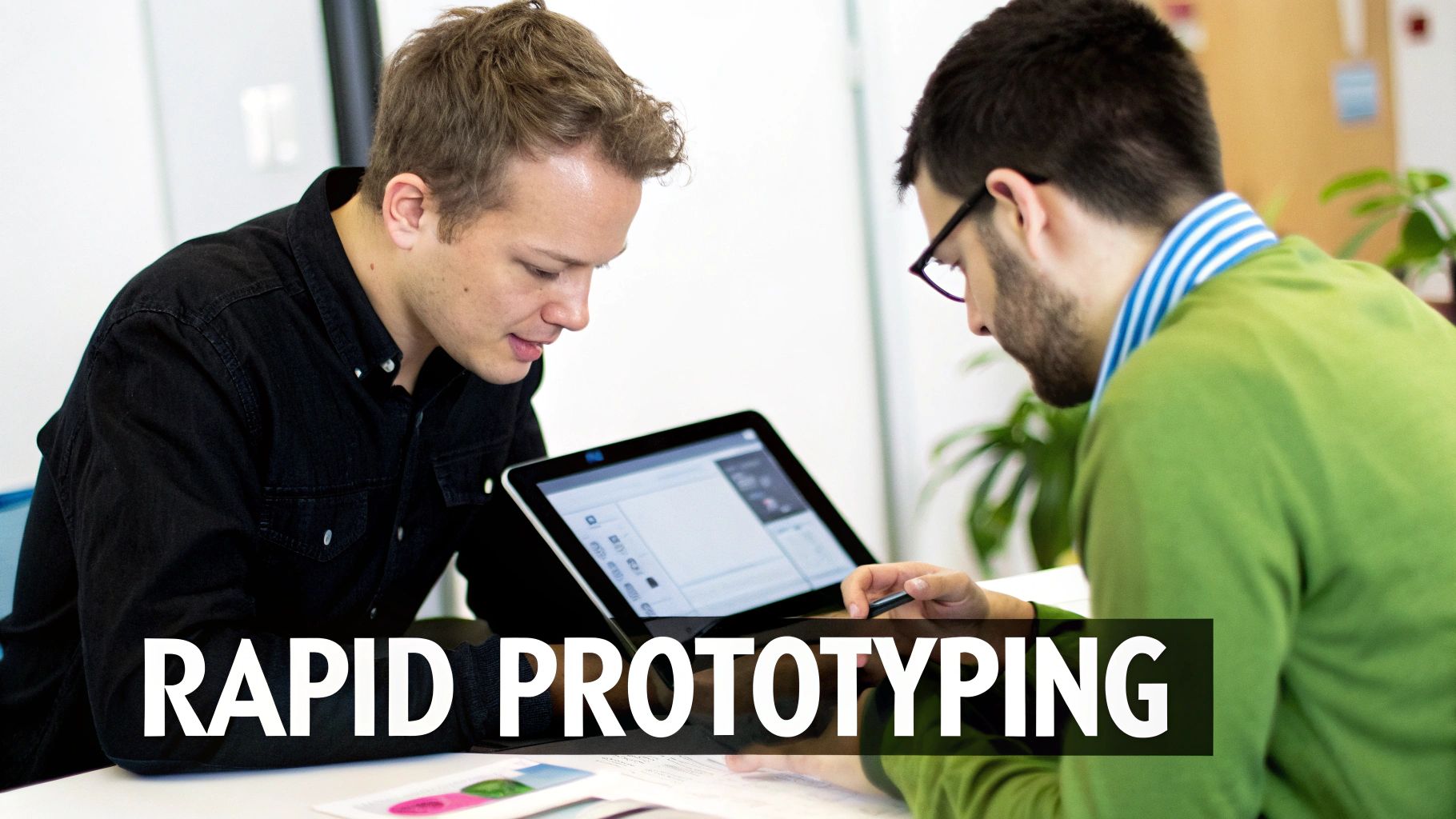
At its heart, RAD is all about rapid prototyping and iterative development. Teams quickly assemble a working model, a prototype, that actual users can click, tap, and interact with. This is a massive departure from older methods where users wouldn't see anything until the final product was delivered, often years later.
This early version doesn't have to be perfect. Its only job is to get real-world feedback on the app’s design and functionality. Based on that input, developers refine the prototype, add features, and present a new version. This build-test-learn cycle repeats until the product perfectly meets what users actually need. The process often kicks off with a core set of features, much like what you'd find in what is a minimum viable product.
The core idea behind RAD is that building software isn't like constructing a building with a fixed blueprint. Software is malleable. It should evolve based on user interaction and changing needs, not a static plan created months in advance.
To really get a feel for RAD, it helps to understand its key characteristics. The table below breaks down the fundamental principles that make this methodology so effective.
Key Characteristics of Rapid Application Development
Principle | Description |
|---|---|
Iterative Development | The project is built in a series of small, repeating cycles, not one long push. |
Active User Involvement | End-users are collaborators from day one, providing continuous feedback on prototypes. |
Rapid Prototyping | Working models are built quickly to test ideas and gather feedback, not just for show. |
Flexible and Adaptable | Requirements are expected to change, and the process is designed to embrace that. |
Focus on Reusability | Using pre-built components and code libraries is encouraged to speed up development. |
These principles work together to create a development environment that's fast, responsive, and focused on delivering real value to the end-user.
Why Speed and Flexibility Matter
Today’s business environment moves incredibly fast, and RAD is built to match that pace by shrinking the time between an idea and its launch. The market reflects this. In 2022, the RAD market was valued at $49.8 billion USD and is projected to skyrocket to $802.8 billion by 2030. That's a stunning growth rate of 41% every year. This explosion is driven by the urgent need for companies to get their digital products to market and react quickly to new opportunities.
This approach is especially powerful for projects where:
Requirements are fuzzy or likely to change. RAD embraces change, letting teams pivot without derailing the whole project.
The user experience is critical. Constant feedback ensures the final product is genuinely useful and intuitive.
A fast time-to-market is a competitive weapon. Getting a working product into users' hands quickly is the main goal.
By prioritizing working software over exhaustive documentation, RAD empowers teams to build high-quality applications that actually solve problems for real people.
The Four Core Phases of the RAD Model
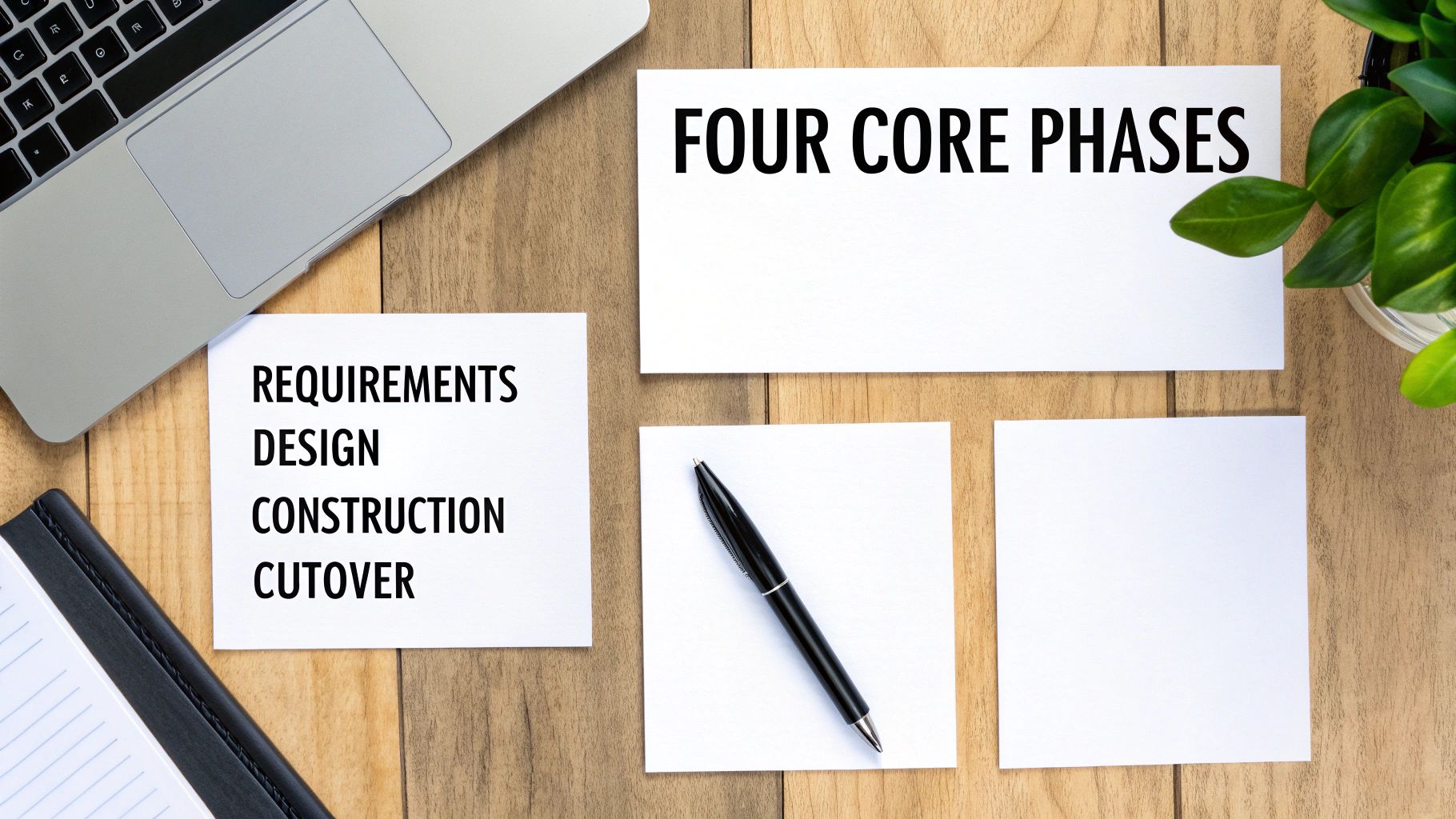
Rapid Application Development isn't about throwing plans out the window and coding in a frenzy. Far from it. It's actually a highly disciplined process that organizes the software lifecycle into four distinct, fast-moving phases. Each stage is designed to feed directly into the next, creating a powerful cycle of continuous improvement that keeps the project flying forward.
Unlike old-school models where you’d spend months on one stage before getting a formal sign-off, the RAD phases are fluid. They're built for quick transitions and instant feedback, ensuring the project stays locked onto business goals and what users actually need from day one. Let's break down each of these critical steps.
Phase 1: Requirements Planning
The first phase, Requirements Planning, lays the project's foundation, but with a modern twist. Instead of creating a massive, rigid document that tries to predict every single feature, this phase is more like an intense, collaborative workshop. Key stakeholders, developers, and the people who will actually use the software all get in a room to hammer out the project's broad scope and goals.
The aim here is to get a high-level understanding, not to get lost in the weeds. The initial plan is kept loose on purpose, leaving room to adapt as the project takes shape. Key activities include:
Defining the Business Need: What core problem are we actually trying to solve?
Identifying Key Stakeholders: Who are the essential decision-makers and end-users?
Outlining the Core Scope: What are the absolute must-have features for a first version?
Setting a Broad Timeline and Budget: Establishing realistic constraints to work within.
This phase is done when everyone agrees on the "gist" of the project and its core purpose, creating a shared vision that guides the team forward.
Phase 2: User Design
The User Design phase is where the magic of the RAD model really happens. Here, development teams work in super-tight loops with users to build and refine interactive prototypes. We're not talking about static wireframes or lifeless mockups; these are working models of the app that users can actually click, tap, and interact with.
This hands-on approach delivers immediate, real-world feedback. Users can test out interfaces, walk through workflows, and give gut reactions on what feels right and what doesn't. Developers take that feedback and iterate on the prototype in real-time, sometimes turning around a new version in a matter of days or even hours.
The User Design phase is essentially a continuous conversation between the builders and the users. It guarantees the product being built is the product that’s actually wanted, cutting out the guesswork and expensive do-overs that plague traditional development.
This cycle of prototyping, testing, and refining keeps going until the core parts of the system are solid and have been validated by the people who will rely on it every day.
Phase 3: Rapid Construction
Once the user design is locked in through prototyping, the project barrels into the Rapid Construction phase. This is where most of the heavy coding happens, but it’s dramatically faster than in traditional models. Why? Because the prototypes from the previous phase have already been tested and approved, so developers aren't starting from a blank slate.
They can focus on turning those validated prototypes into a high-quality, fully functional product. Speed and efficiency are everything here. Teams use a whole toolbox of techniques to accelerate the build, such as:
Reusable Components: Grabbing pre-built code modules to avoid reinventing the wheel.
Low-Code or No-Code Platforms: Using development tools that automate common coding tasks.
Automated Testing: Setting up scripts to quickly check new code and maintain quality.
The application is usually built piece by piece, with each feature being tested as it’s finished. This modular approach allows different parts to be built at the same time and makes it much easier to track progress, keeping the momentum high.
Phase 4: Cutover
The final phase, Cutover, is all about making the transition from development to a live, working application. This stage involves the last data migrations, final testing, and deploying the finished product. And because users have been part of the journey from the very beginning, the amount of training needed is often minimal because they already know how it works.
This phase is managed carefully to make sure the launch is smooth. Activities include final system-wide testing, quick user training sessions, and any last-minute polish on the interface. Once the system is stable and users are good to go, the new application officially goes live.
The principles for a smooth rollout here are very similar to what you’d find in modern deployment strategies. You can learn more about managing this transition by exploring continuous deployment best practices. After launch, the RAD lifecycle doesn't just stop; feedback from the live app can kick off the entire four-phase cycle all over again for the next great feature or update.
Where RAD Came From and Why It Mattered
To get why Rapid Application Development was such a big deal, you have to picture the world it was born into. Before RAD, the undisputed champion of software creation was the Waterfall model. It was a painfully rigid, step-by-step process where you had to finish one entire phase before you could even think about starting the next. Imagine building a house, but you couldn't touch the second floor until the first was completely decorated and furnished.
The problem is, software isn't a house. Requirements are slippery things and they change. Markets pivot overnight. And most of the time, users don't truly know what they want until they have something tangible to react to. The Waterfall approach was so inflexible that projects dragged on for years. By the time they finally launched, they were often already out of date or, worse, solved a problem that no longer existed. This created a massive bottleneck in the tech industry, and people were desperate for a better way.
A Direct Answer to Old, Slow Methods
This is the scene RAD walked into. Born in the 1980s, Rapid Application Development was a direct rebellion against the sluggish, plan-obsessed models like Waterfall. Pioneers like Barry Boehm and James Martin realized that building software just wasn't the same as manufacturing a car. To really dig into this history, it's worth exploring the origins of rapid application development and agile.
Instead of Waterfall's stiff, linear march, RAD championed something new: flexibility, fast prototypes, and constant feedback. In his 1991 book, Rapid Application Development, James Martin gave the approach its formal definition, creating a playbook that would inspire modern agile practices for years to come. The idea was simple but powerful: get a working model in front of real users as fast as humanly possible, see how they react, and adjust on the fly.
The core belief of RAD is that it’s far more valuable to build and tweak a working product with your users than to waste months arguing over theoretical requirements on paper. This focus on the user was a complete departure from the top-down, "we know best" planning of the past.
This shift was everything. It moved the goalposts from perfect, exhaustive documentation to collaboration and real, usable results. This didn't just speed up projects; it dramatically boosted the odds that the final product would actually be something people wanted to use.
The Bridge to Modern Agile
The ideas RAD introduced didn't just stay in a neat little box. They laid the philosophical foundation for what would eventually explode into the Agile movement. When the Agile Manifesto was written in 2001, it echoed the very principles RAD had been championing for more than a decade.
Think about the core ideas RAD brought to the table:
Customer Collaboration Over Contract Negotiation: RAD was built on turning users into partners, not just names on a contract. This is a central pillar of Agile.
Working Software Over Comprehensive Documentation: The focus on rapid prototyping put all the value on having a functional app that could be tested and improved.
Responding to Change Over Following a Plan: RAD’s whole iterative cycle was designed to welcome change, not fight it.
In this way, RAD became the critical bridge connecting the old world of rigid engineering to the flexible, adaptive methods that run software development today. It proved that building things quickly didn’t mean you had to cut corners on quality. In fact, it showed that speed and user feedback were the secrets to building better software for a world that refuses to stand still.
Choosing Your Method: RAD vs. Agile and Waterfall
Picking a development methodology is a lot like choosing how you'll build a house. You wouldn't use the same blueprint for a skyscraper as you would for a custom cabin in the woods. Rapid Application Development, Agile, and Waterfall are just different blueprints for building software, and the right one depends entirely on what you're trying to create.
Understanding the core philosophy behind each one is the first step. These aren't just technical terms; they represent fundamentally different ways of thinking about planning, building, and delivering a product. Getting this choice right can be the difference between a smooth launch and a project that completely misses the mark.
The Structured Path of Waterfall
The Waterfall model is the classic, old-school approach. It’s a strictly linear process where one phase has to be 100% complete before the next one can even begin. Think of it like an assembly line: you must finish designing the car before you can start manufacturing the parts.
This method demands a massive amount of upfront planning. Every single requirement, feature, and design detail gets documented and signed off on before a single line of code is written. That makes Waterfall a solid choice for projects where the requirements are set in stone and aren't expected to change.
Best for: Projects with fixed, unchangeable requirements, like a compliance reporting tool or a system where security protocols are non-negotiable from day one.
Drawback: It's incredibly rigid. If you discover a better approach or the market shifts halfway through, making changes is a painful and expensive process.
Agile: The Broader Philosophy of Flexibility
Agile isn't so much a single method as it is a mindset that champions flexibility, collaboration, and constant progress. It was born out of frustration with Waterfall's rigidity. The Agile world operates in short cycles called "sprints," where teams focus on delivering small, working pieces of the final product.
Rapid Application Development is often seen as one of the very first agile-like methodologies because it shares the same core values of user feedback and iteration. But Agile itself is a massive umbrella covering many frameworks, with Scrum being the most well-known. The entire point is to be able to respond to change rather than just follow a static plan.
This flowchart gives a simple way to visualize when each approach, including Waterfall, RAD, and Agile, might be the best tool for the job.
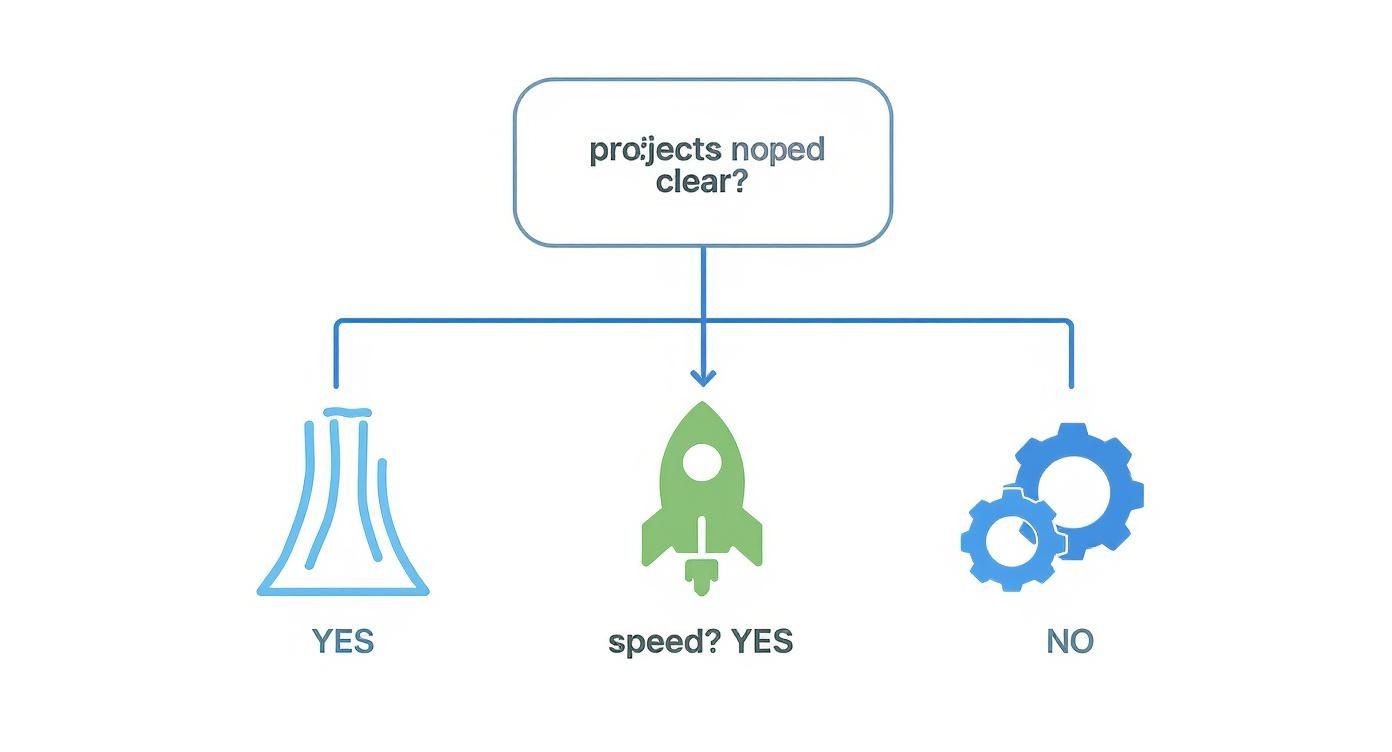
As the chart shows, when requirements are fuzzy, the decision often boils down to a single question: do you need raw speed (RAD) or a more structured, collaborative rhythm (Agile)?
RAD: Where Speed and Prototypes Rule
So where does Rapid Application Development fit into all this? RAD is a specific style of development that takes the idea of iteration and puts it into overdrive, with a relentless focus on rapid prototyping.
While an Agile team might deliver a small "increment" of functional code at the end of a two-week sprint, a RAD team aims to deliver a tangible, clickable prototype for users to play with almost immediately.
The core difference is the emphasis. Agile focuses on delivering functional pieces of the final product over time. RAD focuses on delivering a functional model of the entire system as quickly as possible, then refining it based on real-time user feedback.
This makes RAD an absolute powerhouse for projects where the user interface and overall experience are everything. It shines when you need to validate an idea quickly, see how users react to a design, and adapt on the fly without getting bogged down in the formal meetings and ceremonies of other frameworks.
To put it all together, this table breaks down the key differences between these three powerful approaches.
RAD vs. Agile vs. Waterfall: A Quick Comparison
Attribute | Rapid Application Development (RAD) | Agile | Waterfall |
|---|---|---|---|
Flexibility | Extremely high; change is expected and built into the process. | High; adapts to new information through short sprints and feedback. | Very low; changes are difficult and expensive after a phase is locked. |
User Involvement | Constant collaboration; users are active partners in design from day one. | High and regular; users provide feedback at the end of each sprint. | Minimal; users are mostly involved at the very beginning and very end. |
Planning | High-level planning upfront, with details filled in during prototyping. | Sprints are planned in detail, but the overall product plan is flexible. | Exhaustive and upfront; the entire project is planned from start to finish. |
Delivery Speed | Very fast; the primary goal is rapid delivery of a working prototype. | Fast and incremental; delivers working software in regular, predictable cycles. | Slow; the final product is only delivered at the very end of the project. |
Ultimately, choosing the right method requires an honest assessment of your project's goals. If you need absolute structure and have fixed requirements, Waterfall is a safe bet. If you need collaborative, incremental progress on a complex product, Agile is your guide. But if your number one priority is speed, specifically getting a working model into users' hands as fast as humanly possible, then Rapid Application Development was built for you.
Key Advantages and Potential Pitfalls of RAD
No development methodology is a silver bullet, and Rapid Application Development is no exception. While its speed and flexibility can feel like a superpower, it's not the right tool for every job. Knowing its strengths and weaknesses is the key to deciding if this fast-paced approach is a good fit for your project.
Think of it this way: RAD’s greatest strengths can become its biggest liabilities if they aren't managed correctly. Let's break down what makes it so appealing and where you need to be careful.
The Big Wins: Where RAD Shines
The number one reason teams choose RAD is its incredible speed. By jumping straight into prototypes and ditching exhaustive upfront planning, you can get a working model into users' hands in a fraction of the time a traditional approach would take. Your business gets to market faster, starts collecting real feedback sooner, and begins delivering value almost immediately.
This speed goes hand-in-hand with flexibility. The entire RAD model is built on the assumption that requirements will change. It’s designed to absorb new ideas and pivot based on feedback without throwing the whole project off the rails.
Other major advantages include:
Higher Quality Products: With users involved from day one, the final product is almost guaranteed to hit the mark. Bugs and awkward design choices are spotted early when they’re cheap and easy to fix, not after months of work have already been sunk.
Massively Reduced Risk: Instead of a high-stakes "big reveal" at the end of a long project, RAD validates ideas piece by piece. This dramatically lowers the risk of building something nobody actually wants or that fails to solve the right problem.
Happier, More Engaged Teams: Developers and designers get to see their work come to life quickly and receive immediate validation. That’s far more rewarding than toiling away for months with little to no outside interaction.
The real magic of RAD is its relentless focus on tangible results. It channels a project’s energy away from writing massive documents and toward building working software that people can actually see and touch. This ensures the end product is both useful and genuinely wanted.
Potential Drawbacks: Where RAD Can Stumble
For all its strengths, RAD's fluid nature can create its own set of problems. Its focus on speed makes it a poor choice for projects with a rigidly fixed scope and budget. Because the design evolves with feedback, it’s tough to predict the final cost and feature list, a deal-breaker for organizations needing precise financial forecasts from the get-go.
Another challenge is the heavy demand it places on people. This model needs highly skilled developers who can iterate quickly without cutting corners on quality. It also requires a serious time commitment from your end-users and stakeholders, who must be ready to provide frequent, thoughtful feedback.
Not Built for Massive Projects: RAD thrives on smaller, modular projects. For huge, complex systems, the lack of deep architectural planning upfront can lead to a messy, hard-to-maintain codebase down the road.
The Danger of "Scope Creep": When you’re constantly getting feedback, it's tempting to keep adding "just one more thing." Without strong project management to guard the boundaries, the finish line can keep moving further and further away.
Communication is Everything: The whole process hinges on seamless collaboration. If communication between developers, designers, and users breaks down, the project can quickly descend into chaos.
Ultimately, RAD is a powerful tool when you use it for the right purpose. It’s a fantastic choice for user-focused apps where speed-to-market is critical and you expect requirements to evolve. But for large-scale, mission-critical systems with strict regulatory needs or inflexible budgets, a more structured approach is probably a safer bet.
How We Use RAD to Deliver Results Faster
It’s one thing to talk about RAD in theory, but it’s another thing entirely to see it in action. At CatDoes, we didn’t just adopt RAD principles; we baked them directly into our platform to completely change how mobile apps get built. We move from an idea to a live, interactive product at a speed that traditional methods simply can't match.
Forget about spending weeks staring at static design mockups. Our process kicks off with immediate, hands-on prototyping. When a client tells us their vision, our AI agents don’t just write up a plan. They build a functional, interactive preview of the app from day one. This means clients can see, touch, and feel their app right from the start.
From Immediate Feedback to Flawless Execution
This instant prototyping is the heart of how we work. Clients can click through user flows and test out the interface in a live browser preview or scan a QR code to run the app on their own phone. This creates a tight, real-time feedback loop that is impossible with old-school development.
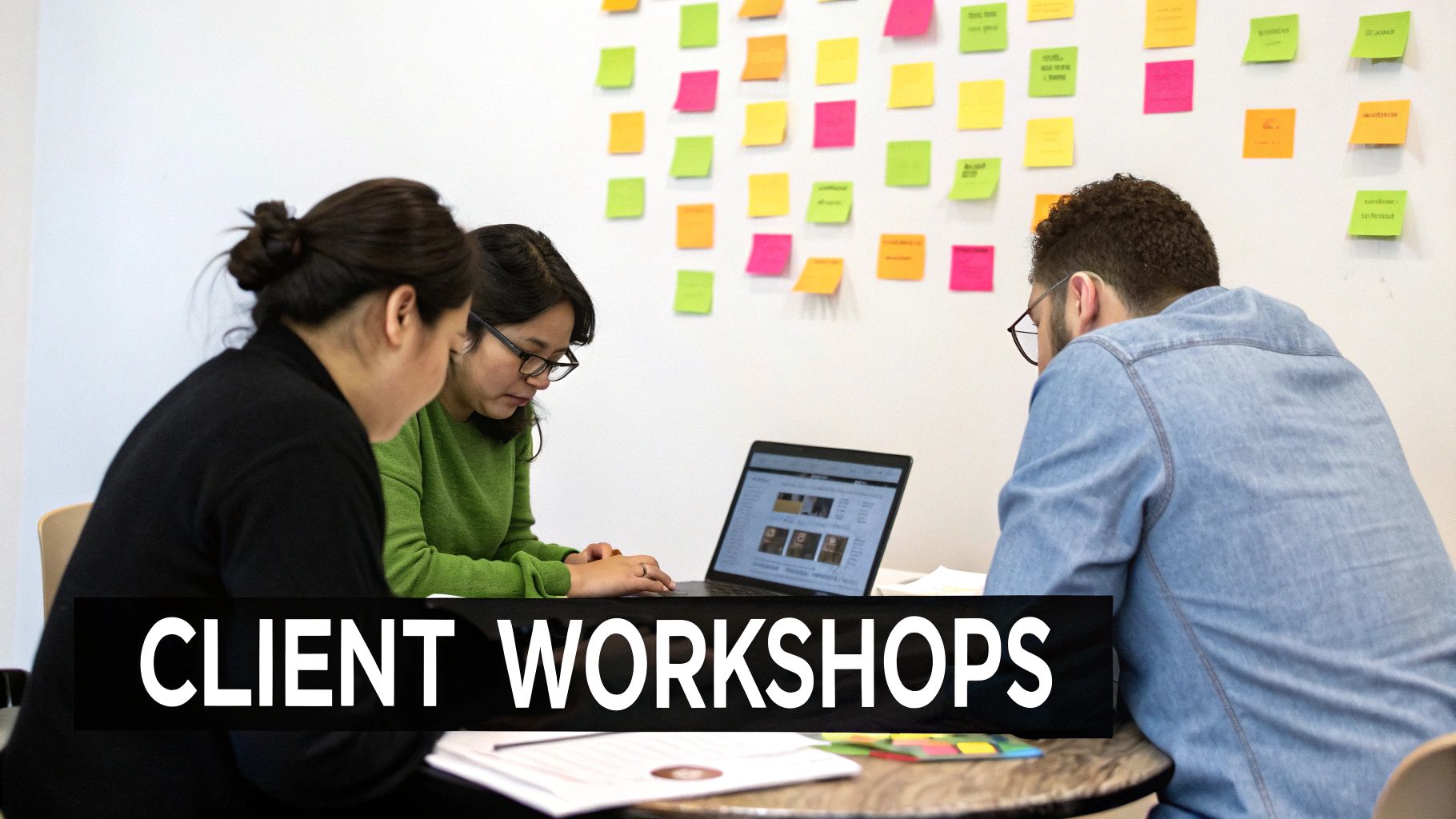
This cycle of building, testing, and refining is where the magic really happens. We've replaced slow, formal review meetings with dynamic, collaborative workshops where a client’s feedback is translated into app updates almost instantly. A suggestion made in the morning can become a working feature by the afternoon. When the goal is to get results faster, this process is everything. For a complex project like building a modern automotive dealer app, this approach can shave months off the timeline.
At its core, our platform is a RAD engine. We use AI to automate the entire construction phase, which lets us put all our energy into the user design and feedback loop. It ensures the final app is a perfect fit for the client’s goals because they helped build it every single step of the way.
The Tangible Outcomes of Our RAD Approach
By embedding RAD into our workflow, we deliver real-world benefits that go far beyond just speed. Our process is built to slash project risk and ensure the final app is perfectly aligned with what the market actually wants, right from day one.
This focus on rapid delivery completely reshapes project timelines. To get a better sense of what this looks like, take a look at our guide on the typical mobile app development timeline.
Here’s what our clients can expect:
Accelerated Time-to-Market: We shrink the development cycle from months down to days, giving our clients a serious head start on the competition.
Reduced Project Risk: By constantly validating with real users, we eliminate the risk of building a product that nobody wants.
Perfect Goal Alignment: The constant collaboration means the finished app is guaranteed to solve the right business problems and deliver real value.
Got Questions About RAD? We've Got Answers.
Even after you get the big picture, a few practical questions always seem to pop up about Rapid Application Development. Let's tackle the most common ones to clear things up and help you figure out if RAD is the right tool for your next project.
Is RAD Just Another Name for Agile?
Not exactly, though they're definitely related. Think of Agile as a broad philosophy, a mindset focused on flexibility, customer collaboration, and delivering value in small, iterative chunks. Frameworks you've probably heard of, like Scrum and Kanban, live under this big Agile umbrella.
RAD, on the other hand, is a specific, highly focused methodology that was actually a major influence on the modern Agile movement. Its secret weapon is the prototype. While both RAD and Agile embrace change, they go about it a little differently.
Here’s the key difference: Agile is all about delivering working pieces of the software in cycles. RAD is about delivering a working model of the entire system almost immediately, then refining it over and over based on real user feedback.
What Kind of Projects Are a Perfect Fit for RAD?
RAD truly shines on projects where the requirements are a bit fuzzy or guaranteed to change. It's fantastic for building applications where the user interface and overall experience are make-or-break factors. That hands-on feedback loop is gold for making sure the final product feels intuitive and actually solves the user's problem.
It works best with smaller, modular projects that can be tackled by a skilled, tight-knit team that can move fast. RAD is generally a poor choice for massive, monolithic systems with extreme security needs or huge technical risks right from the start. Those kinds of projects usually need a lot more architectural planning before a single line of code gets written.
Can You Really Do RAD on a Fixed Budget?
This is a tricky one. Using RAD with a truly fixed, inflexible budget can be tough. The whole point is to be flexible, which means the project's scope can, and often should, evolve as you get feedback. Naturally, that can mess with costs and timelines.
It's not impossible, but it requires some serious project management discipline and brutally honest prioritization. Everyone involved has to be crystal clear about the trade-offs. A much smarter approach is to fix the time and cost for a development cycle but keep the scope of features within that cycle flexible. This gives you budgetary control while still letting the methodology do what it does best: adapt.
Ready to turn your app idea into reality at lightning speed? CatDoes uses an AI-native, RAD-powered approach to build and launch production-ready mobile apps from a simple description. Skip the long development cycles and see your vision come to life. Start building for free at https://catdoes.com.
Nafis Amiri
Co-Founder of CatDoes


